Church Website Examples
Lutheran churches face a particular web-design challenge: how do you convey a worship tradition that’s centuries deep — liturgy, sacraments, hymnody, the church year — while still feeling warm and accessible to a first-time visitor who has never sung a chorale? The best Lutheran church websites pull it off, and the fastest way to design a great one is to study churches that already have.
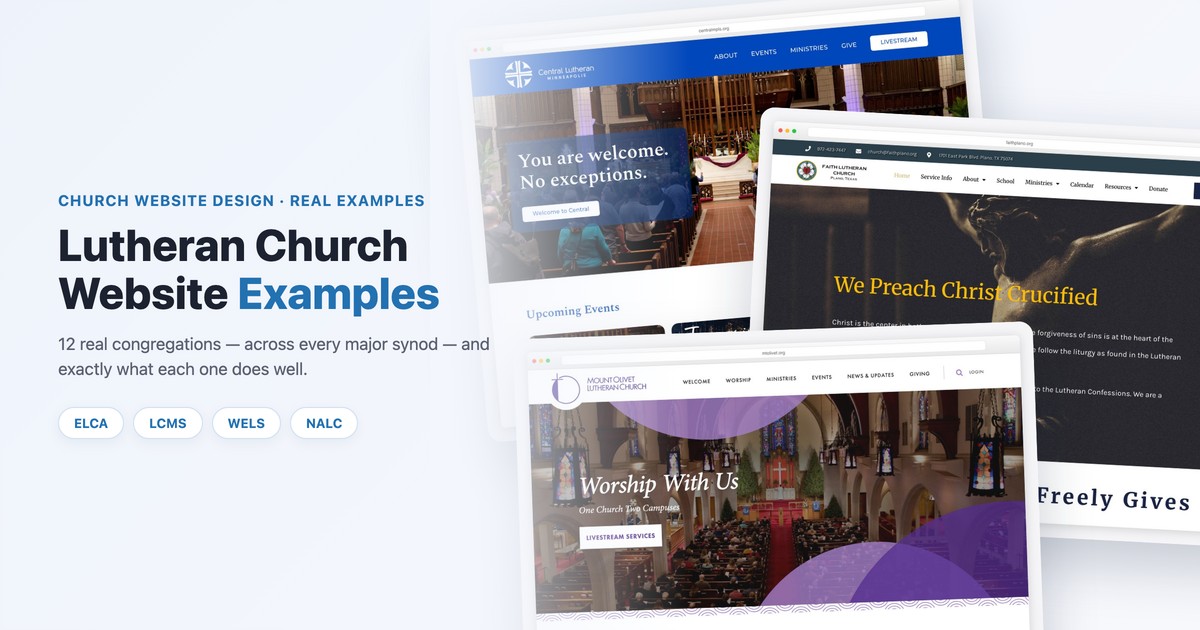
Below are 12 real, current Lutheran church websites — spanning the ELCA, LCMS, WELS, and NALC — with what each one does well and the platform it’s built on. We don’t sell a website builder, so this is a neutral look at real congregations, not a product showcase. First, a quick orientation on the synods and a checklist of what the strongest Lutheran sites have in common.
Part of designing — or choosing — a Lutheran church website is communicating which Lutheran body you belong to, because the worship and theology differ meaningfully. Here’s a neutral, one-line orientation to the main ones you’ll see represented below.
| Synod | In a sentence |
|---|---|
| ELCA (Evangelical Lutheran Church in America) | The largest US Lutheran body (~3 million members); mainline, ecumenical, and broadly inclusive. |
| LCMS (Lutheran Church—Missouri Synod) | The second largest (~1.8 million); confessional and traditional, holding closely to the Lutheran Confessions. |
| WELS (Wisconsin Evangelical Lutheran Synod) | Confessional and conservative (~340,000); known for close doctrinal adherence and a strong church-and-school tradition. |
| NALC (North American Lutheran Church) | Formed in 2010; traditionally grounded, Christ-centered, mission-driven, and congregationally focused. |
| LCMC (Lutheran Congregations in Mission for Christ) | Also post-2010; theologically traditional with a strong emphasis on congregational autonomy. |
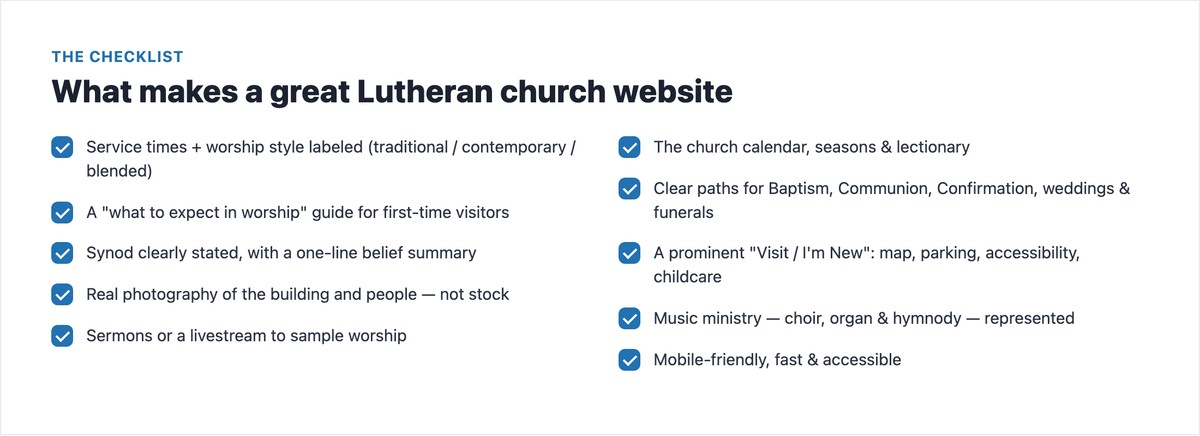
Across every synod, the strongest Lutheran sites do the same handful of things well: they name their worship style so newcomers can self-select, explain what a liturgical service is actually like, state their synod and beliefs honestly, and use real photography that conveys both the beauty of the space and friendly faces. Here’s the full checklist.
The one Lutheran-specific element worth emphasizing: a short “what to expect in worship” guide. Liturgical worship — Holy Communion, hymns and organ, the rhythm of standing, sitting, and kneeling — is unfamiliar to many first-time and cross-denominational visitors. A church that explains it warmly removes a real barrier. For the bigger picture of page structure, see our church homepage formula and guide to a Plan Your Visit page.
All were live when we last checked, ordered to move across synods and styles. For each, note what it does well — and which ideas you could borrow.
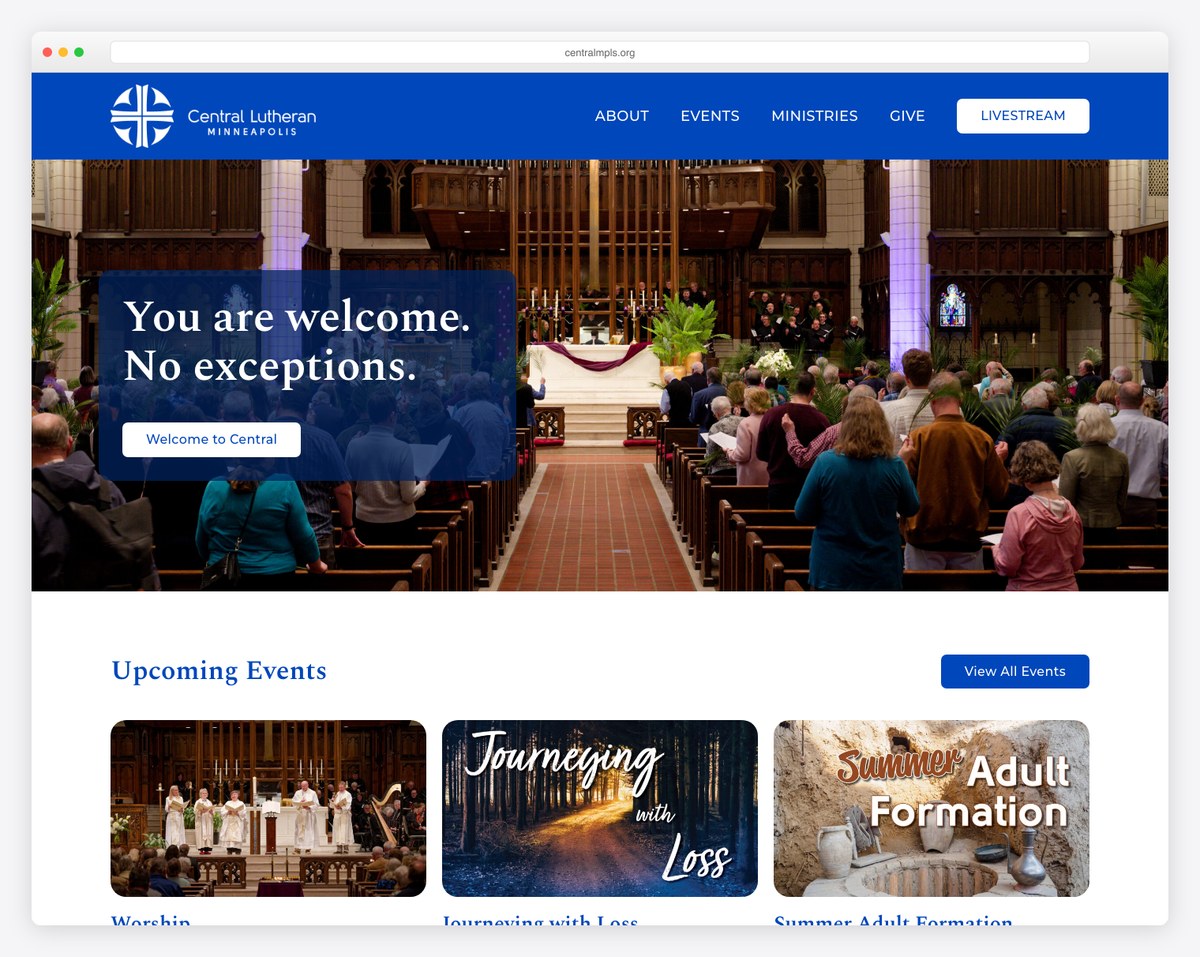
Central Lutheran opens with a confident, welcoming masthead — “You are welcome. No exceptions.” — over a real sanctuary photo. This downtown flagship (built on WordPress) leads with clear worship paths and social-ministry storytelling, and keeps its navigation clean despite a large, active congregation. A great model for an urban ELCA church that wants to feel both grand and approachable.
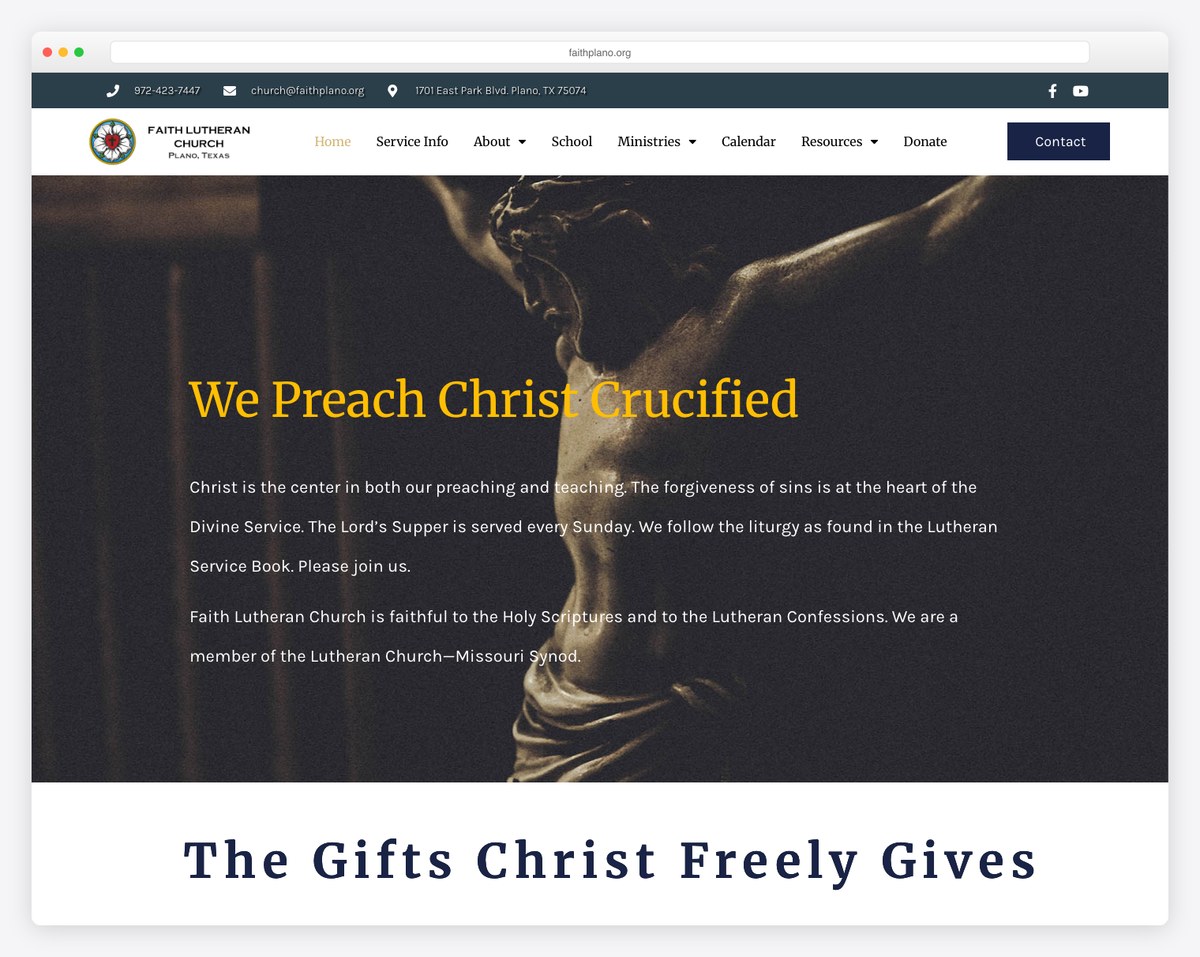
Faith Lutheran states its confessional identity boldly — “We Preach Christ Crucified / The Gifts Christ Freely Gives” — over a dramatic, reverent hero. Built on WordPress with Elementor, it organizes worship and online-worship sections clearly. If your church wants its theology front and center rather than softened, this is how to do it with confidence and style.
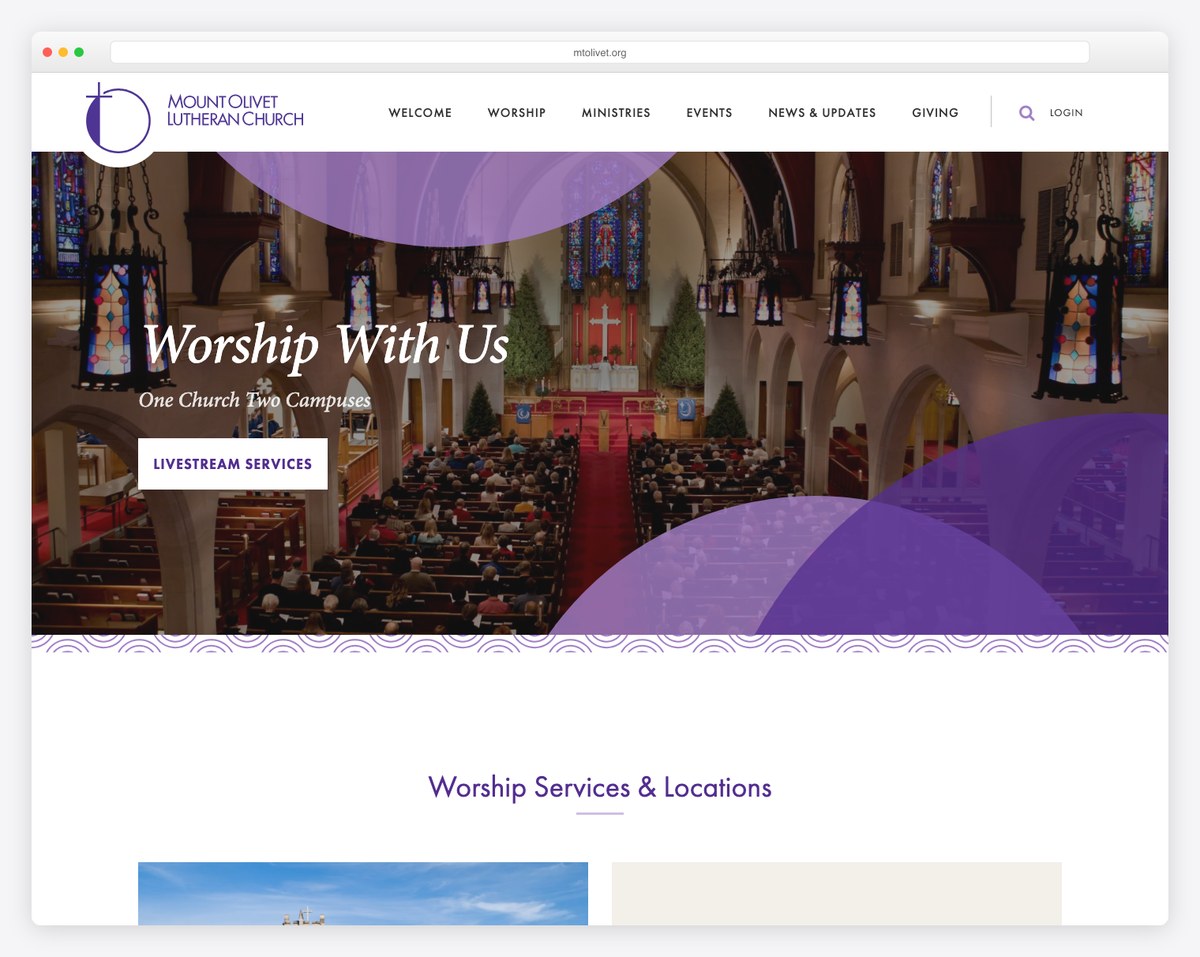
Mount Olivet is one of the largest ELCA congregations in the country, and its WordPress site carries a polished, cohesive brand — “Believing. Belonging. Becoming.” — with rich imagery and a clear “Worship With Us” path across multiple locations. A strong reference for a large church that needs to organize a lot without feeling corporate.
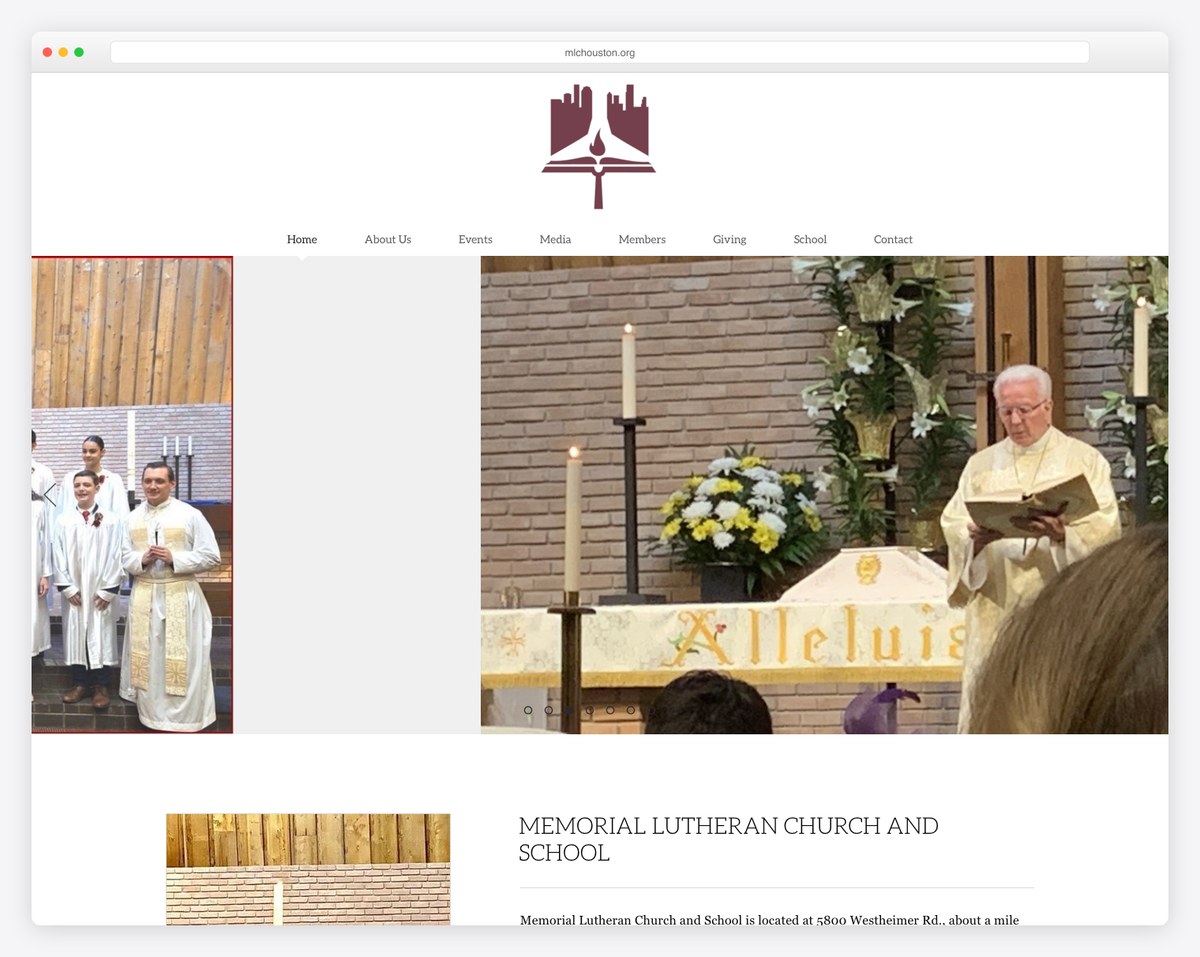
Memorial Lutheran leans fully into its liturgical identity — the homepage imagery and “Alleluia” tone signal a traditional, Communion-centered parish — while keeping the practical details and its school well integrated. Proof that a deeply traditional LCMS church can present its heritage beautifully online without diluting it.
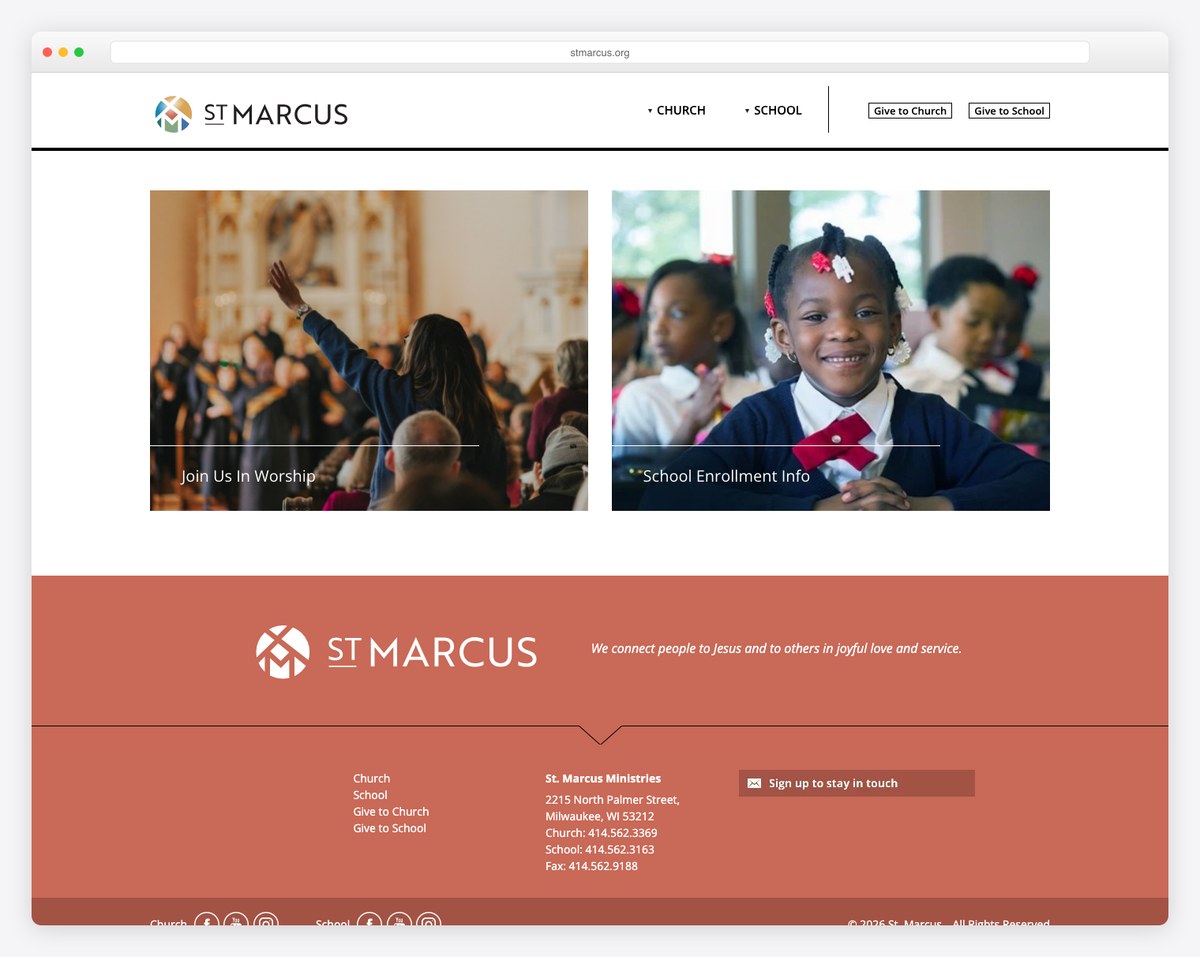
St. Marcus is a large WELS church and school, and its site handles the dual identity gracefully — warm community and classroom photography, with traditional and contemporary services both clearly presented. The strongest example here of the classic Lutheran church-and-school combination done well online.
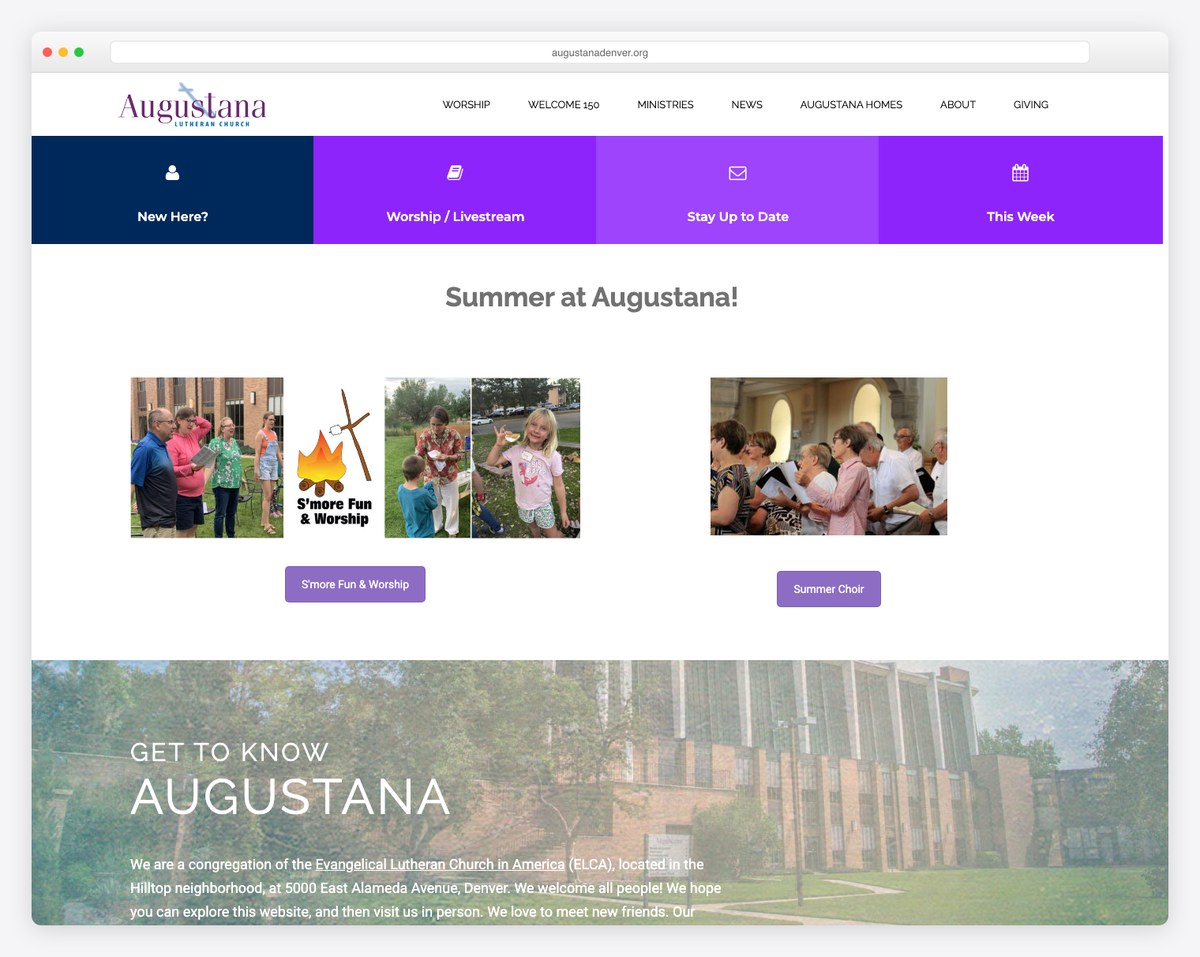
Augustana Denver uses a confident, colorful design (built on WordPress with the Divi builder) to present an active congregation — seasonal programming, a strong music-and-arts presence, and clear service times. A good template for a church with a lot going on that wants its calendar to feel inviting rather than overwhelming.
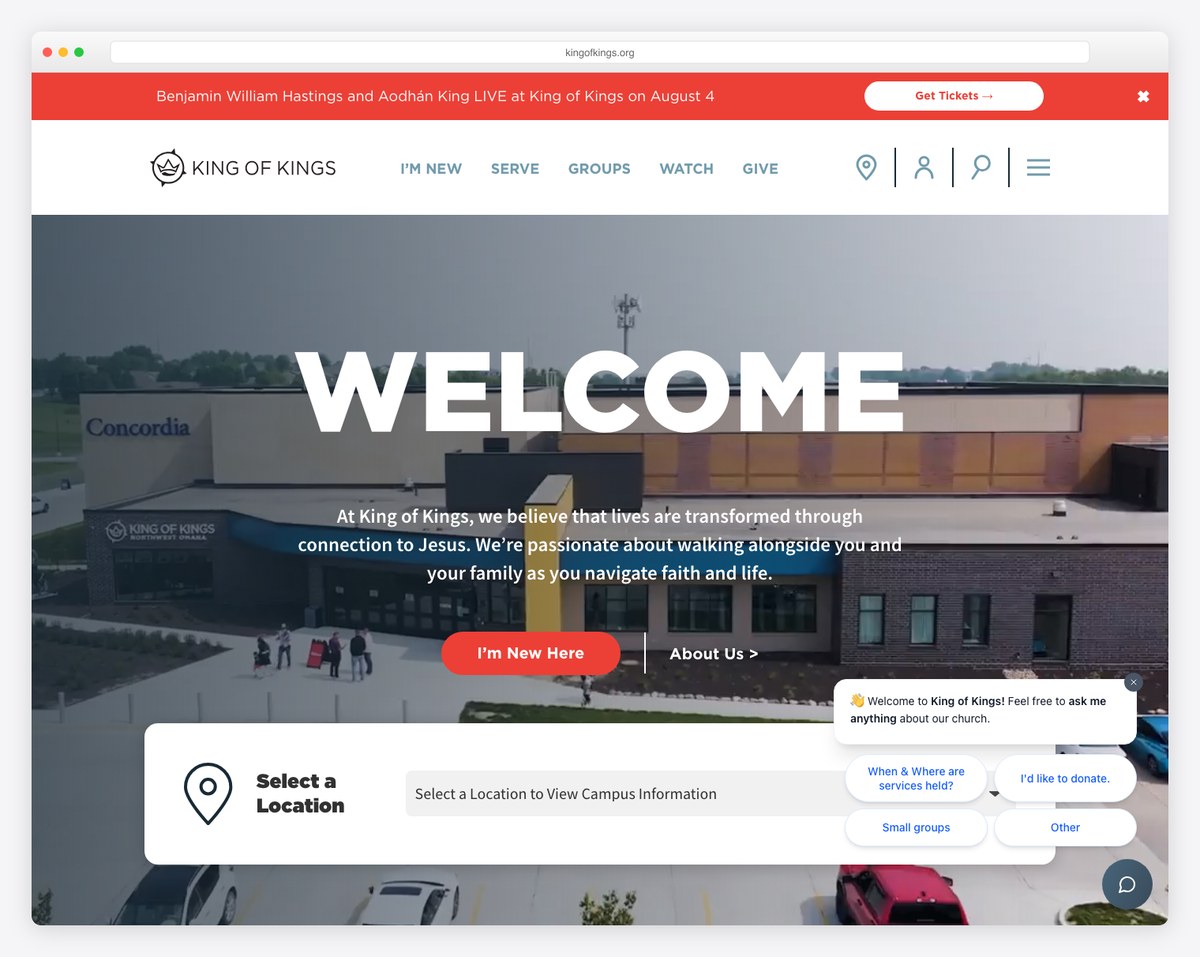
King of Kings shows the contemporary end of the LCMS spectrum — a bold “Welcome” hero, clean modern design, and a clear multi-site “Find a Location” path with service times right up front. If your LCMS church leans contemporary and multi-campus, this is the look to study.
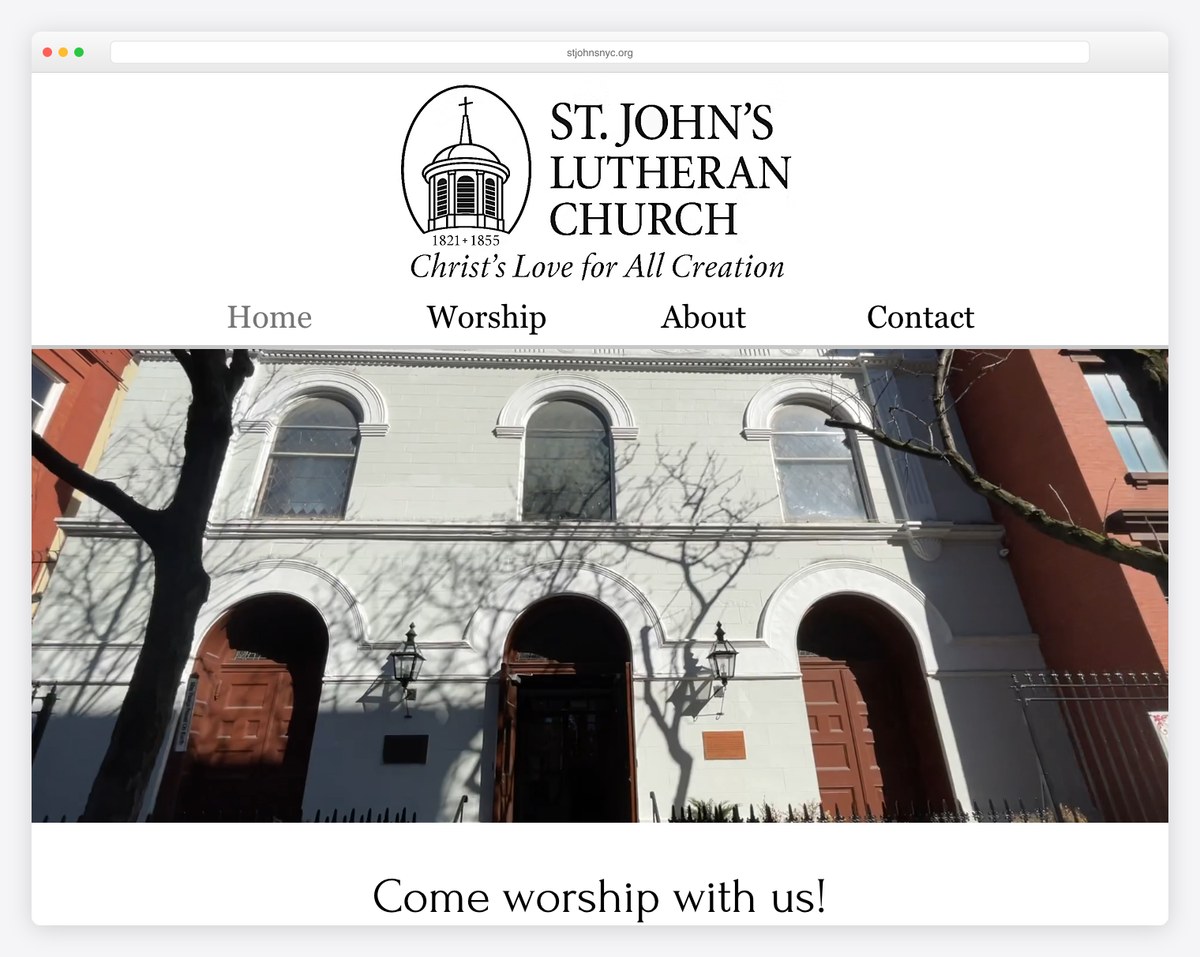
St. John’s in the West Village proves a small urban congregation can look polished on a budget. Its tasteful Wix build — “Christ’s Love for All Creation,” “Come worship with us!” — keeps address and visit info clear and the tone affirming. A reassuring example for any small church without a big web budget.
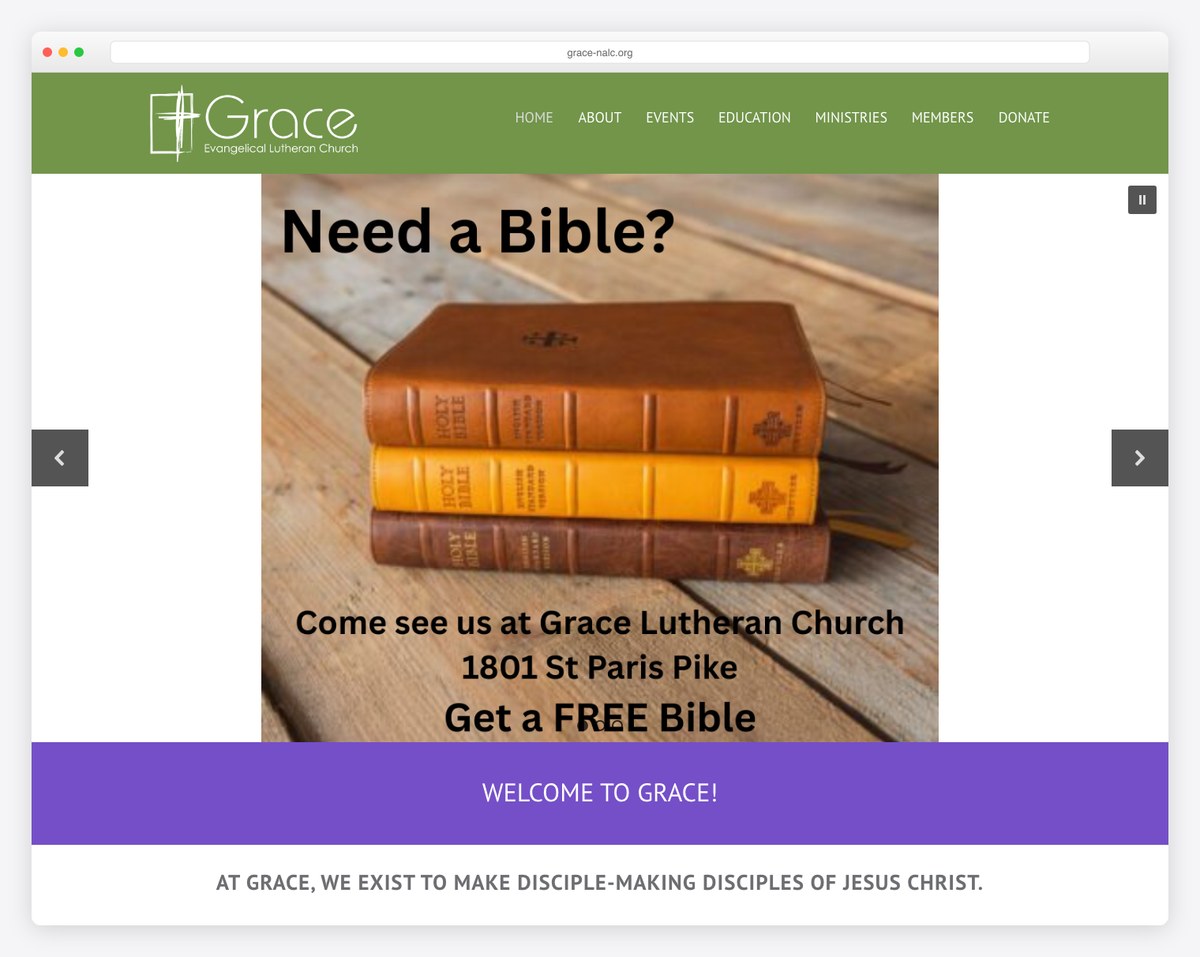
Grace Lutheran states its NALC affiliation cleanly and leads with a warm, mission-minded outreach hook (a free-Bible offer) over a “traditionally grounded” tone. A good model for a smaller, newer-synod congregation that wants its welcome and its identity equally clear.
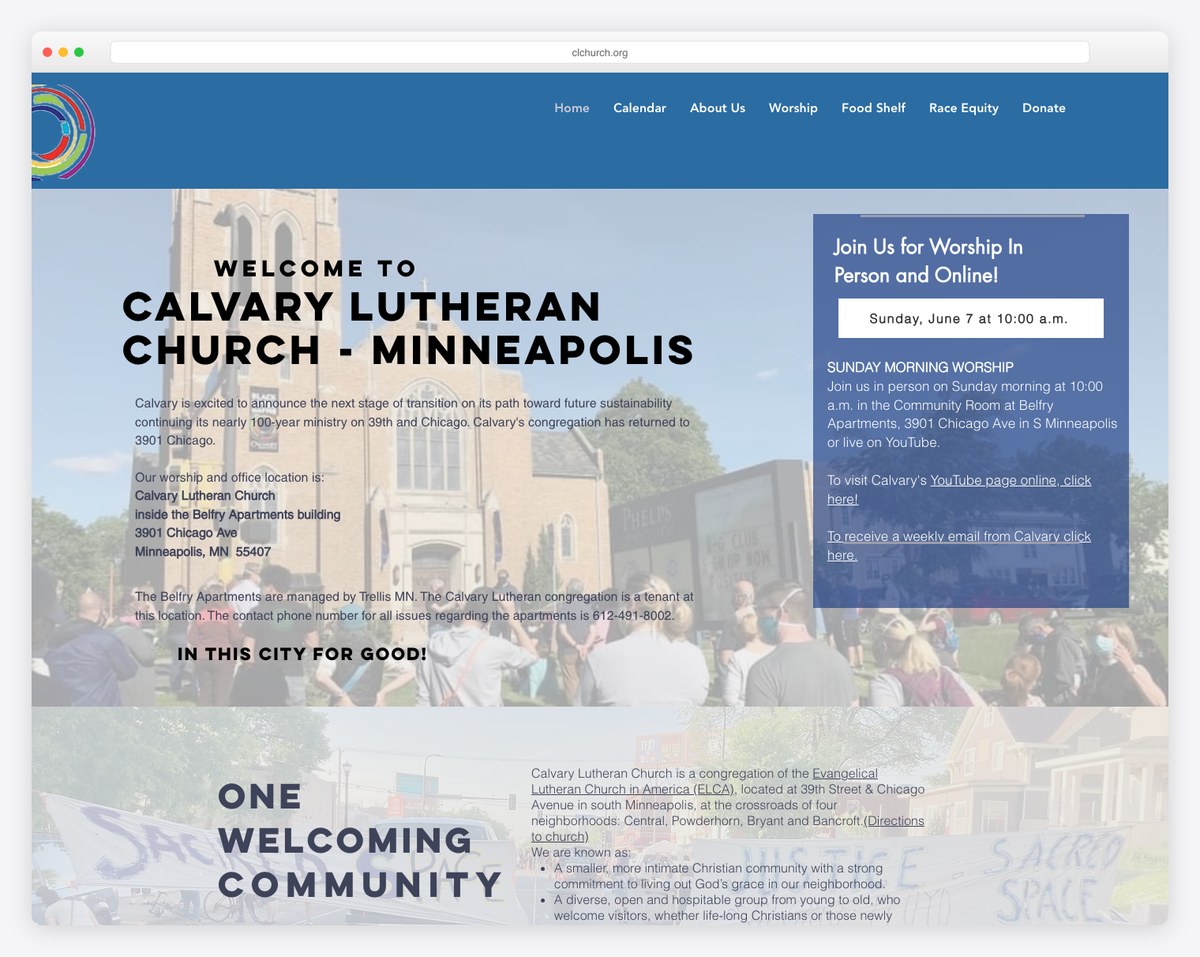
Calvary Lutheran centers its identity on a simple promise — “One Welcoming Community” — in a tidy, easy-to-navigate Wix build with clear service times and a community focus. Another example that a mid-sized church can look clean and current without a custom build.
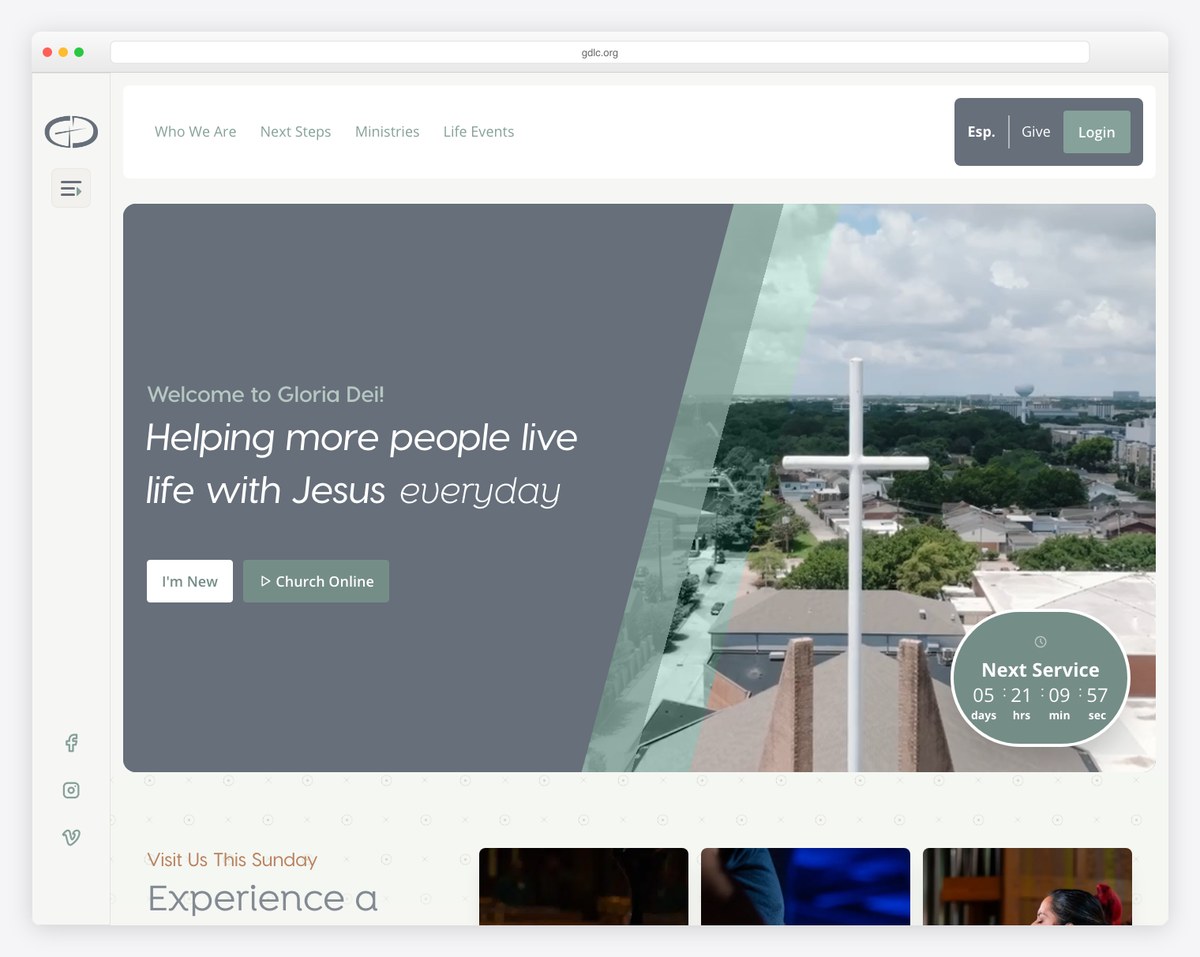
Gloria Dei pairs a clear mission line — “Helping more people live life with Jesus every day” — with warm, well-shot photography that balances reverence and accessibility. A polished WordPress example of an ELCA church that feels both rooted and friendly.
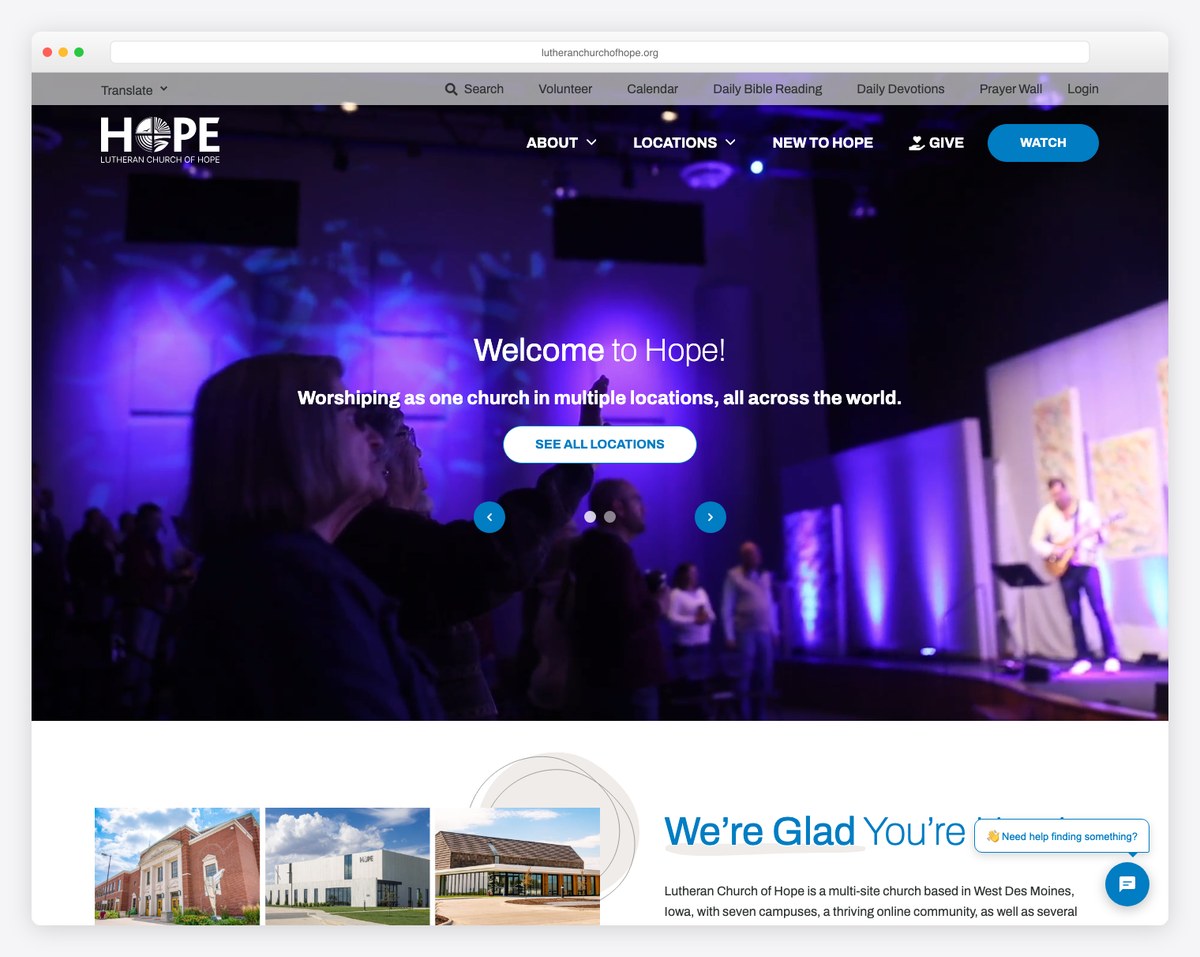
Lutheran Church of Hope is the largest Lutheran congregation in the United States, and its site is megachurch-grade: a bold, video-style welcome (“Wherever you are, however you arrived…”), smooth multi-campus navigation, and obvious next steps. The reference point for a large, contemporary Lutheran church operating at scale.
Notice the range: the same tradition is served beautifully on WordPress, Squarespace, and Wix, by congregations from a few hundred to tens of thousands. The platform matters less than nailing the fundamentals in the checklist above. To choose your own, see our best church website builders guide and the best church WordPress themes. For more inspiration beyond the Lutheran tradition, browse our 50 best church website designs or the examples for Methodist, Catholic, and Baptist churches.
If you would rather start from something built for the tradition than adapt a general-purpose theme, Cornerstone is a free template for Episcopal, Anglican and Lutheran parishes that keep the calendar, with the church year computed rather than typed in by hand.
At minimum: your service times with the worship style labeled (traditional, contemporary, or blended), a short “what to expect in worship” guide for newcomers, your synod and a one-line belief summary, real photos of your building and people, sermons or a livestream, a clear “Visit / I’m New” path with map and parking, and details on sacraments and milestones (Baptism, Communion, Confirmation, weddings, funerals). The strongest Lutheran sites also surface their music ministry and the church calendar.
They’re the two largest Lutheran bodies in the US and differ in theology and practice. The ELCA (Evangelical Lutheran Church in America) is the largest and is mainline — more progressive, ecumenical, and inclusive, including in who it ordains. The LCMS (Lutheran Church—Missouri Synod) is the second largest and is confessional and traditional, holding more closely to the historic Lutheran Confessions and a conservative doctrinal stance. Many Lutheran websites state their synod plainly so visitors know what to expect.
There’s no single best — the examples above are split across WordPress, Squarespace, and Wix, and all look great. WordPress offers the most flexibility and ownership (ideal for larger churches or those wanting a sermon archive and full control); Squarespace gives the most polished design with the least effort; Wix is the easiest and has a free plan, well suited to smaller congregations. Choose based on your church’s size, budget, and how much you want to maintain. Our church website builders guide compares them in depth.
Add a short, friendly “what to expect” section to your visit page. Briefly describe the flow of a service (hymns and music, Scripture readings, the sermon, Holy Communion), roughly how long it lasts, the rhythm of standing, sitting, and kneeling, what to wear (“come as you are”), and what’s available for children. The goal is to remove the fear of the unfamiliar — many of your potential visitors have never been to a liturgical service, and a little explanation goes a long way.

Church Website Examples
Church Website Examples
Church Website Examples
10 complete church website templates, MIT licensed. Browse every demo freely; we will email you whichever folder you want.
All templates