Methodist church websites face a unique challenge: communicating both denominational identity and local church personality. The United Methodist Church has a strong connectional structure, social justice heritage, and emphasis on education — all of which should come through online. At the same time, your local church has its own character, programs, and community that make it distinct from every other Methodist church in your district.
We reviewed Methodist church websites across different sizes and regions to find the ones that balance denominational identity with welcoming design. Here are the best examples, along with tips for making your Methodist church website stand out.
In This Guide
What Makes Methodist Websites Unique
Connectional Identity
Methodist churches exist within a connectional structure — conference, district, local church. Your website should acknowledge this connection. Include your conference affiliation, link to your conference website, and display the United Methodist cross-and-flame logo (or your new denomination’s branding if you’ve recently transitioned). This helps visitors understand your church within the broader Methodist tradition.
At the same time, don’t let denominational branding overwhelm your local identity. Your church name, mission, and community should be front and center. The denomination is context, not the headline.
Social Justice Emphasis
Methodism has a deep commitment to social justice, community service, and compassion ministries. The best Methodist websites highlight this — food pantries, homeless ministries, racial justice work, community partnerships, and mission projects. If your church lives out this heritage, showcase it prominently. For many visitors, a church’s commitment to serving others is what draws them in.
Blended Worship
Many Methodist churches offer blended worship — combining traditional hymns with contemporary elements, or offering separate traditional and contemporary services. Your website needs to communicate this clearly so visitors can choose the service that fits them. Describe each service style honestly. “Contemporary” and “Traditional” mean different things at different churches — be specific about what to expect at each.
Education and Formation
Sunday School, Bible studies, Disciple Bible Study, Companions in Christ, and other educational programs are hallmarks of Methodist church life. Your website should organize these offerings clearly — by age group, day/time, and topic. Many Methodist churches also offer classes on Methodist history and theology, which deserve their own space on the website.
Open Welcome
The phrase “Open Hearts, Open Minds, Open Doors” defined United Methodist branding for years. Whether or not your church uses that specific tagline, the welcoming spirit should permeate your website. Use inclusive language, feature diverse photography, and make your welcome explicit — not assumed. A clear statement of welcome on your homepage communicates volumes.
Methodist Church Website Examples
1. The United Methodist Church of the Resurrection (Leawood, KS)
URL: cor.org
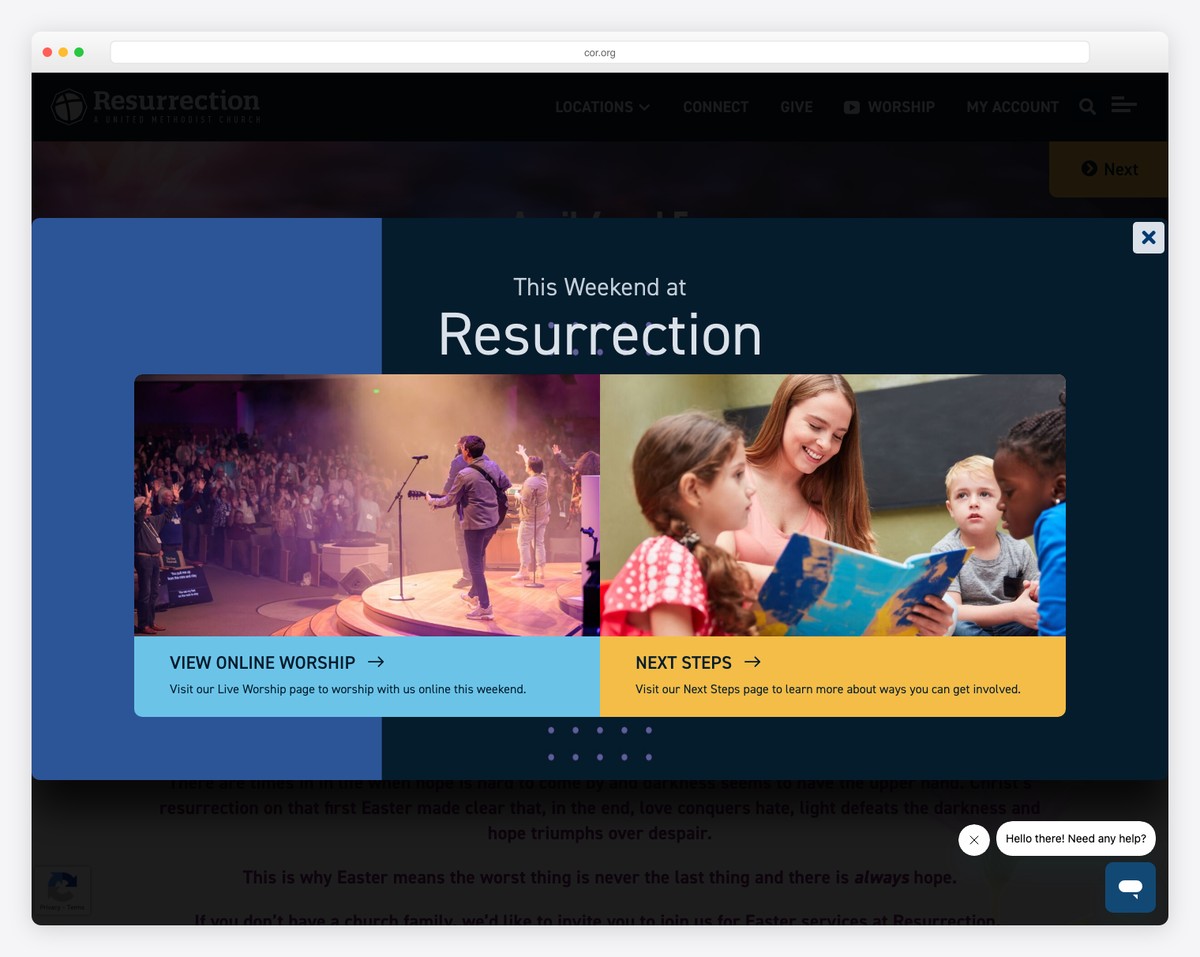
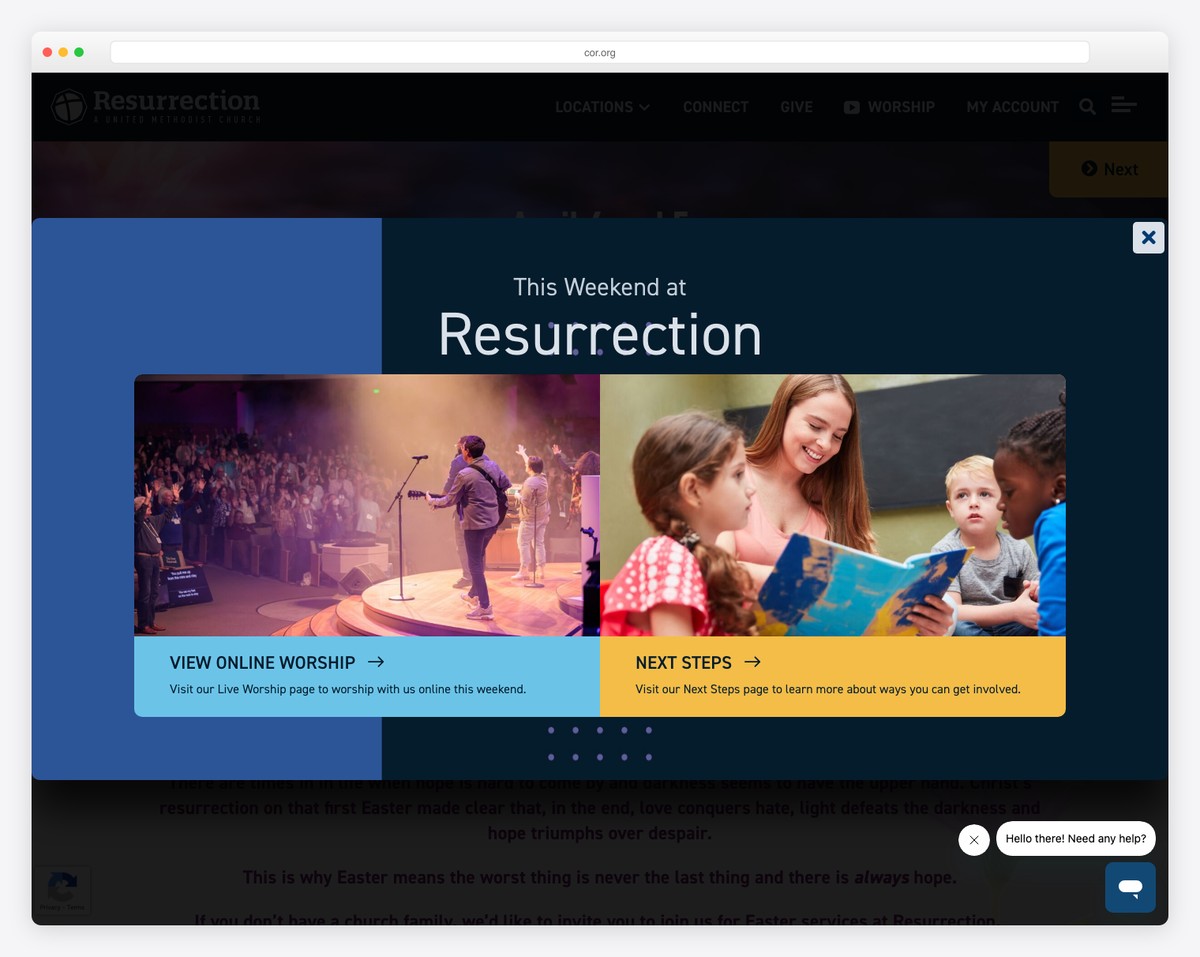
What’s great: One of the largest United Methodist churches in the country, and their website matches their scale. The design is modern and professional. The homepage immediately offers pathways for new visitors, sermon content, and upcoming events. Multi-campus information is handled cleanly. The “Justice and Mercy” section prominently features the church’s social justice work. The sermon library is extensive and well-organized. Pastor Adam Hamilton’s teaching content is featured without making the site feel personality-driven.
2. Hyde Park United Methodist Church (Tampa, FL)
URL: hydeparkumc.org
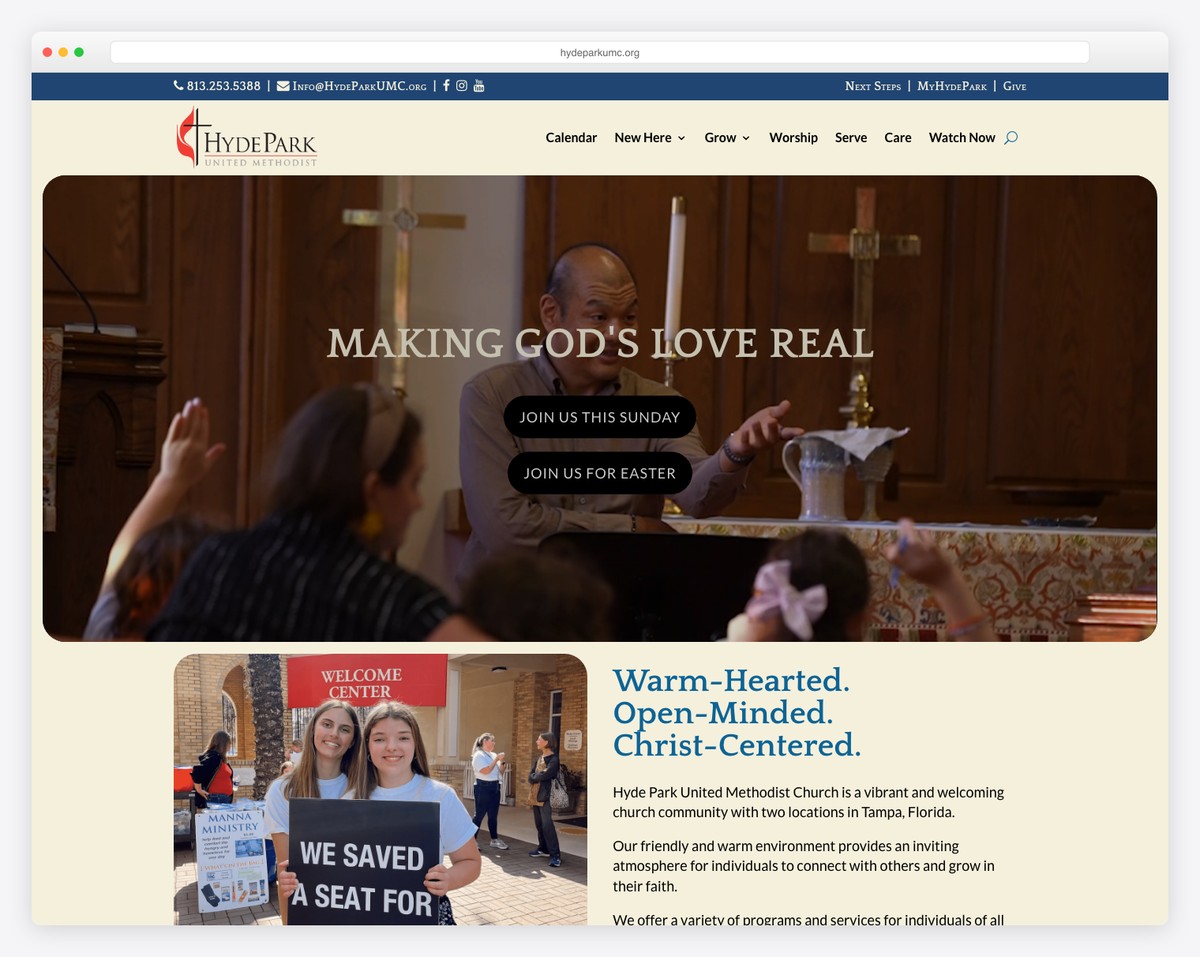
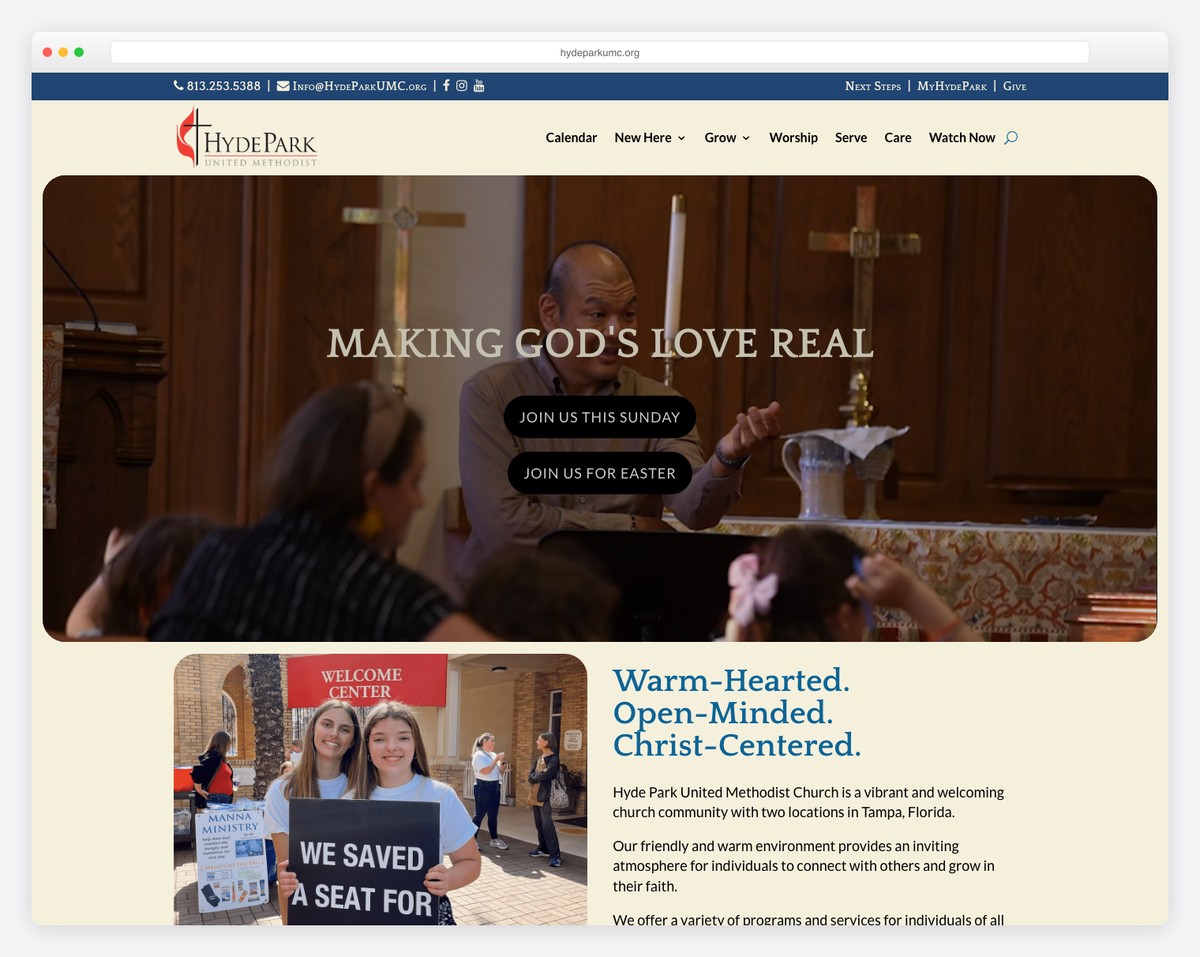
What’s great: Clean, elegant design that reflects the church’s historic character. Multiple worship styles (traditional, contemporary, modern) are clearly described with service times and what to expect at each. The community outreach section is thorough — food ministries, affordable housing work, and community partnerships are prominently featured. The children and youth pages give parents detailed information about programming.
3. Foundry United Methodist Church (Washington, DC)
URL: foundryumc.org
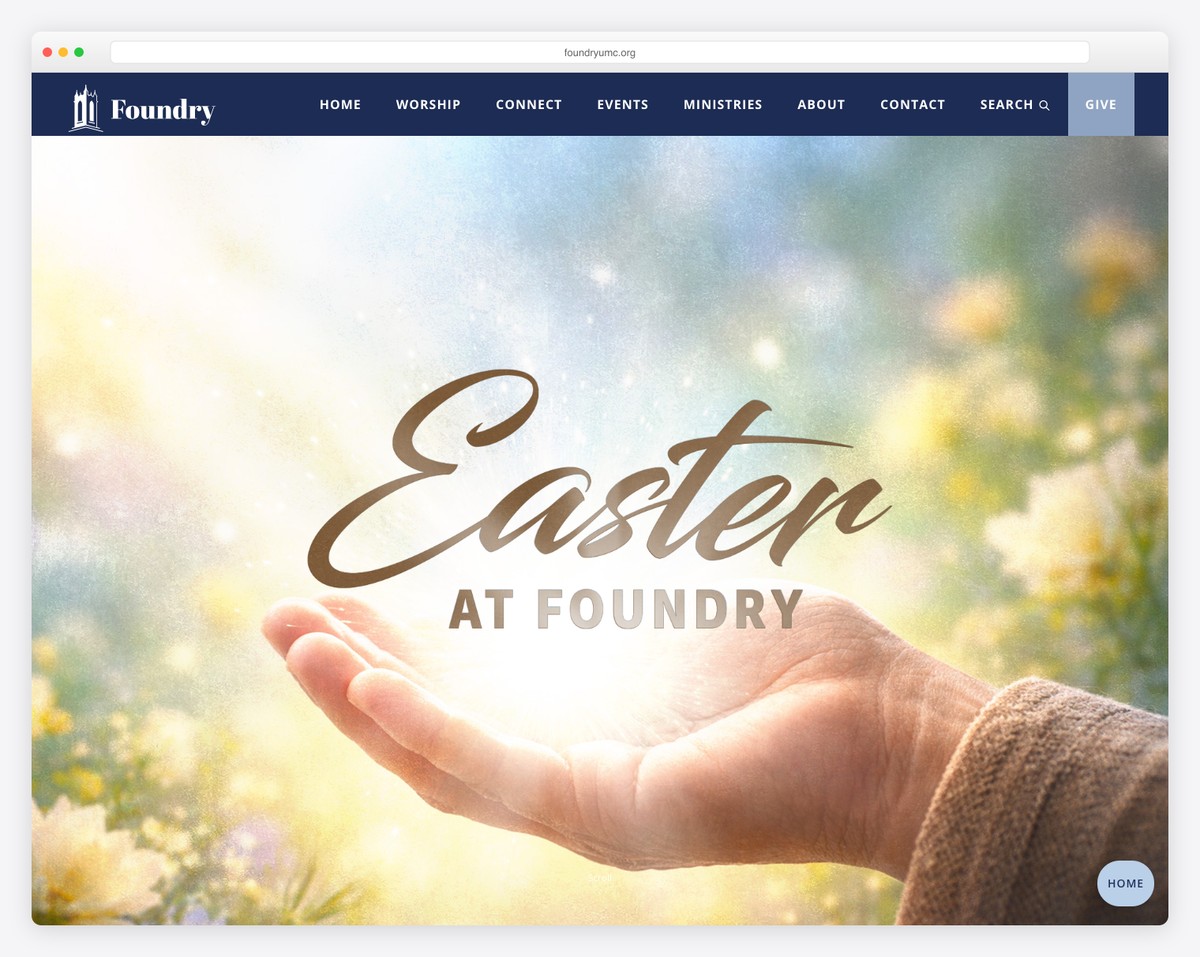
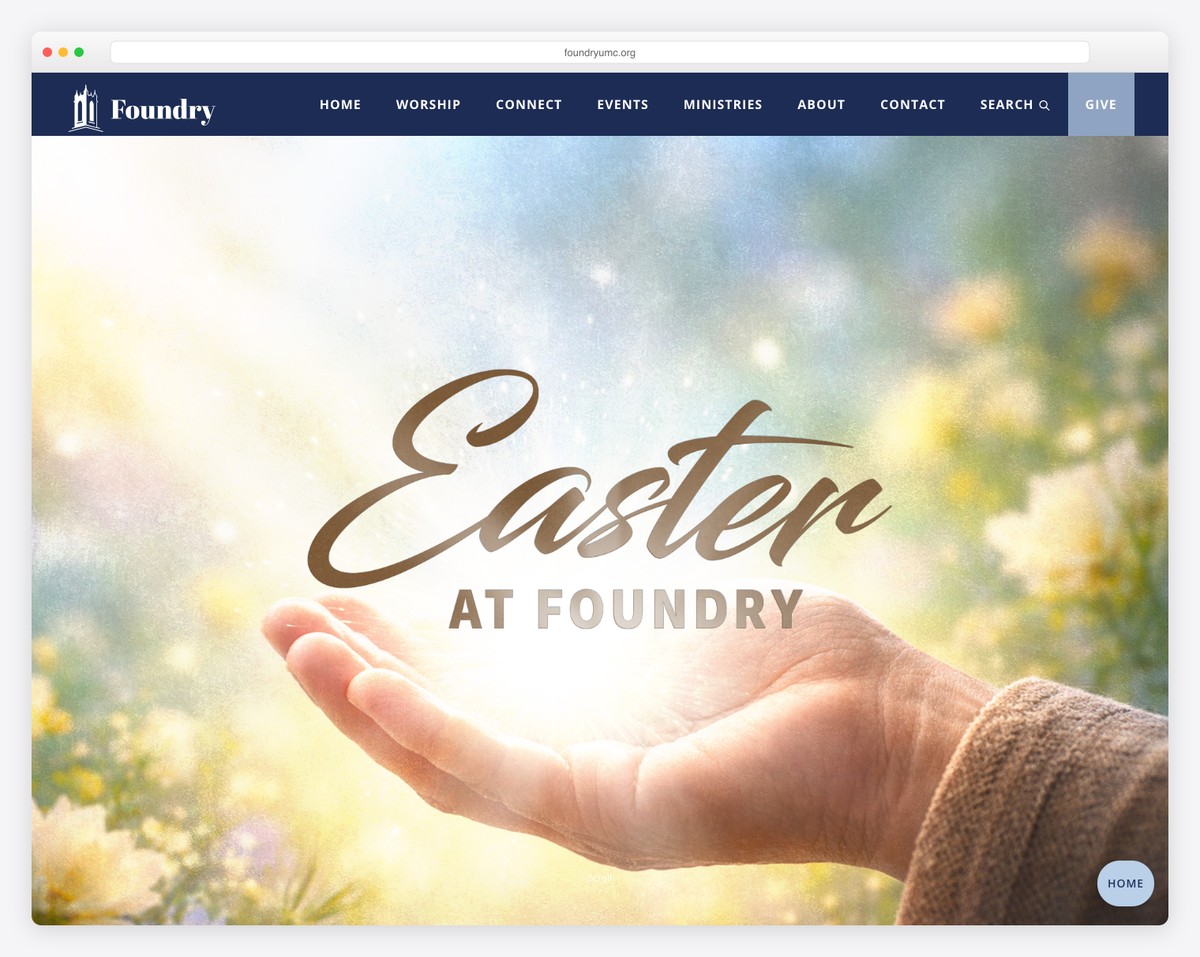
What’s great: A historic church with a website that balances tradition and modernity. The social justice focus is front and center — consistent with both the church’s location and Methodist heritage. The “Who We Are” section is warm and genuine, directly addressing visitors. The inclusive welcome is explicit and prominent. The design is clean without being sterile, and content is organized logically despite the volume of programs.
4. Ginghamsburg Church (Tipp City, OH)
URL: ginghamsburg.org
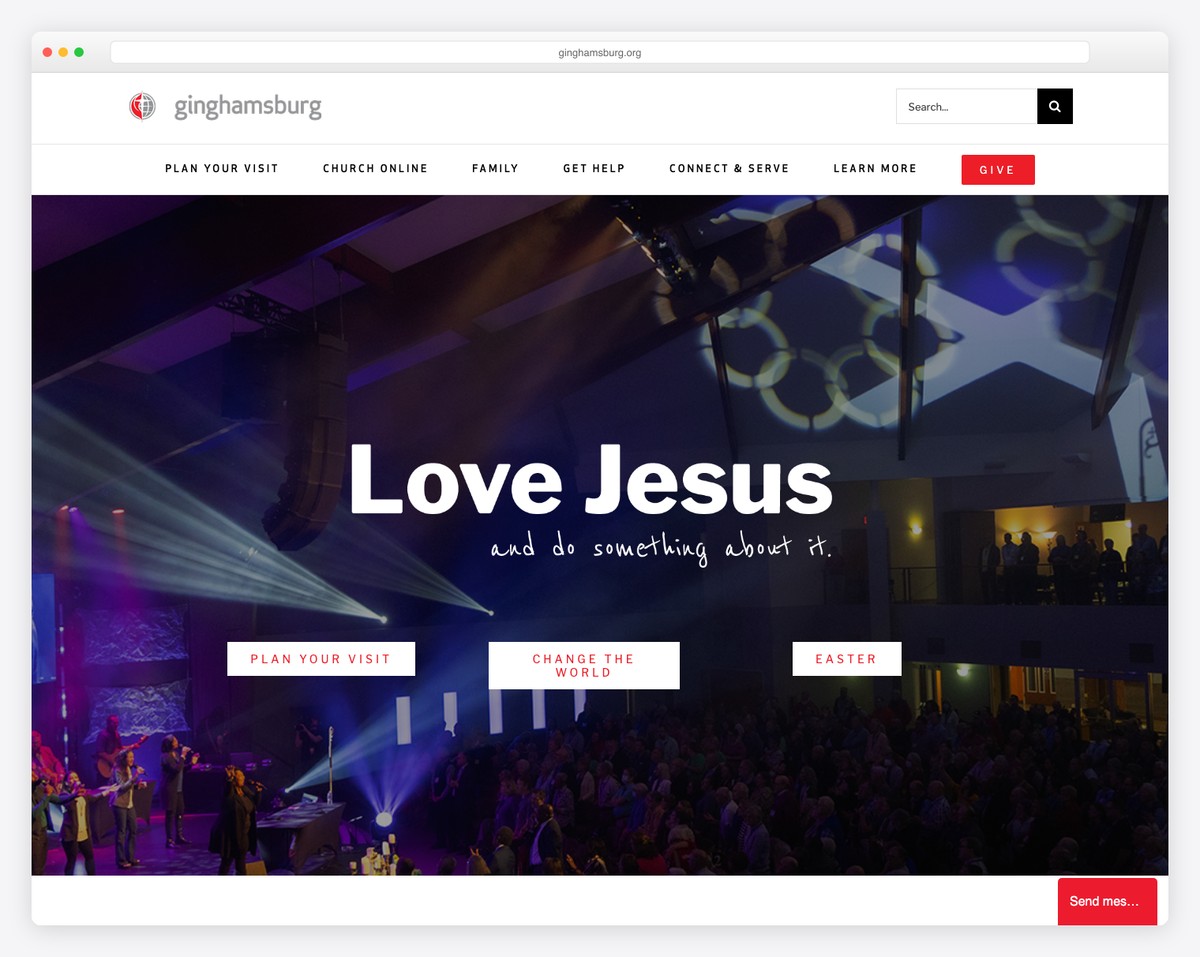
What’s great: Known for innovation in the United Methodist world, and their website reflects it. Contemporary design, strong video content, and a focus on mission and discipleship. The “New Here” section is comprehensive. The church’s signature mission projects (including their well-known Sudan initiative) are featured prominently. The design is more contemporary than most Methodist churches, showing that denominational identity doesn’t require dated design.
5. Floris United Methodist Church (Herndon, VA)
URL: florisumc.org
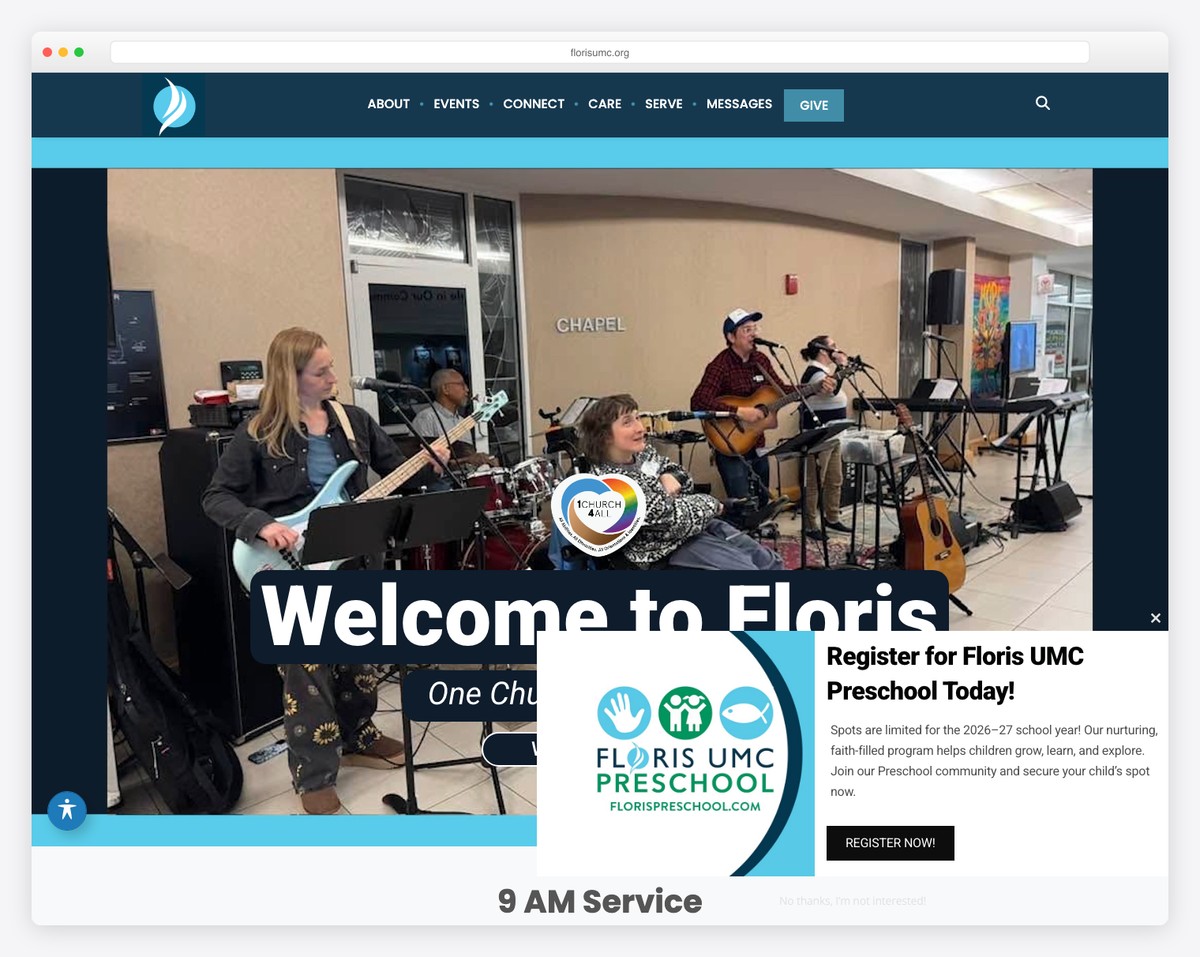
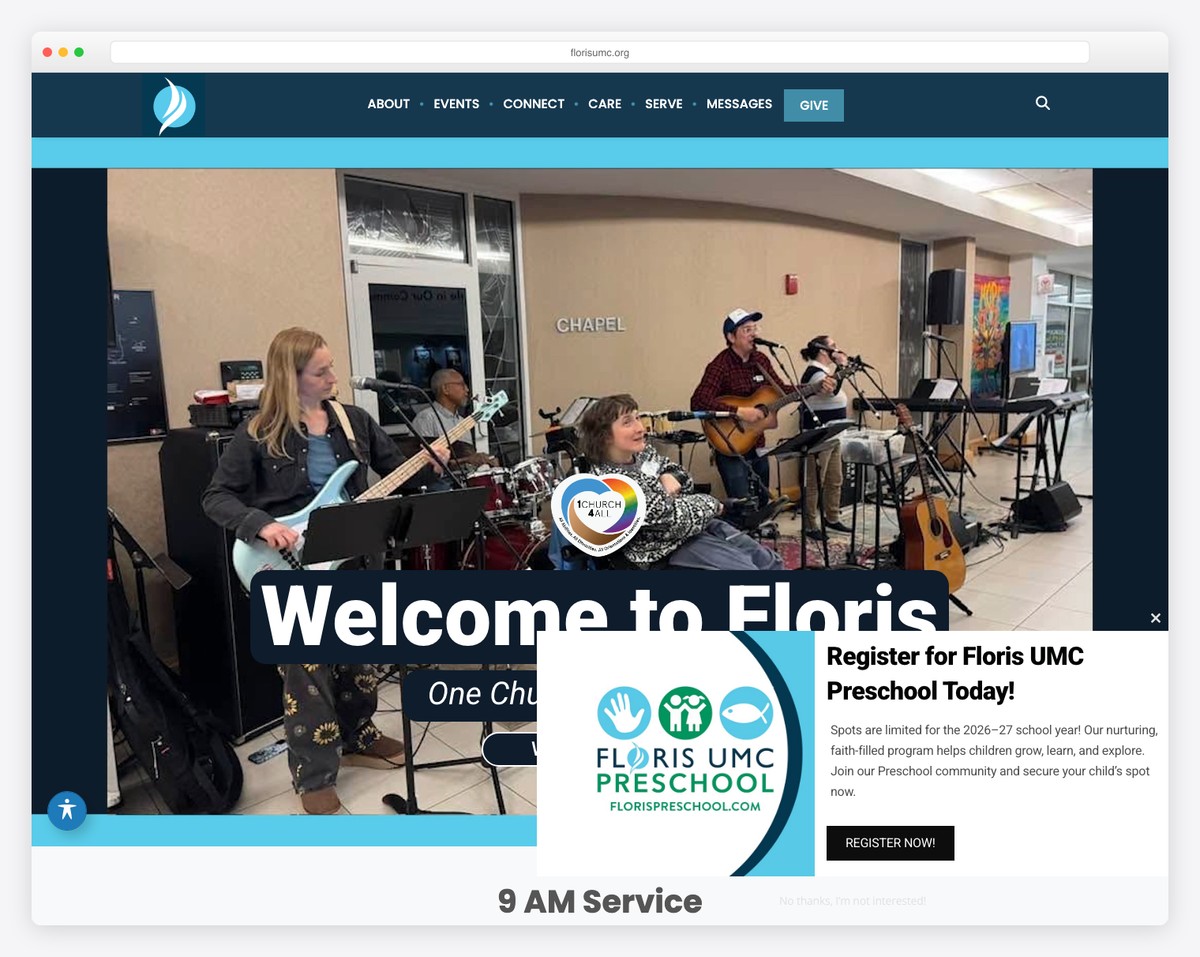
What’s great: Suburban church website that demonstrates excellent organization. The homepage highlights service times, current sermon series, and next steps for visitors. The small groups section includes a group finder tool. The children and student ministry pages are parent-friendly with details about curriculum, safety, and volunteer screening. The giving page is well-designed with clear explanation of how funds are used.
6. St. Luke’s United Methodist Church (Indianapolis, IN)
URL: stlukesumc.com
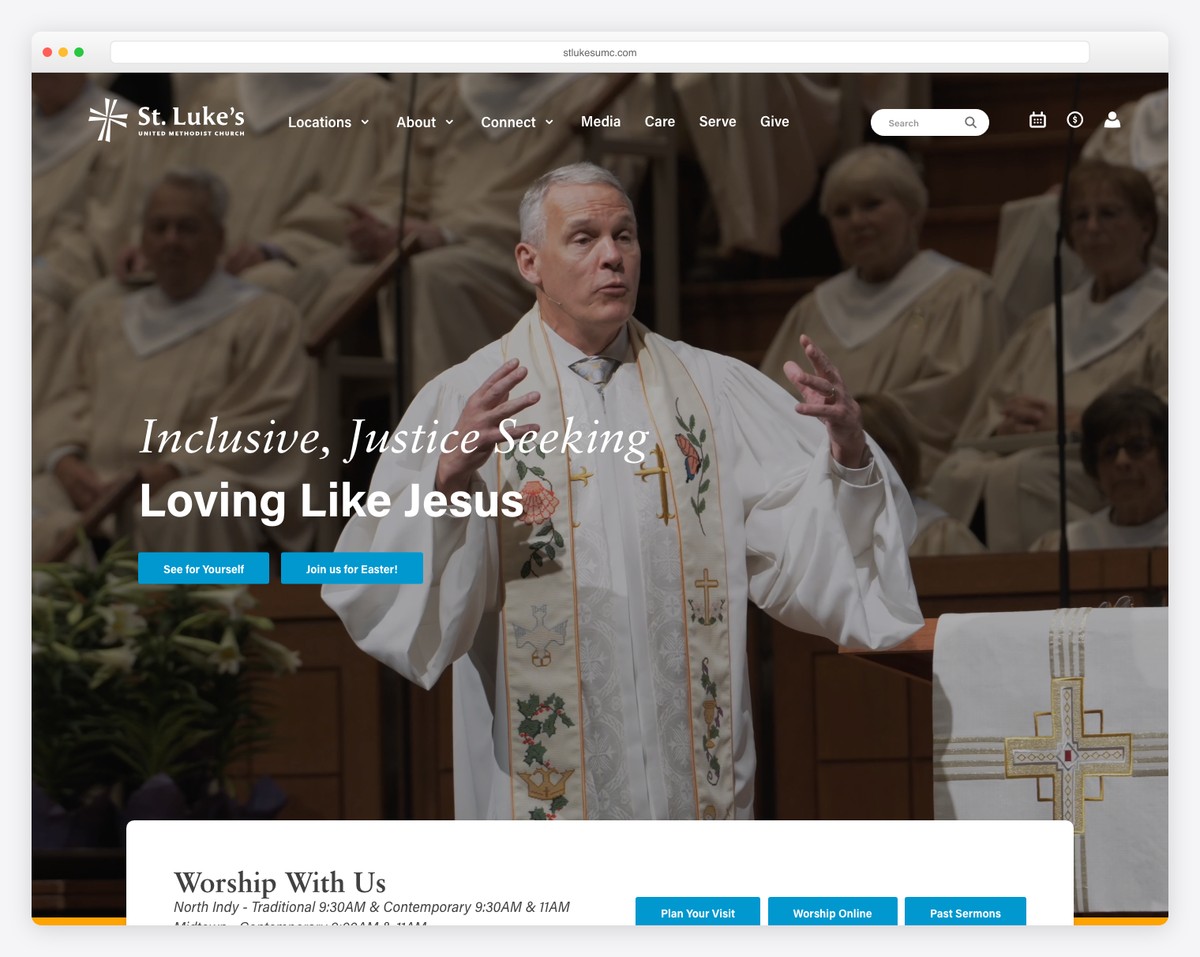
What’s great: Good example of a mid-to-large Methodist church handling comprehensive content. Multiple service times and styles are clearly presented. The care ministries section — pastoral care, Stephen Ministry, grief support — reflects the Methodist emphasis on personal care. The website feels warm and approachable. The community engagement section demonstrates the church’s commitment to local impact.
Design Tips for Methodist Church Websites
Describe Your Worship Styles Clearly
If you offer multiple service styles, create a brief description of each one: What music is used? Is there a choir? What’s the dress code? How long is the service? Is communion offered every week? These details help visitors choose the right service and reduce the anxiety of attending for the first time. See our homepage formula for placement tips.
Showcase Your Community Impact
Methodist churches often have extensive community ministries. Don’t bury these in a submenu. Feature them on your homepage or create a prominent “Our Impact” or “Serve” section. Include specific numbers when possible — meals served, families helped, volunteer hours contributed. This content resonates with visitors who want a church that makes a tangible difference.
Address Denominational Questions
The Methodist landscape has changed significantly in recent years. Visitors may have questions about your church’s denominational affiliation, especially regarding the Global Methodist Church split. Address this proactively on your About page. Be clear about which body your church belongs to and what that means practically. Transparency builds trust.
Highlight Education Opportunities
The Wesleyan tradition emphasizes lifelong learning. Organize your educational offerings in a way that invites participation: what’s available, who it’s for, when it meets, and what you’ll learn. Brief descriptions of each class or study — not just titles — help newcomers understand what they’re signing up for.
Use Inclusive Language
Your website copy should reflect the welcoming Methodist tradition. Write for people who might feel uncertain about church. Avoid insider terms (Charge Conference, Apportionment, SPRC) on public-facing pages — or explain them when you must use them. Make sure your photography represents the diversity of your congregation and community.
Platform Recommendations for Methodist Churches
Many Methodist churches use WordPress because of its flexibility with extensive content. For smaller Methodist churches that want simplicity, Squarespace offers beautiful design with minimal maintenance. Tithe.ly works well for churches wanting built-in giving and church management features. Compare all options in our church website builders guide.
Frequently Asked Questions
Should we display the cross-and-flame logo on our website?
If your church is United Methodist, yes — include it, typically in the header or footer. The cross-and-flame is a recognized symbol that communicates denominational identity. If your church has transitioned to the Global Methodist Church or another body, use the appropriate branding. The logo is a trust signal for visitors looking specifically for a Methodist church.
How do we handle the UMC/GMC transition on our website?
Address it directly but briefly. A paragraph on your About page explaining your church’s current denominational home is appropriate. Don’t make it the focus of your website — visitors care more about your worship, community, and ministries than denominational politics. If you’re mid-transition, a brief FAQ page can address common questions from concerned members.
Should we include information about Methodist theology on the website?
Include a beliefs page that covers core Christian beliefs and Wesleyan distinctives (grace theology, personal and social holiness, the Wesleyan quadrilateral) in accessible language. Don’t assume visitors know Methodist theology. For many visitors, your beliefs page is their introduction to what Methodism is. Write it to inform and invite, not to lecture.
What about including the church’s history?
Many Methodist churches have rich histories spanning decades or even centuries. Include a history section — but keep it concise on the main page with a “Learn More” link to a longer timeline for those interested. Lead with what your church is today, not what it was in 1952. History builds credibility; but your current mission and community are what visitors come for.
How should smaller Methodist churches approach their website?
A small church doesn’t need a complex website. Focus on the essentials: service times, location, a welcoming message, pastor information, and contact details. Add a beliefs page, a brief about page, and photos of your community. Platforms like Squarespace or Tithe.ly‘s free tier can produce a professional-looking site without overwhelming a small church’s volunteer capacity.
Leave a Reply