Church Website Examples
The Black church is one of the most influential institutions in American life — a center of worship, music, community, and the long struggle for justice. Its websites carry a distinctive weight: they have to honor a deep heritage (some of these congregations date to the early 1800s), showcase a rich gospel-music and preaching tradition, and serve multigenerational communities — all on a design that feels current, not dated. The best ones do it beautifully, and the fastest way to design one is to study churches that already have.
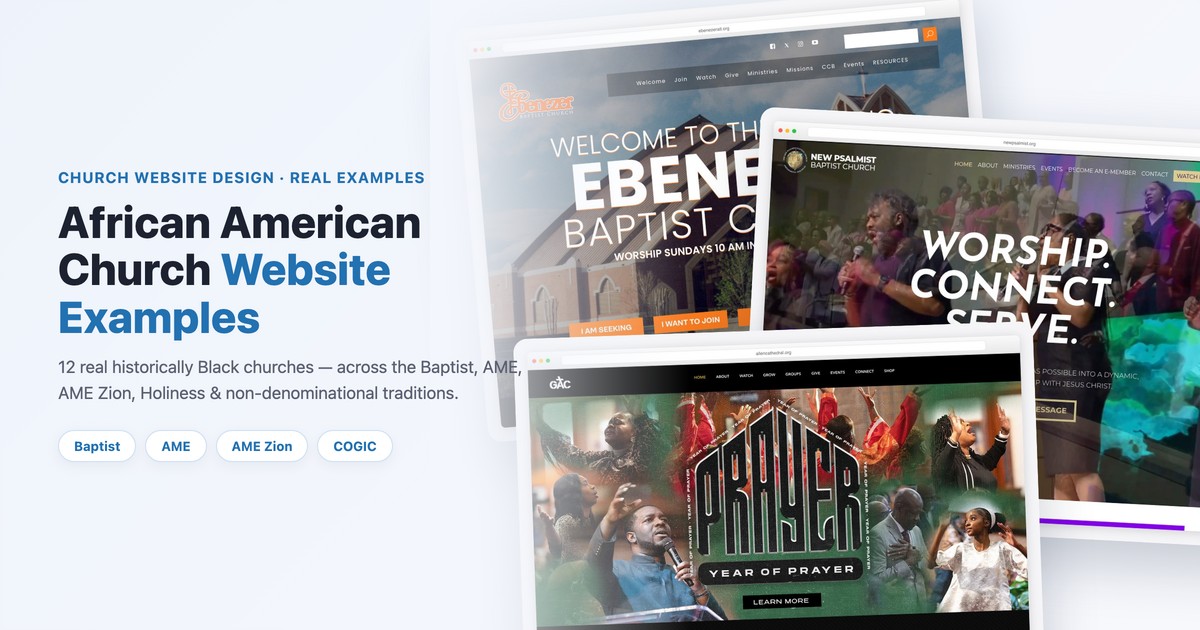
Below are 12 real, current African American and historically Black church websites — across the Baptist, AME, AME Zion, Holiness/Pentecostal, and independent traditions — with what each does well and the platform it’s built on. We don’t sell a website builder, so this is a neutral look at real congregations, not a product pitch. First, a quick orientation to the traditions and a checklist of what the strongest sites share.
“The Black church” spans several historic denominations, and many congregations wear their tradition with pride. Here’s a neutral, one-line orientation to the main ones represented below.
| Tradition | In a sentence |
|---|---|
| National Baptist / Progressive National Baptist | The largest stream of the Black church; the PNBC (1961) carries a strong civil-rights and social-justice emphasis (Dr. King’s affiliation). |
| AME (African Methodist Episcopal) | The first independent Black denomination in the US, founded in 1816 under Richard Allen; deeply tied to abolition and education. |
| AME Zion | A parallel independent Black Methodist body rooted in 1796 NYC — the abolitionist “Freedom Church” of Harriet Tubman, Frederick Douglass, and Sojourner Truth. |
| CME (Christian Methodist Episcopal) | Organized in 1870 in Jackson, TN by formerly enslaved Methodists; Southern roots with international missions. |
| COGIC (Church of God in Christ) | The largest historically Black Pentecostal/Holiness denomination, known for expressive, Spirit-filled worship. |
| Independent / non-denominational | Contemporary Black megachurches (Potter’s House, New Birth) emphasizing broadcast reach and large-scale community programming. |
Across traditions, the strongest sites share a recognizable playbook: they lead with worship and gospel music, treat the livestream and sermon archive as first-class features, surface their community and justice ministries, and tell their heritage with pride — all on a clean, contemporary, mobile-first design. Here’s the full checklist.
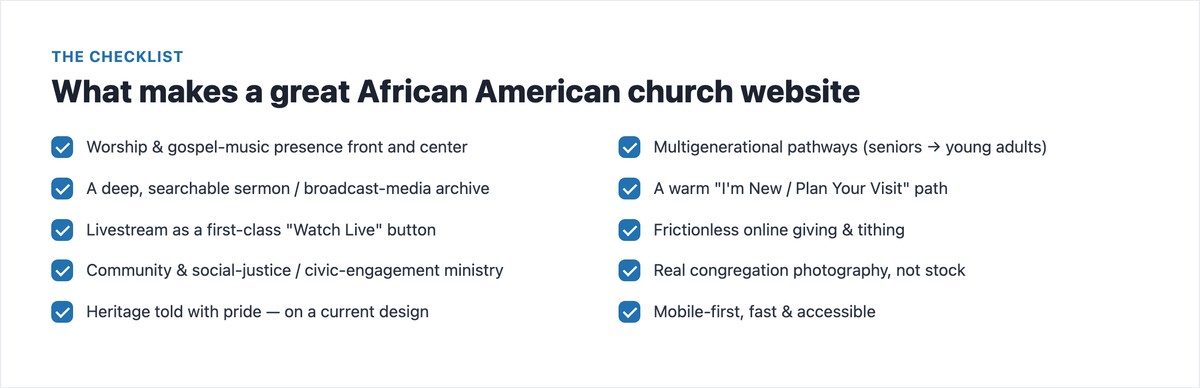
Two things especially separate the best from the rest. First, media depth: many historic Black churches have decades-long preaching legacies and broadcast ministries, so a robust sermon archive and a prominent “Watch Live” — see our live streaming guide and sermon archive guide — signal both authority and welcome. Second, community ministry: the Black church’s role in food, health, housing, education, and civic engagement is core identity, and the best sites give it real estate rather than burying it.
All were live when we last checked, ordered to move across traditions and styles — historic landmarks alongside contemporary megachurches. For each, note what it does well.
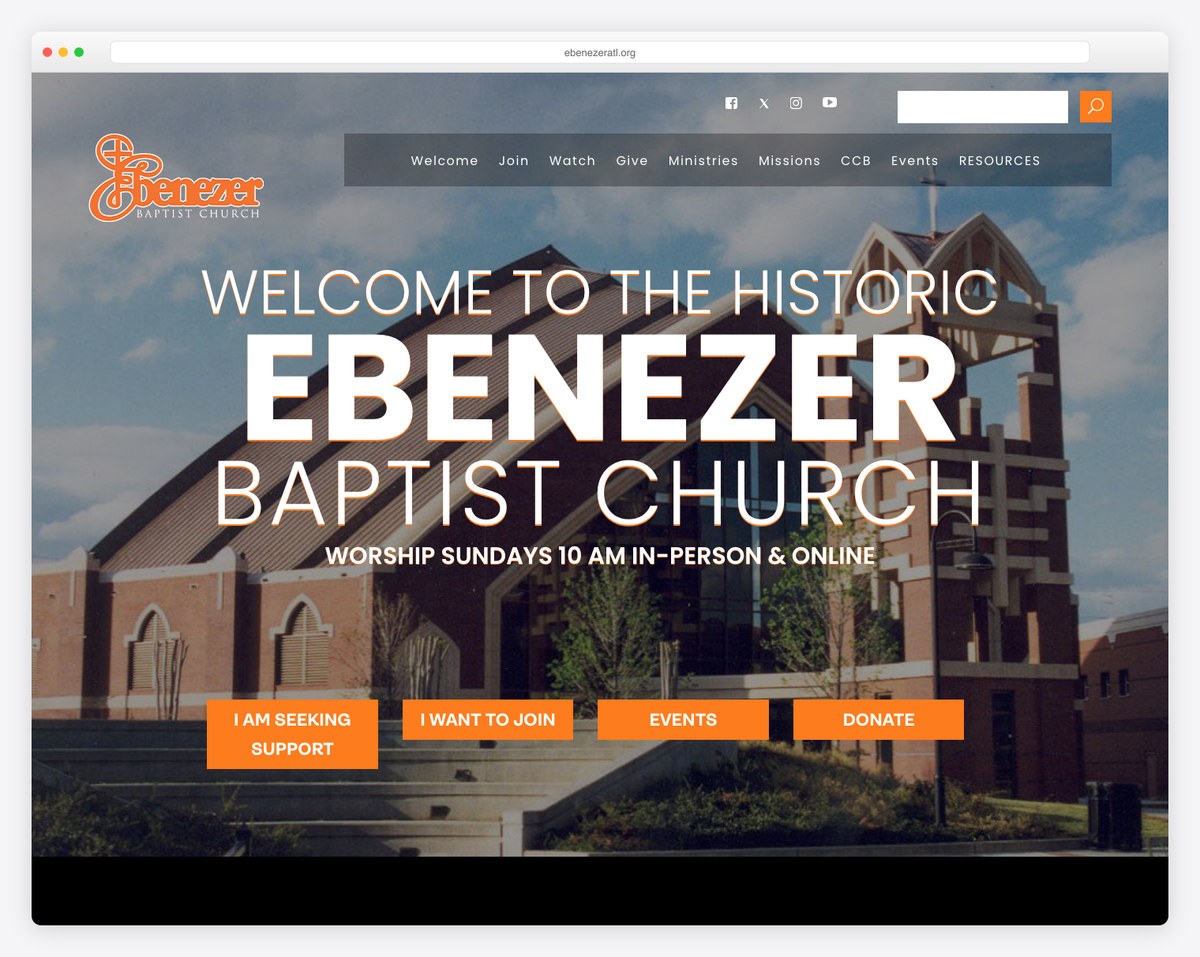
Ebenezer Baptist — the spiritual home of Dr. Martin Luther King Jr. and now Senator Raphael Warnock — leads with “Welcome to the Historic Ebenezer Baptist Church” and carries its civil-rights legacy with dignity, never letting heritage tip into datedness. Clear worship times, livestream, and justice-ministry prominence make it the model for a historic Black Baptist church online.
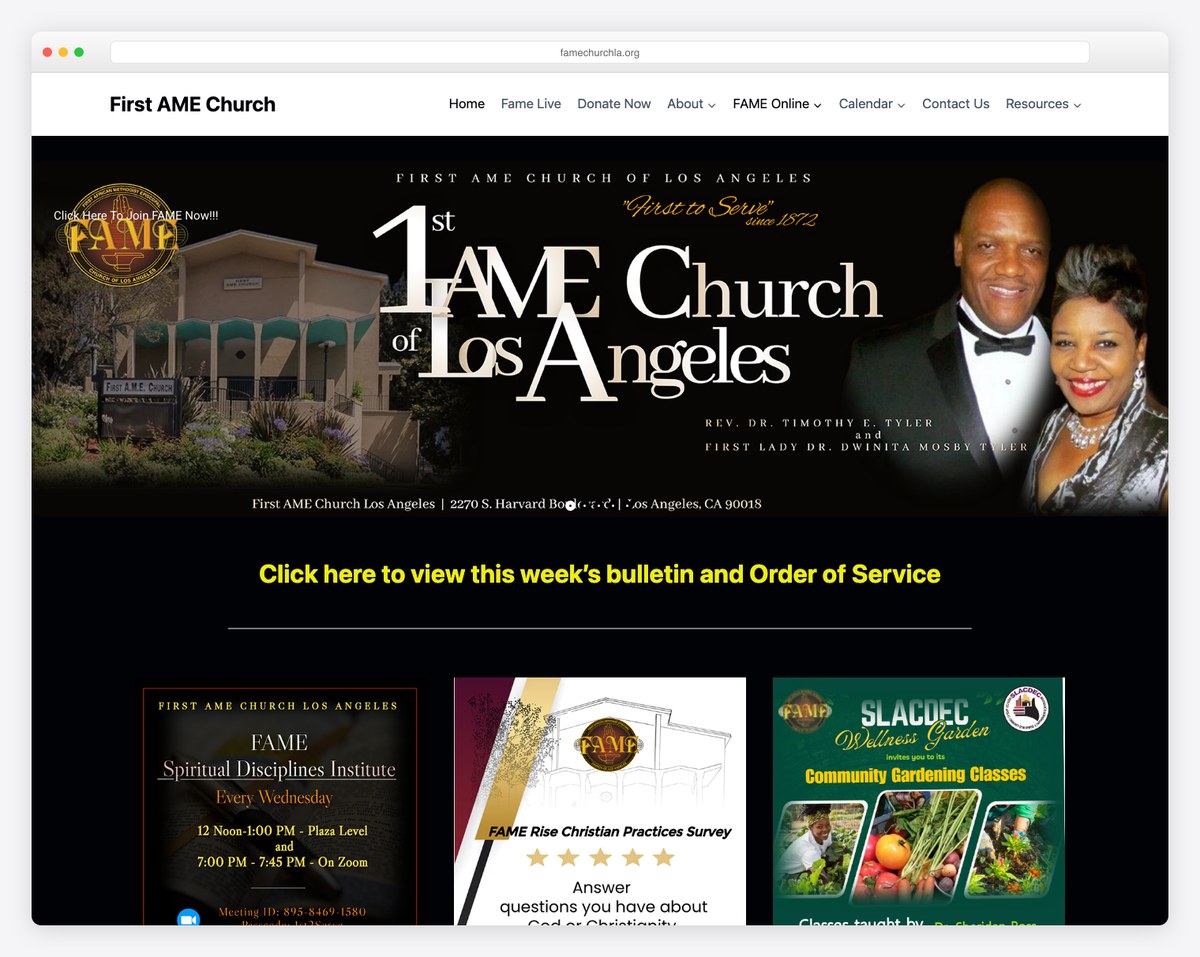
First AME — the oldest Black church in Los Angeles — builds its identity around a “First to Serve” community-service ethic, with the livestream and calendar kept front and center. A strong example of a historic AME congregation foregrounding its civic and service role.
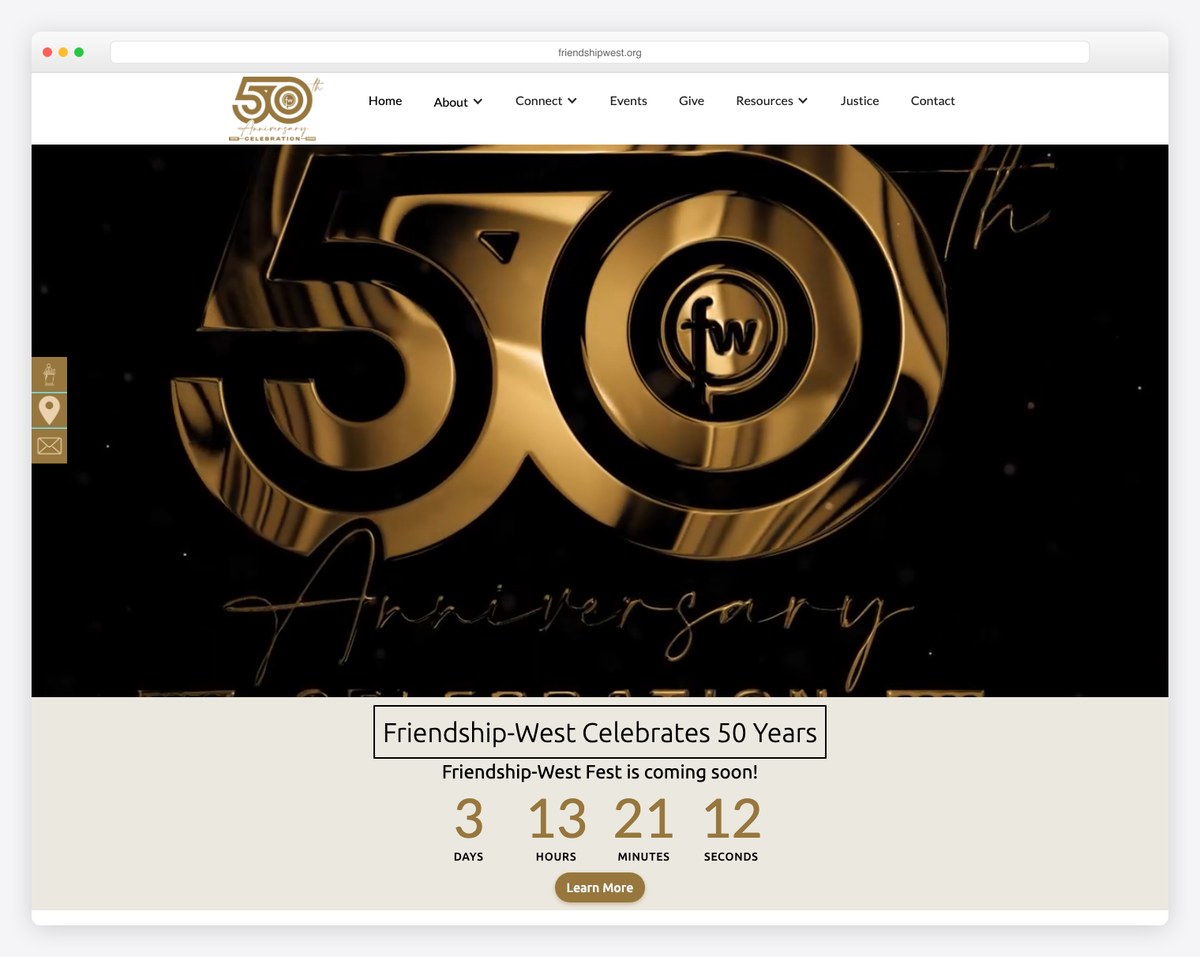
Friendship-West (Dr. Frederick Haynes III) pairs a bold, contemporary Webflow design with an explicit liberation and social-justice voice. It’s proof that a justice-forward Black Baptist church can have a site as modern and confident as its preaching.
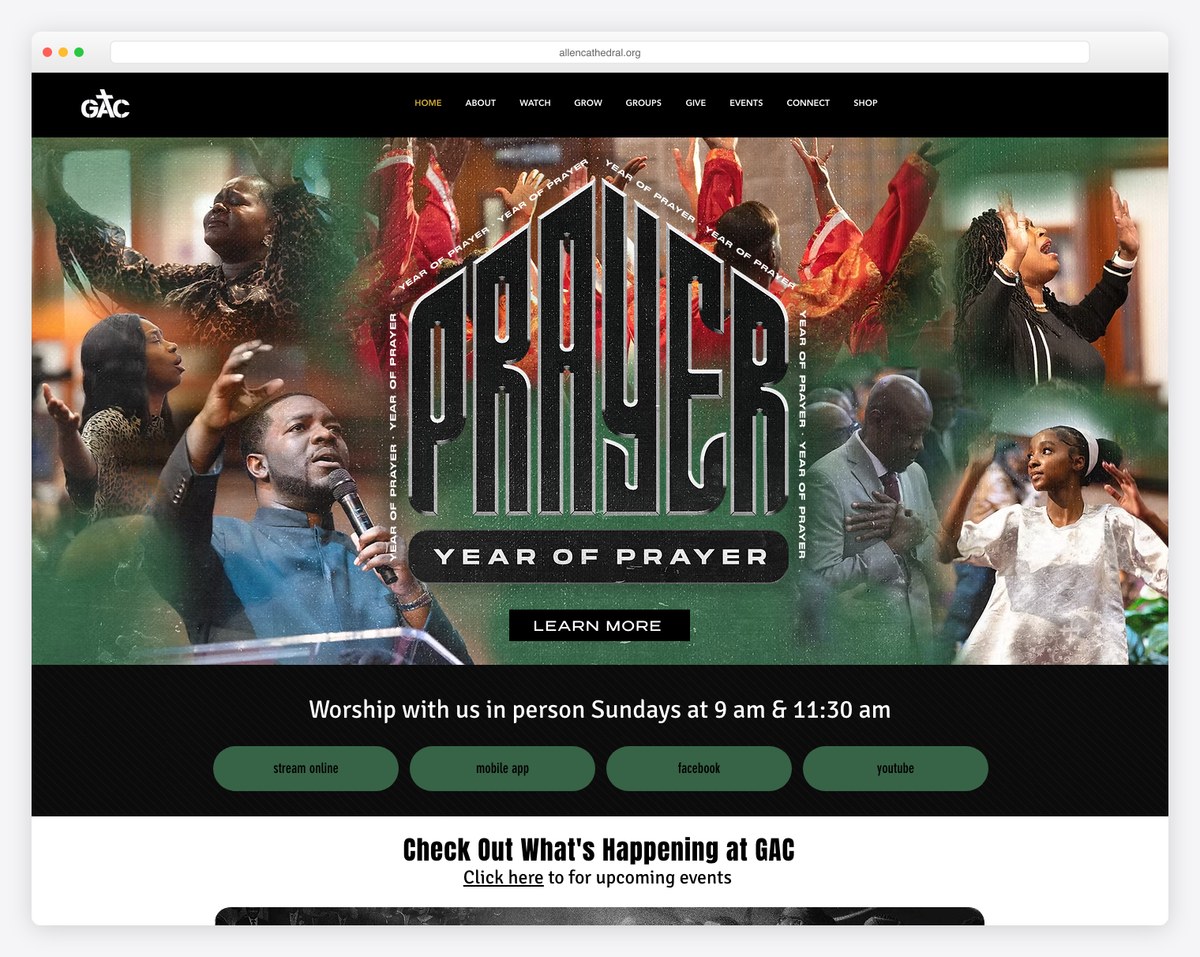
Greater Allen Cathedral carries cathedral-scale presence with a vibrant, image-rich design — a “Year of Prayer” theme, clear ministries, and strong media. A great reference for a large AME church that wants energy and organization in equal measure.
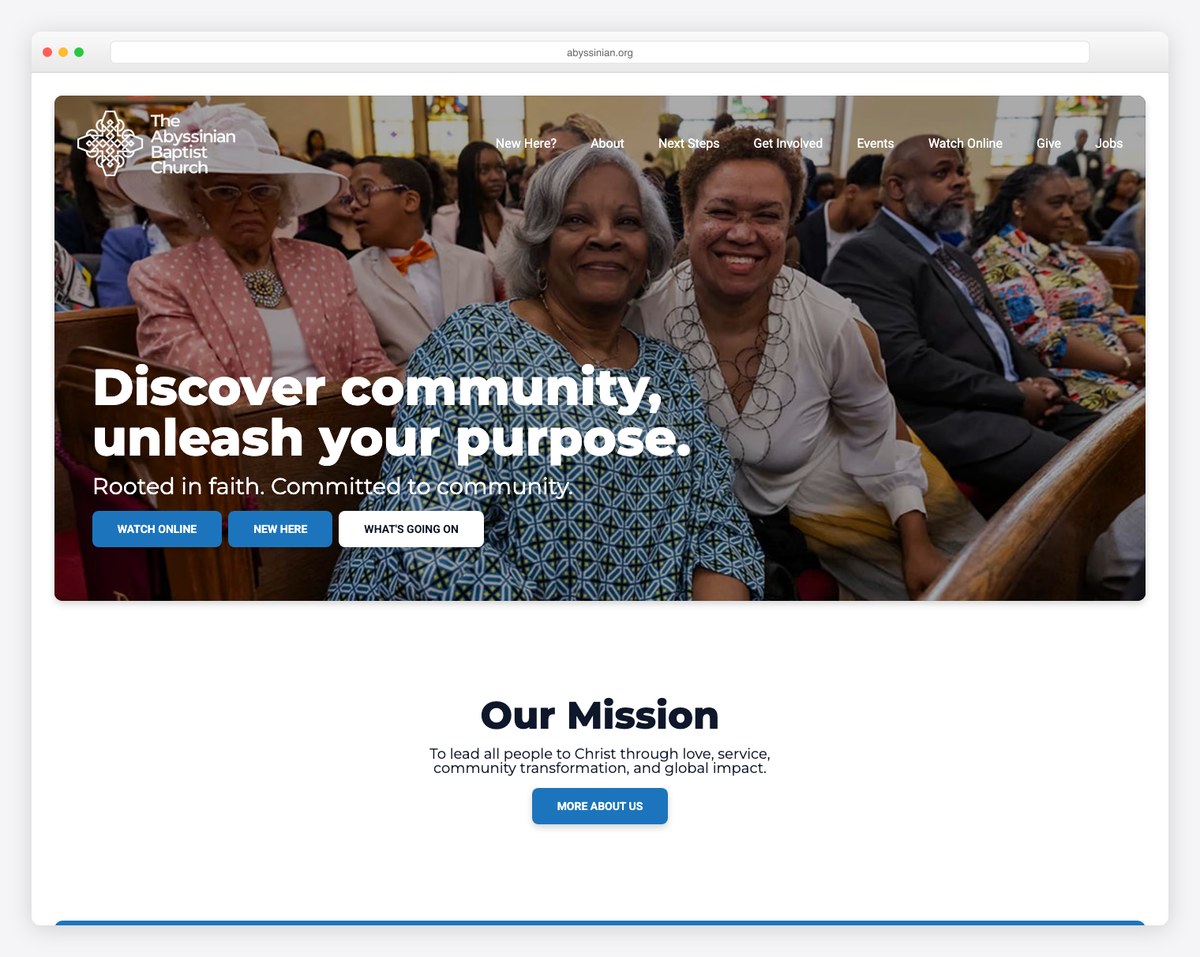
Abyssinian Baptist — founded in 1808, one of the most storied Black churches in America — frames itself plainly as a historic African-American Baptist church and invites you to “discover community, unleash your purpose.” It balances deep history and visitor information beautifully, a model for a landmark congregation that still draws newcomers and tourists.
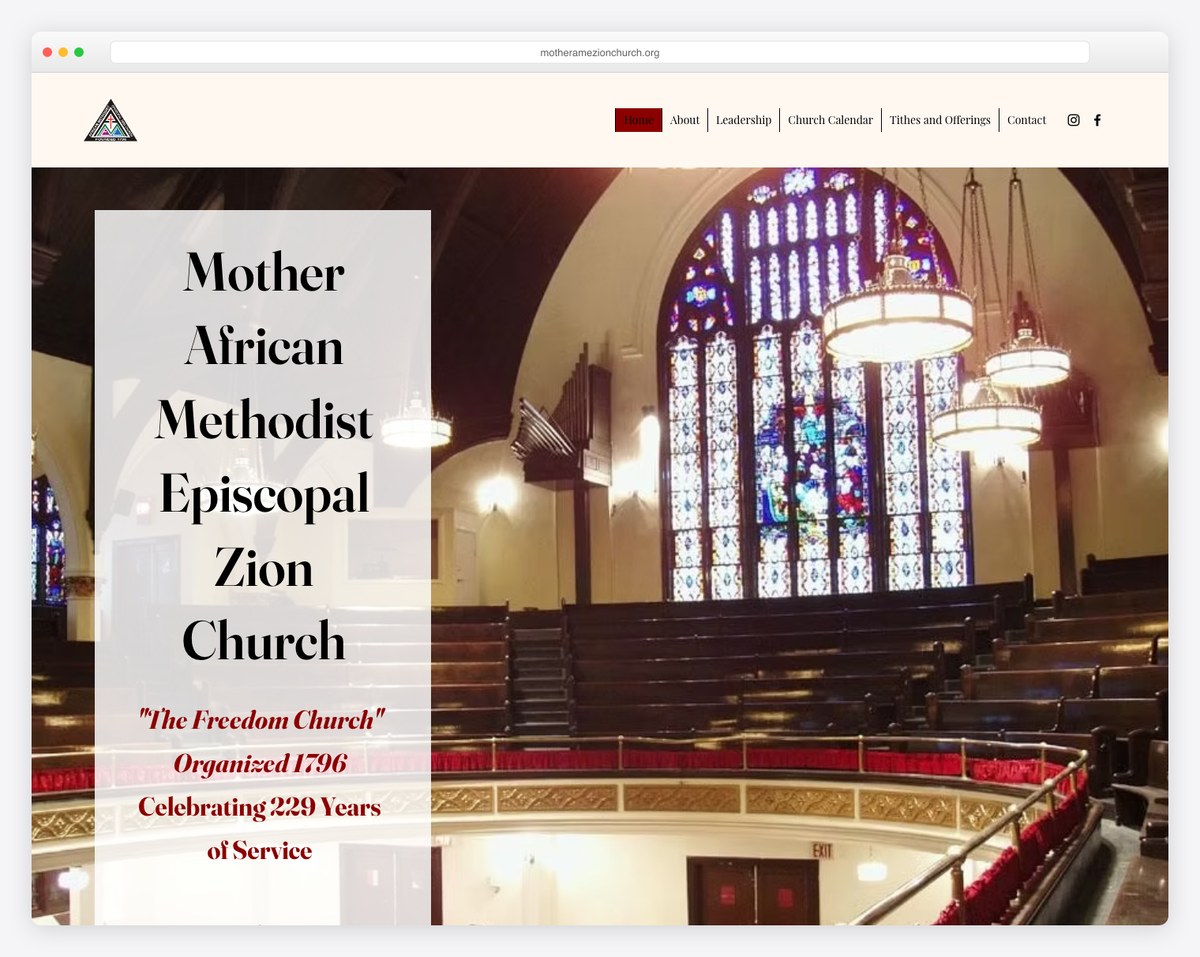
Mother AME Zion — the oldest Black church in New York State (1796) and the abolitionist “Freedom Church” — tells its extraordinary history with pride on a clean, current site. The example to study for a heritage congregation whose story is itself a draw.
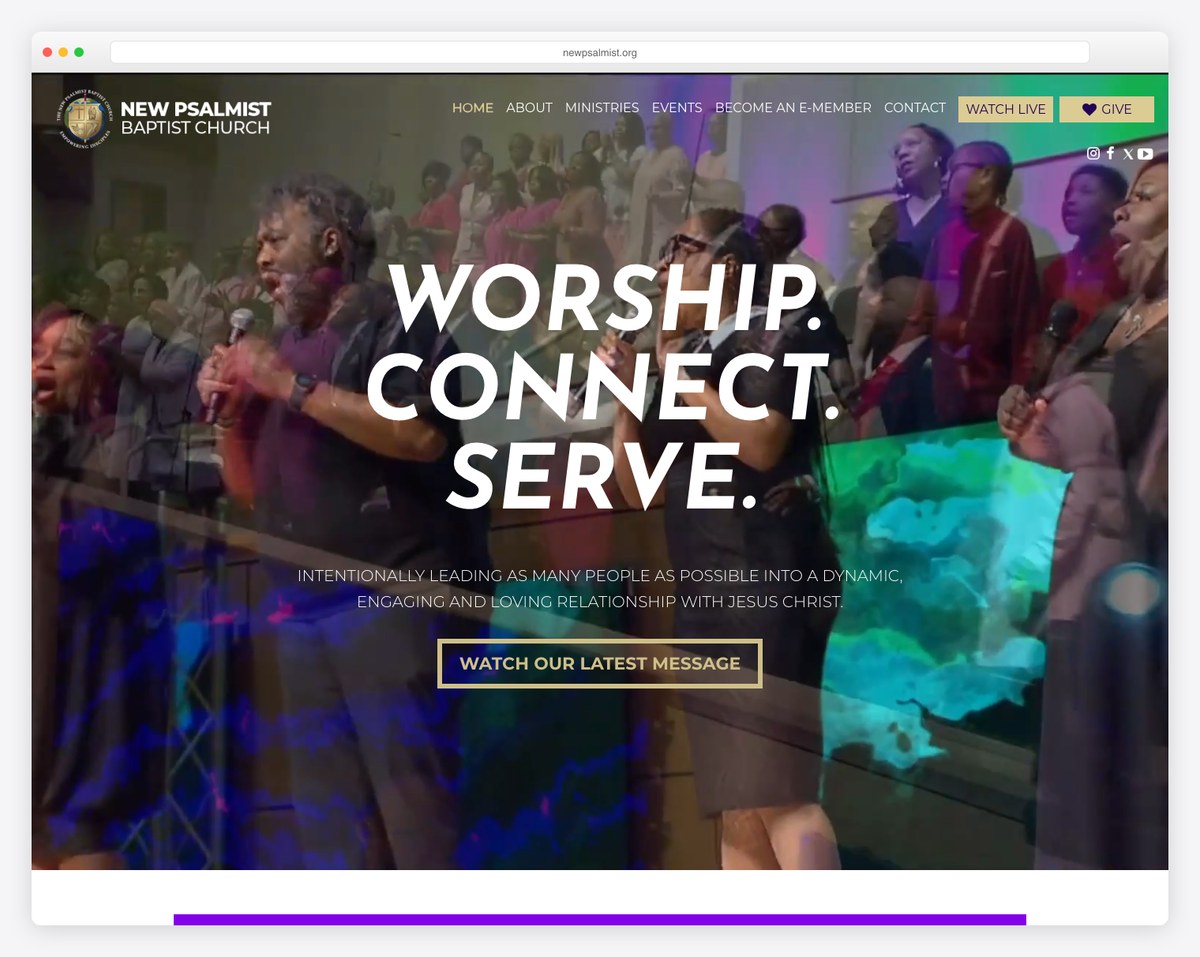
New Psalmist distills the whole identity into three words — “Worship. Connect. Serve.” — over rich worship photography, with a strong media and broadcast presence. A clean example of a megachurch leading with its gospel-music and worship culture.
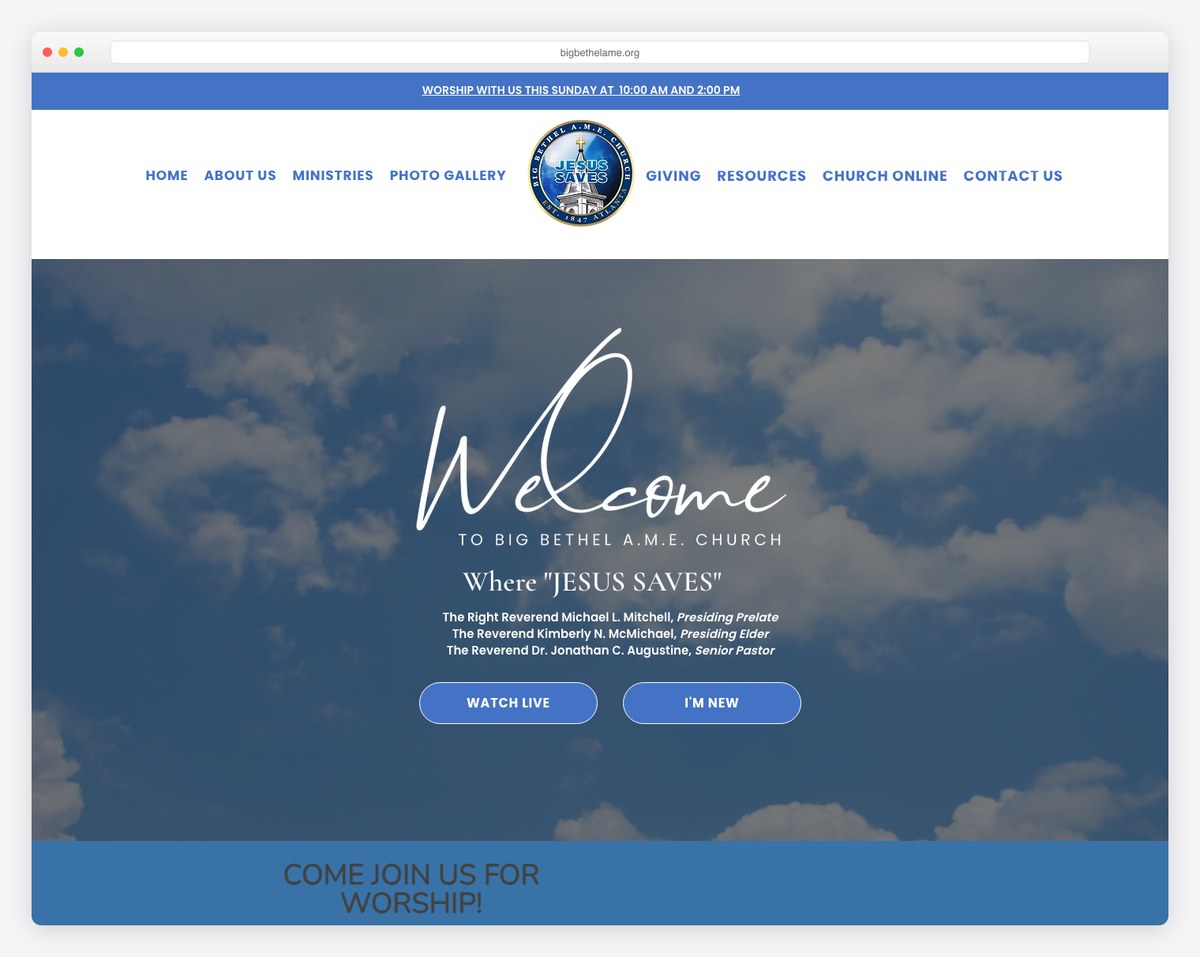
Big Bethel AME — a landmark on Atlanta’s historic “Sweet Auburn” Avenue — keeps a light, welcoming, current Wix design that lets its heritage shine without weighing the site down. Proof that a historic church can feel airy and modern.
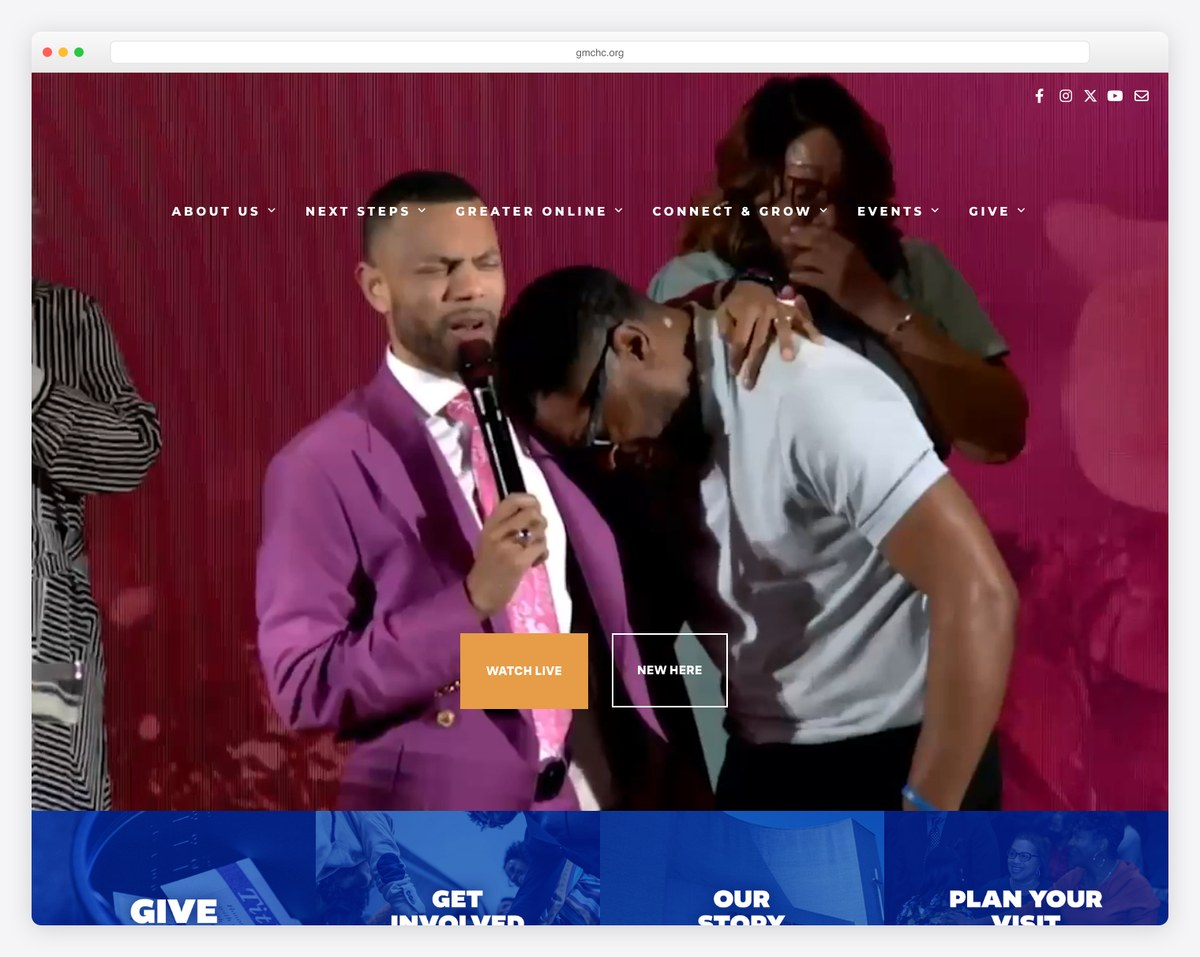
Greater Mount Calvary represents the Black Holiness/Pentecostal tradition with an app-integrated Subsplash site that puts livestream, giving, and a “Plan Your Visit” path right up front. A strong model for a worship-and-media-forward Holiness church.
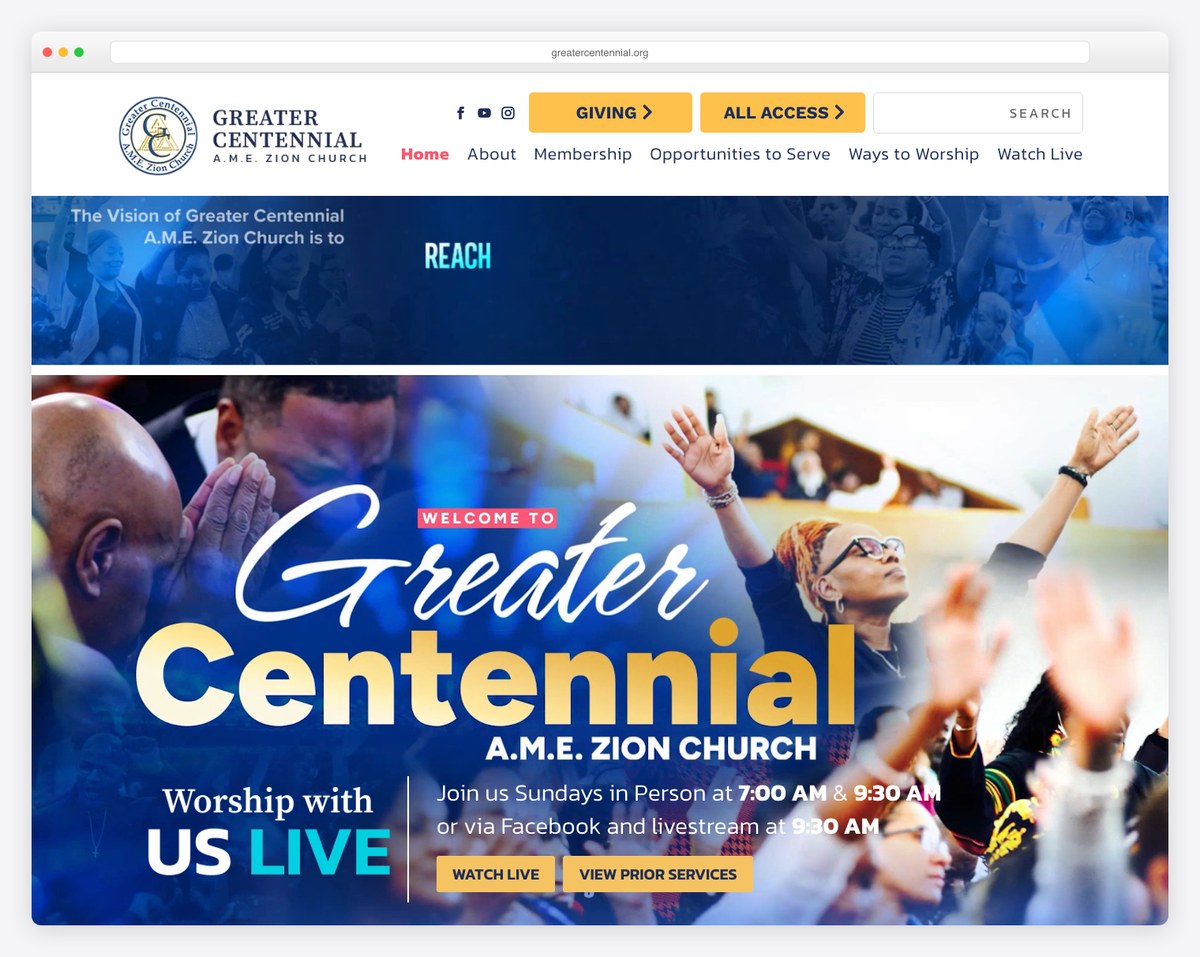
Greater Centennial leans into online church with a prominent “US LIVE” livestream hub and a contemporary feel — a good example of a Methodist-tradition Black church fully embracing digital worship.
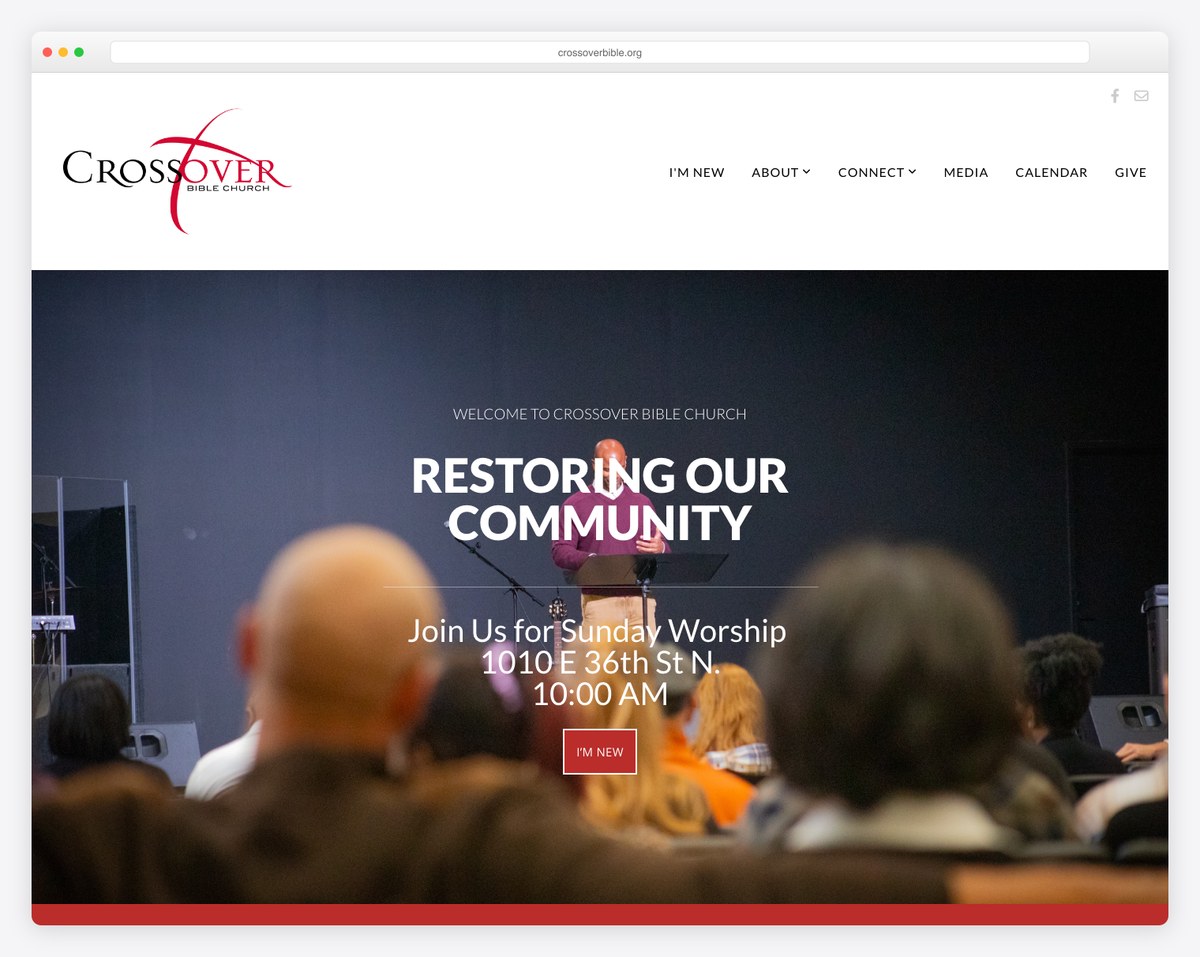
Crossover Bible Church centers a clear mission — “Restoring Our Community” — with strong, theology-forward teaching media. A great example of a Black non-denominational church pairing serious Bible content with a clean, modern presentation.
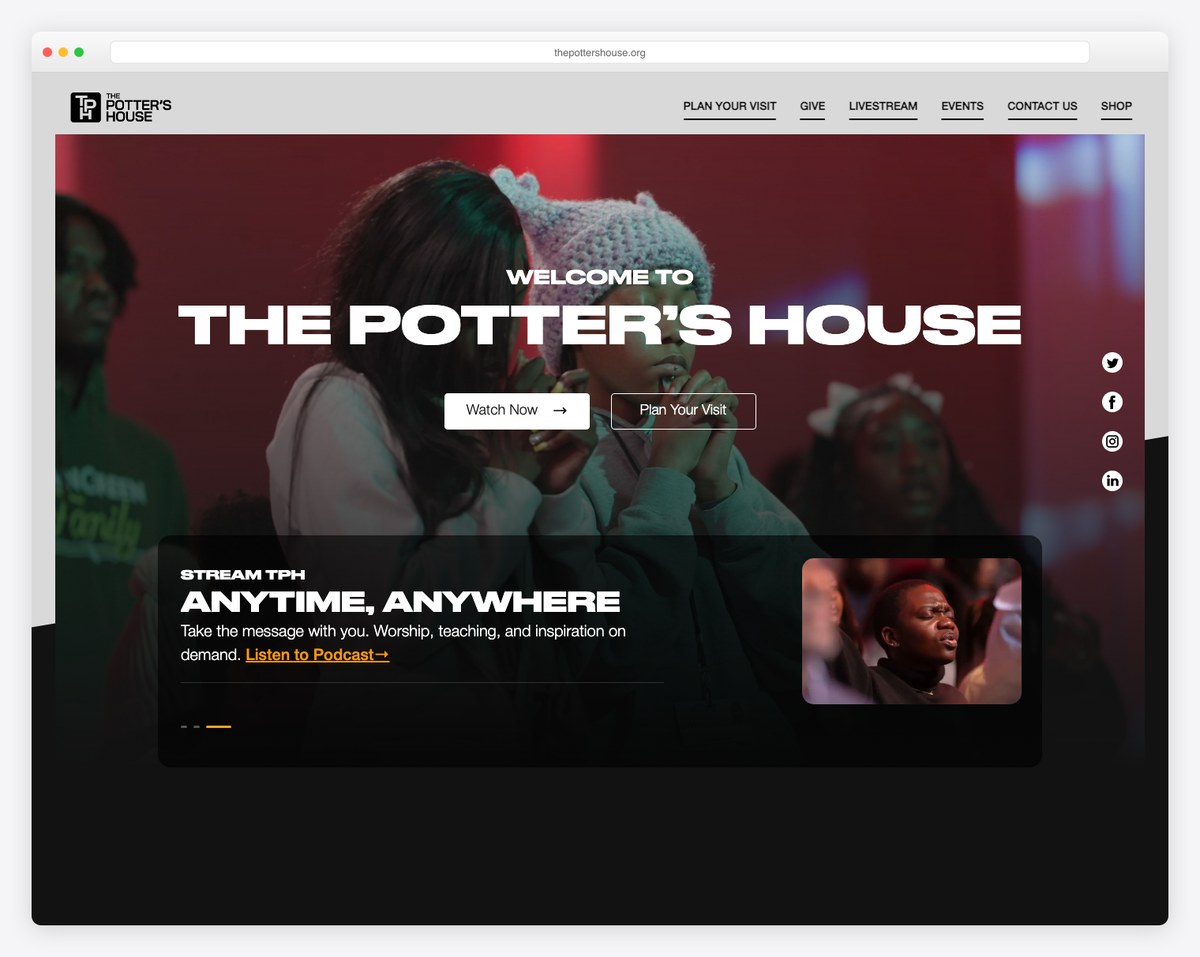
The Potter’s House (Bishop T.D. Jakes) is the broadcast-ministry exemplar — a media-rich site built to deliver worship and teaching “anytime, anywhere” at enormous scale. The reference for a Black megachurch whose reach is global and whose media is the front door.
The throughline: lead with worship and gospel music, make the livestream and sermon archive easy to find, surface your community ministry, and let your heritage shine on a current, mobile-first design. These churches achieve it on WordPress, Wix, Squarespace, Webflow, Subsplash, and more — so the fundamentals matter more than the tool. To choose yours, see our best church website builders guide. For more inspiration, browse our 50 best church website designs or the examples for Pentecostal, Baptist, and non-denominational churches.
If you are building rather than browsing, all ten of our free church website templates are worth a look. They cover a range of traditions, they are MIT licensed, and there is no email address to hand over first.
Beyond the basics every church site needs: a worship- and gospel-music-forward presence (recent worship video and the music ministry up front), a deep and searchable sermon and broadcast-media archive, a prominent “Watch Live” livestream, your community and social-justice ministries given real estate, your heritage and history told with pride, multigenerational ministry pathways, a warm “I’m New / Plan Your Visit” path, frictionless online giving, real photography of your congregation, and a fast, mobile-first build. The two biggest differentiators are media depth and visible community ministry.
The largest are the National Baptist Convention and the Progressive National Baptist Convention (the Baptist stream), the African Methodist Episcopal Church (AME), the African Methodist Episcopal Zion Church (AME Zion), the Christian Methodist Episcopal Church (CME), and the Church of God in Christ (COGIC, the largest historically Black Pentecostal body). Alongside these historic denominations is a large and growing movement of independent, non-denominational Black megachurches. Many congregations state their tradition clearly on their websites.
There’s no single best — the churches here are built on WordPress, Wix, Squarespace, Webflow, Subsplash, and church-specific platforms, and all look great. WordPress offers the most flexibility, ideal for a large church with a deep sermon archive and broadcast ministry; Squarespace, Wix, and Webflow give polished design with less maintenance; and church platforms like Subsplash bundle the app, livestream, and giving that media-forward congregations rely on. Choose based on your size, budget, and how much you want to maintain.
Tell the history proudly, but present it on a contemporary design. Give your founding date, civil-rights legacy, and landmark status a dedicated, well-designed history page — and pair it with real, current photography of today’s congregation, a clean and fast layout, and prominent livestream and giving. The churches that do this best (Ebenezer, Mother AME Zion, Abyssinian) treat heritage as a living legacy carried by a thriving, present-day community, not as a museum exhibit.

Church Website Examples
Church Website Examples
Church Website Examples
10 complete church website templates, MIT licensed. Browse every demo freely; we will email you whichever folder you want.
All templates