Catholic parish websites have unique requirements that generic church website advice doesn’t address. Mass schedules with multiple languages, sacramental preparation information, liturgical calendar integration, confessional times, parish registration forms, and bilingual content aren’t standard features on most church website platforms. Getting these right matters — your parish website may be the first point of contact for families looking for a new spiritual home.
We reviewed dozens of Catholic parish websites to find the ones that balance beautiful design with practical parish information. These examples demonstrate what’s possible when a parish invests in its online presence, plus actionable tips you can apply to your own site.
In This Guide
What Makes Catholic Websites Unique
Before we look at examples, it helps to understand why Catholic parish websites have different needs than a typical Protestant church site.
Sacramental Information
Catholic parishes need dedicated pages or sections for each sacrament: Baptism, First Communion, Confirmation, Marriage, Reconciliation, Anointing of the Sick, and Holy Orders. Each page needs to explain requirements, preparation processes, scheduling, and contact information. This is content that doesn’t exist on a typical non-denominational church website.
Liturgical Calendar
The Catholic liturgical year drives parish life — Advent, Christmas, Lent, Easter, Ordinary Time. Your website should reflect the current liturgical season through content, imagery, and highlighted events. The best parish websites update their homepage imagery and featured content to match the season, creating a dynamic experience that mirrors what parishioners experience at Mass.
Architecture and Visual Identity
Catholic churches often have stunning architecture — stained glass, sacred art, historic buildings. The best parish websites showcase this architecture through high-quality photography. A beautiful exterior shot of your church building communicates something that no amount of text can: this is a place of reverence, beauty, and tradition.
Bilingual Content
Many Catholic parishes serve bilingual communities, particularly Spanish-speaking populations. A parish website that only exists in English excludes a significant portion of the community. The best bilingual parish websites offer complete content in both languages — not just a translated homepage, but every page, every event, every announcement.
Parish Life Depth
Catholic parishes tend to have extensive ministries, organizations, and community programs: Knights of Columbus, Ladies Guild, RCIA, youth ministry, Bible studies, charitable outreach, school programs, and more. Organizing this depth of information in a navigable way is a design challenge unique to Catholic parishes.
Catholic Parish Website Examples
1. St. Monica Catholic Church (Santa Monica, CA)
URL: stmonica.net
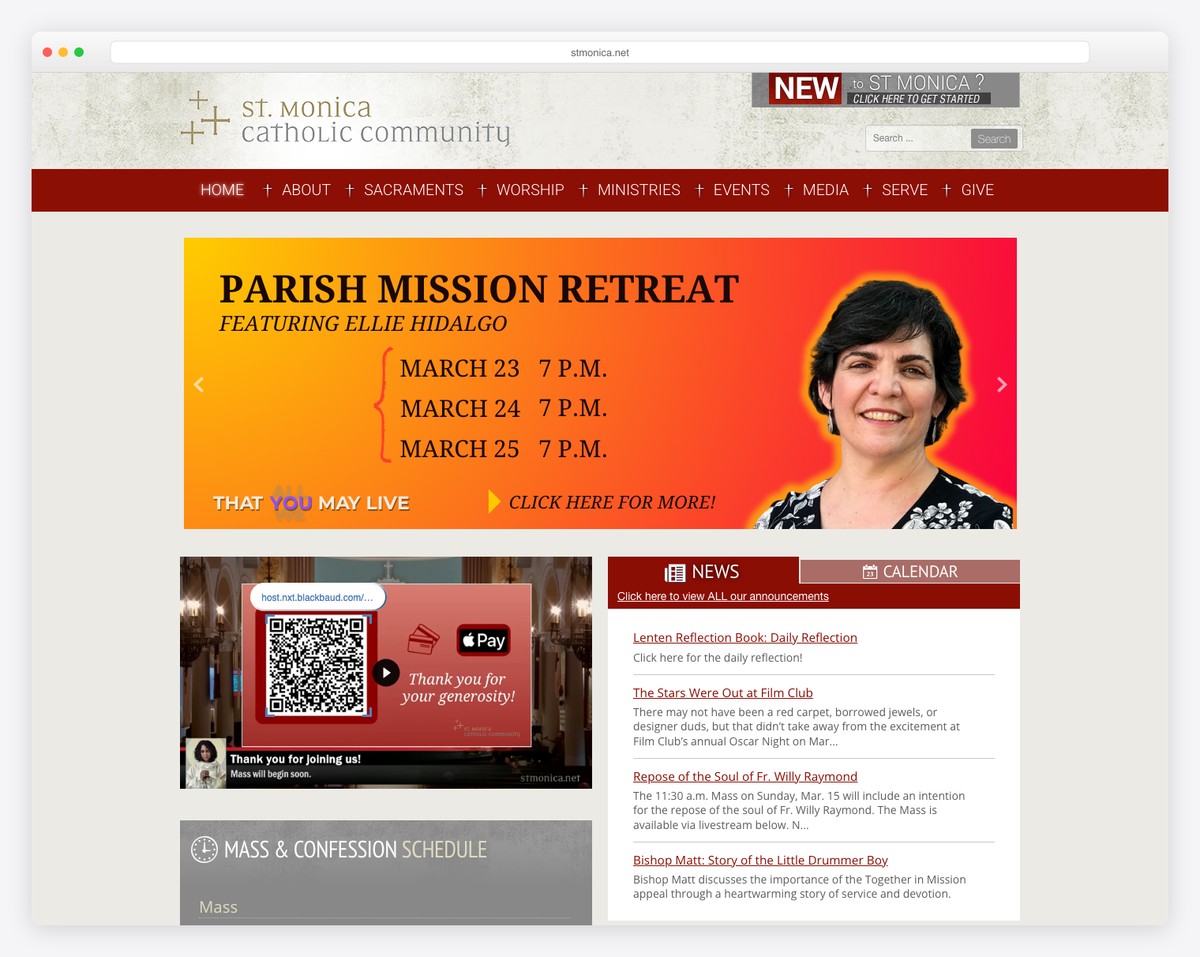
What’s great: Clean, modern design that doesn’t sacrifice traditional Catholic identity. The homepage balances welcoming imagery with practical information (Mass times, confession schedule, upcoming events). The sacramental preparation section is well-organized with clear pathways for each sacrament. Photography of the historic church building is used throughout, creating visual cohesion.
2. Cathedral of Christ the Light (Oakland, CA)
URL: ctlcathedral.org
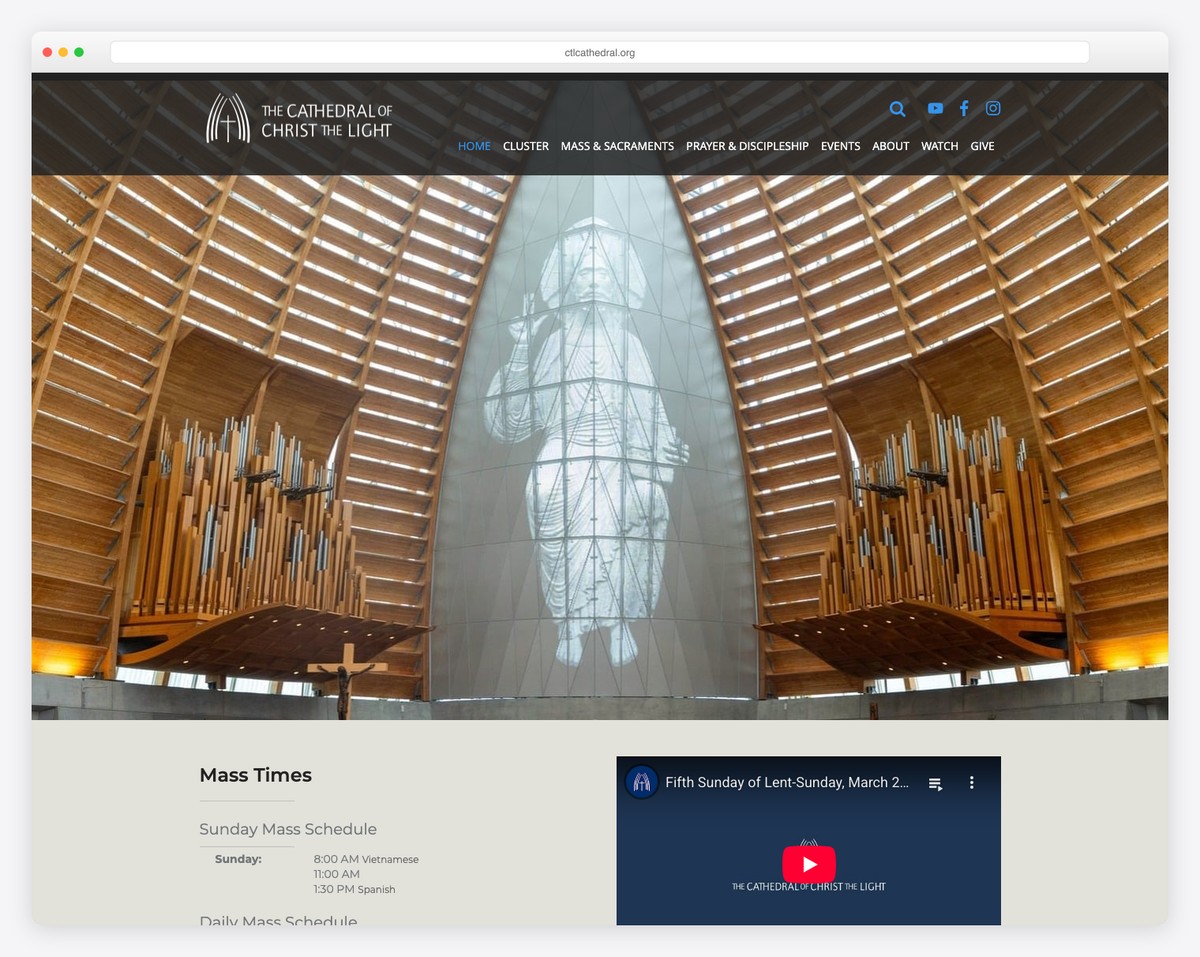
What’s great: Stunning photography of the cathedral’s contemporary architecture dominates the design. The website uses the building’s visual drama to create an immediate emotional impact. Navigation is clean despite the volume of content. The live stream page is prominently featured, and the parish bulletin is available digitally each week.
3. St. Patrick’s Cathedral (New York, NY)
URL: saintpatrickscathedral.org
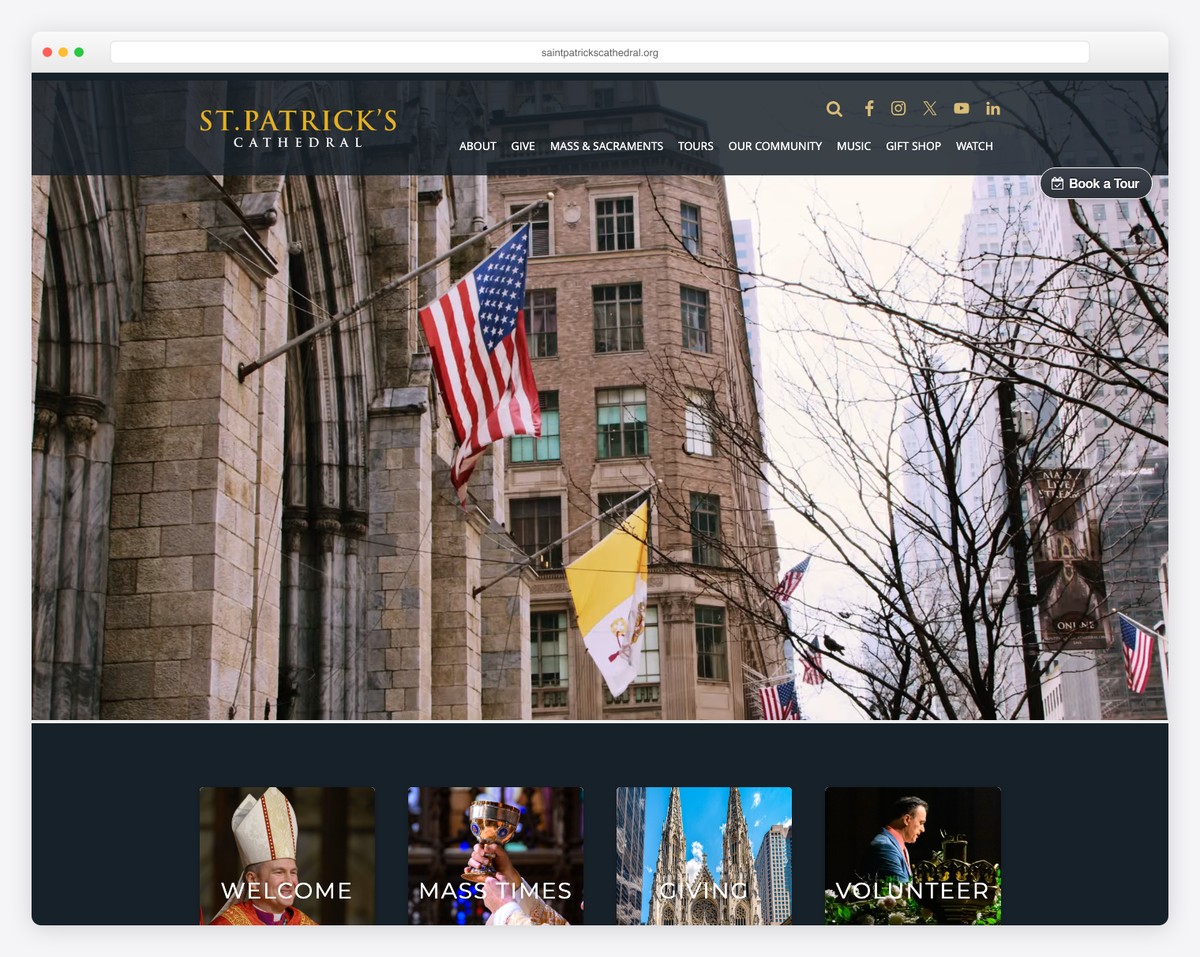
What’s great: The website matches the grandeur of the building. Rich photography, elegant typography, and thoughtful use of the cathedral’s iconic imagery. The visitor information section is particularly strong — recognizing that many visitors are tourists, not regular parishioners. Mass and confession schedules are front and center. The online giving integration is seamless.
4. St. Thomas More Catholic Church (Austin, TX)
URL: stmaustin.org
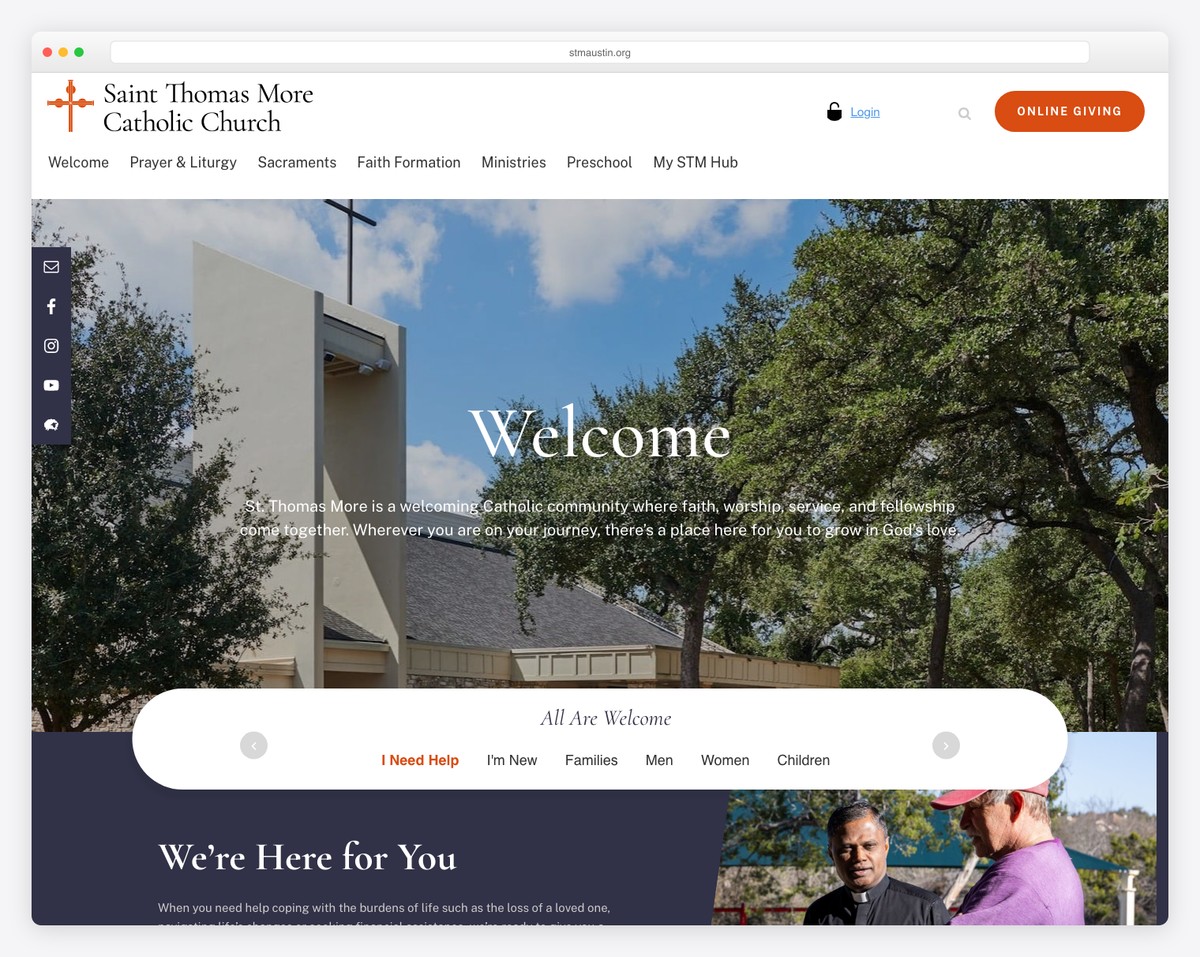
What’s great: Excellent example of a large suburban parish website that manages enormous amounts of information without feeling cluttered. The mega-menu navigation organizes dozens of ministries and programs logically. The homepage features a clear “I’m New” pathway alongside Mass times and upcoming events. Parish registration is prominent and easy to find.
5. St. James Cathedral (Seattle, WA)
URL: stjames-cathedral.org
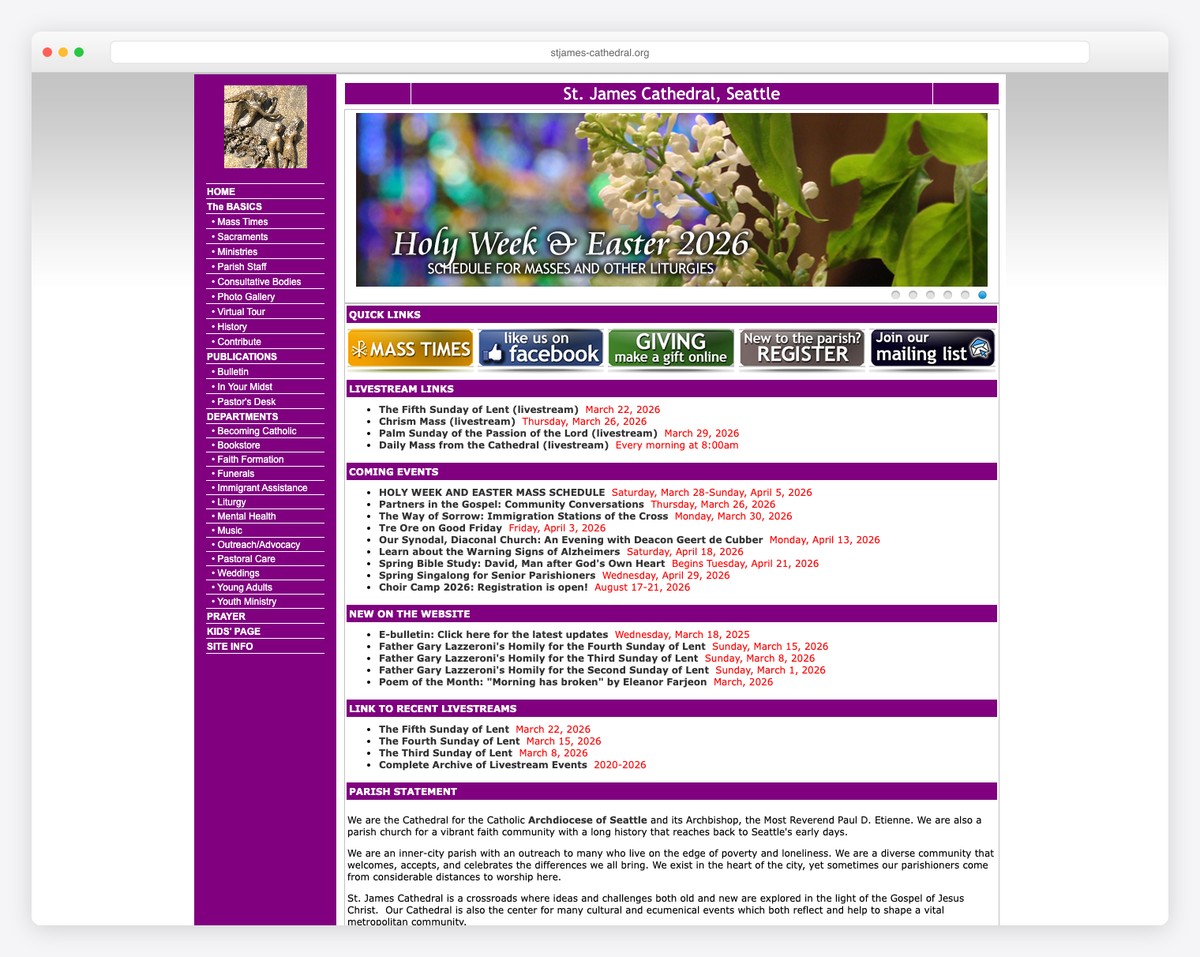
What’s great: Beautiful integration of the cathedral’s historic architecture with a modern web design. The liturgical calendar is reflected throughout the site, with content updating seasonally. The social justice and outreach section is unusually thorough — reflecting Catholic social teaching prominently. Music and liturgy information is detailed, which parishioners and visitors appreciate.
6. Our Lady of the Lake Catholic Church (Lake Oswego, OR)
URL: ollparish.com
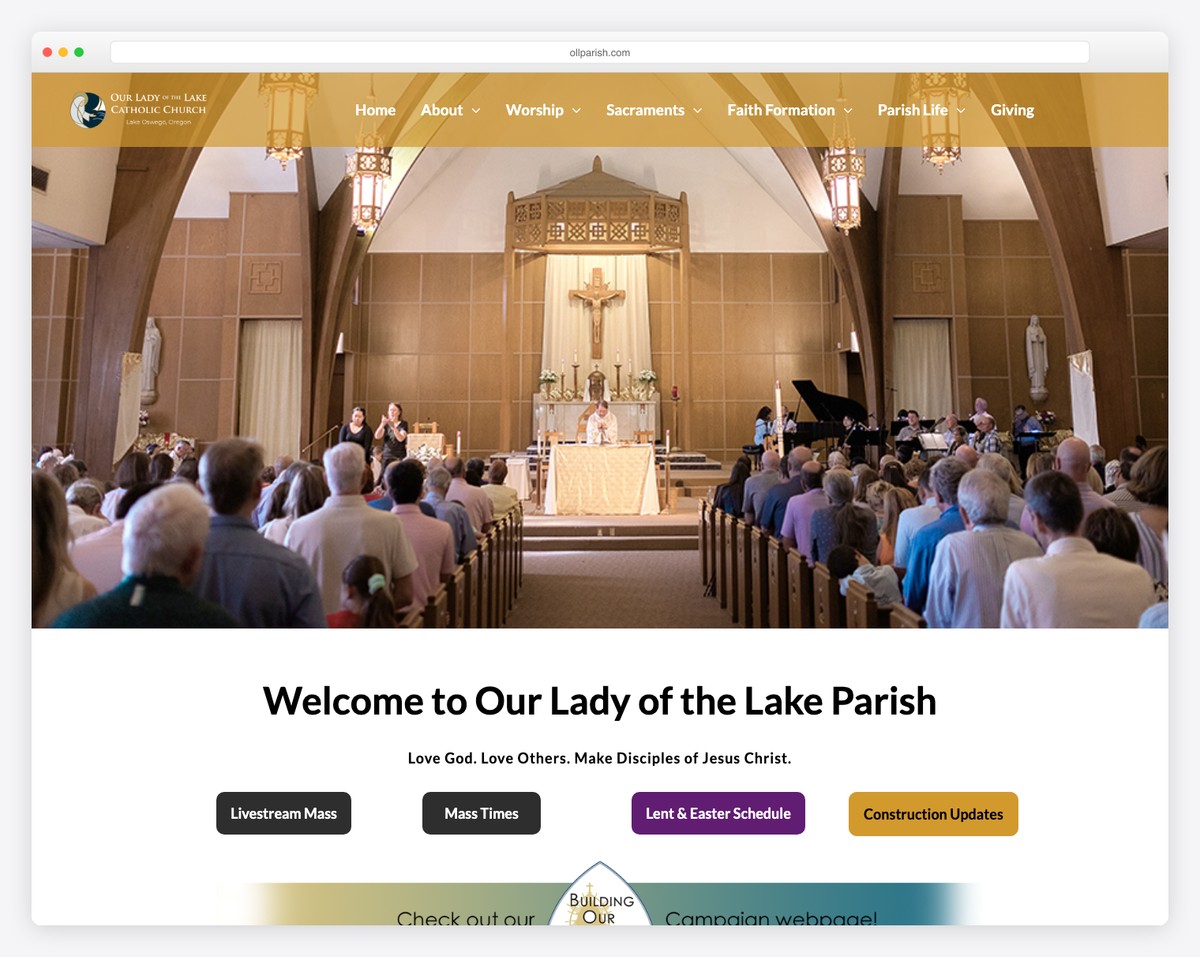
What’s great: A mid-sized parish website that gets the fundamentals right. Clean layout, clear Mass schedule, easy-to-find sacramental information, and a welcoming tone throughout. The “New to Our Parish” page is genuinely helpful rather than just a registration form. The school integration shows how parishes with schools can connect both communities through the website.
7. Holy Name Cathedral (Chicago, IL)
URL: holynamecathedral.org
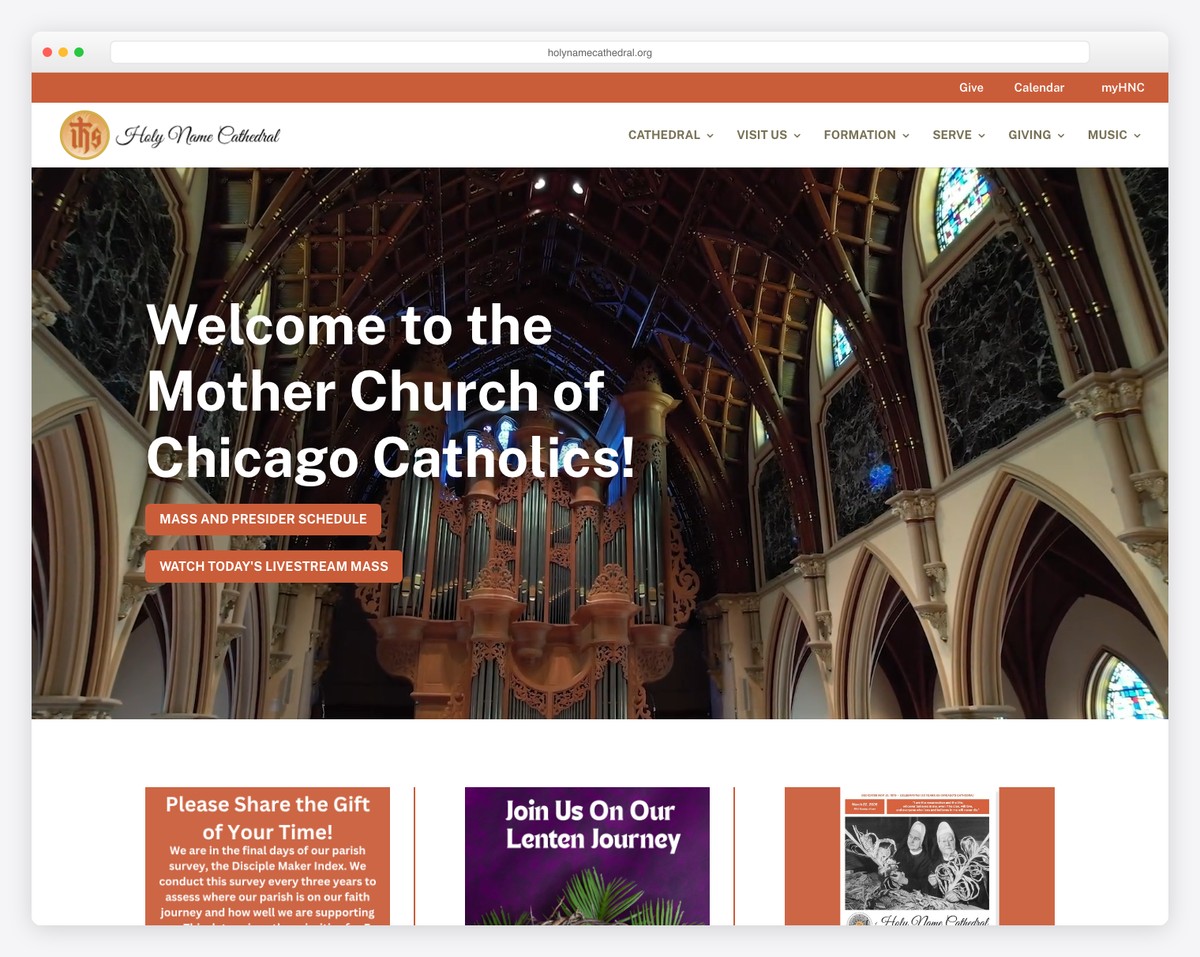
What’s great: Professional-grade photography and design that reflects the cathedral’s significance. The events calendar is comprehensive and well-maintained. The giving page is thoughtful, with multiple giving options clearly explained. The bulletin and homily archives provide ongoing value for regular parishioners. The website effectively serves both tourists and the parish community.
8. St. Ignatius of Loyola (New York, NY)
URL: stignatiusloyola.org
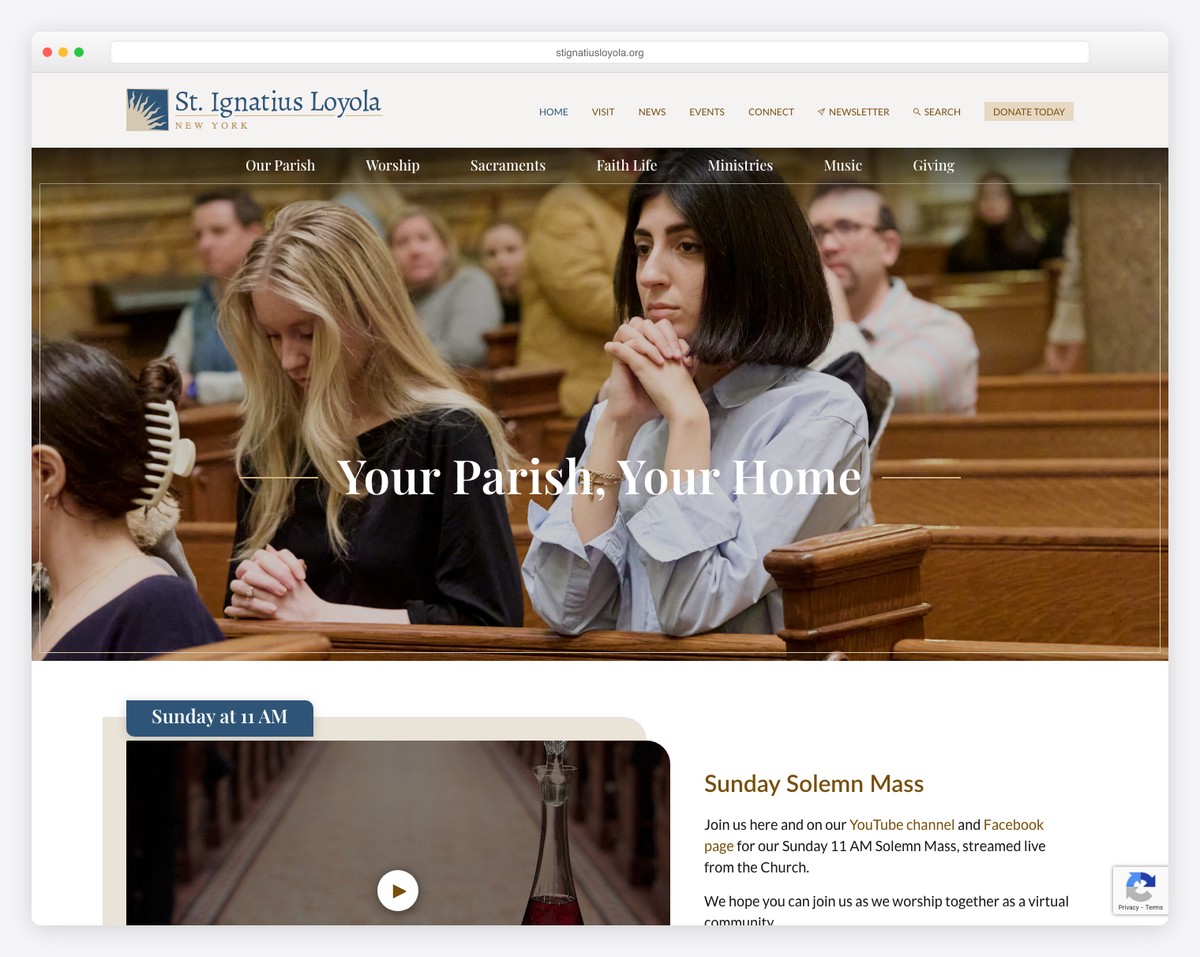
What’s great: Reflects the Jesuit intellectual tradition through content-rich pages that educate while informing. The adult faith formation section is exceptional — featuring lectures, reading groups, and spiritual direction information. The music program gets its own detailed section. Navigation handles the content volume well, and the design feels both traditional and contemporary.
Design Tips for Catholic Parish Websites
Invest in Photography
Your church building is likely beautiful. Hire a photographer for a single session to capture your church’s exterior, interior, stained glass, altar, and gathering spaces. These photos become the visual foundation of your entire website. Stock photos of generic churches undermine the unique identity of your parish.
Organize Sacraments Clearly
Create a “Sacraments” section in your main navigation with individual pages for each sacrament. Each page should include: what the sacrament is (brief explanation for newcomers), requirements, preparation process and timeline, how to register, and who to contact. Don’t assume visitors understand Catholic sacramental processes — many are returning Catholics, converts, or inquirers.
Make Mass Times Unmissable
Mass times should be visible on your homepage without scrolling. Include all Mass times (weekday and weekend), confession times, and holy day schedules. If your parish offers Masses in multiple languages, clearly label which Masses are in which language. This is the single most searched piece of information about any Catholic parish.
Support Bilingual Communities
If your parish has a significant Spanish-speaking (or other language) community, offer your website in both languages. A language toggle in the header is the standard approach. At minimum, translate your homepage, Mass schedule, sacramental information, and contact page. Platforms like WordPress with the WPML plugin handle bilingual content well.
Include Parish Registration
Catholic parishes have formal registration. Make the registration process easy to find and easy to complete — ideally an online form rather than a PDF to download and print. Include registration as a call-to-action for new visitors alongside “Plan Your Visit” and “Mass Times.”
Feature the Bulletin Online
The weekly parish bulletin is still a primary communication tool for many Catholic parishes. Upload it to your website each week as a PDF or, better yet, feature key announcements as web content. This helps with SEO (search engines can’t read PDFs as well as web text) and keeps your website fresh.
Choosing a Platform for Your Catholic Parish Website
Catholic parishes have more content than most churches, which means the platform needs to handle complexity. WordPress is the most popular choice among Catholic parishes because of its flexibility — you can create as many pages as needed, organize content with custom navigation structures, and add bilingual support through plugins.
Squarespace works for smaller parishes with fewer ministries and programs. Tithe.ly is an option if you want church-specific features like online giving built in. For a complete comparison, see our church website builders guide.
Frequently Asked Questions
Should a Catholic parish website include information about RCIA?
Absolutely. RCIA (Rite of Christian Initiation of Adults) is how people become Catholic, and many begin their inquiry online. Your RCIA page should explain the process in welcoming, jargon-free language, include the schedule, note that no commitment is required to attend inquiry sessions, and provide a contact person. This page can be one of your most important — it serves people actively seeking faith.
How should we handle the parish school on the website?
If your parish has a school, include a prominent link to the school website (which should be its own site or section). The parish website should mention the school, highlight its connection to parish life, and make it easy for families to find enrollment information. Don’t try to run the entire school website within the parish website — they serve different audiences and need different content structures.
What’s the best way to display confession times?
Include confession (Reconciliation) times on your homepage alongside Mass times, on a dedicated Reconciliation page under Sacraments, and on your Google Business Profile. Many people search “confession times near me” — having this information prominent and accurate on your website helps people find your parish. Also note whether appointments are available outside regular confession hours.
Should we include the diocese logo and links?
Yes. Include a small diocese logo in your footer with a link to the diocesan website. This establishes your parish’s connection to the broader Church and helps visitors verify that your parish is a legitimate Catholic community. Many dioceses also require this as part of their website guidelines for parishes.
How do we handle multiple Mass times in multiple languages?
Create a clear, formatted schedule that groups Masses by day and labels each with the language. For example: “Sunday: 8:00 AM (English), 10:00 AM (English), 12:00 PM (Spanish), 2:00 PM (Vietnamese).” Use a simple table format on your homepage and a more detailed schedule on your Mass Times page. Consider color-coding or icons for quick visual identification of languages.
Leave a Reply