Church Website Examples
Presbyterian churches carry centuries of Reformed heritage — the Westminster Confession, a Word-centered, preaching-first worship, a strong tradition of Christian education — and the best Presbyterian websites express that depth without feeling stuffy or dated. The challenge is balancing historic identity with a warm, modern welcome; the fastest way to nail it is to study churches that already have.
Below are 12 real, current Presbyterian church websites — spanning the PCA, PC(USA), EPC, ECO, OPC, and an independent Reformed congregation — with what each does well and the platform it’s built on. We don’t sell a website builder, so this is a neutral look at real congregations, not a product pitch. First, a quick orientation to the denominations and a checklist of what the strongest Presbyterian sites share.
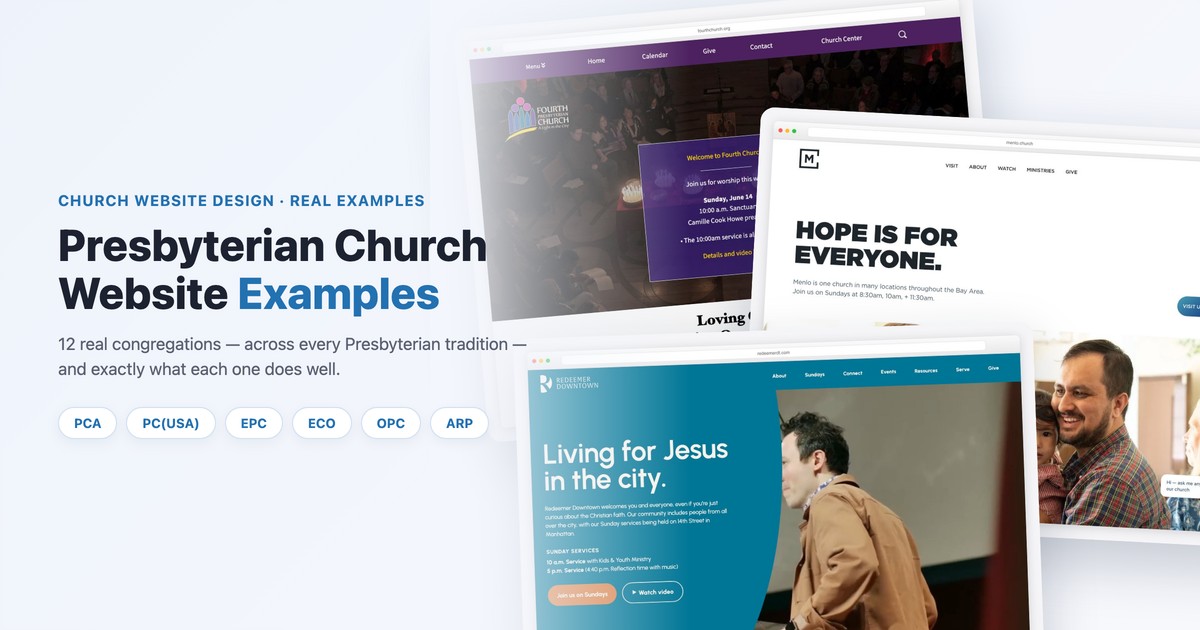
For Presbyterian visitors, the denomination is theologically load-bearing — PCA and PC(USA) differ meaningfully — so the best church sites name it plainly. Here’s a neutral, one-line orientation to the main Reformed bodies represented below.
| Denomination | In a sentence |
|---|---|
| PC(USA) — Presbyterian Church (U.S.A.) | The largest, mainline Presbyterian body; broadly progressive and ecumenical. |
| PCA — Presbyterian Church in America | The second-largest; conservative and evangelical, holding to the Westminster Standards. |
| EPC — Evangelical Presbyterian Church | Mid-size, evangelical and Reformed, known for latitude on non-essentials. |
| ECO — A Covenant Order of Evangelical Presbyterians | Newer (founded 2012); evangelical, formed largely by congregations leaving PC(USA). |
| OPC — Orthodox Presbyterian Church | Small and strictly confessional, conservative Reformed (founded 1936). |
| ARP — Associate Reformed Presbyterian Church | A small, historic Southern Reformed body, “rooted in the Reformation.” |
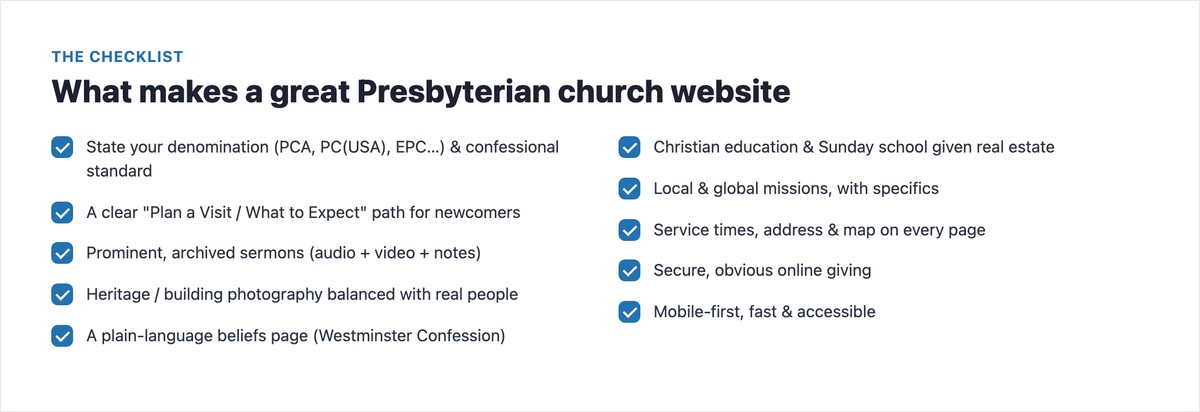
Across denominations, the strongest Presbyterian sites share a pattern: historic identity communicated with modern warmth, theology stated plainly, and sermons treated as a first-class feature — because in the Reformed tradition, the preaching of the Word is the main draw. Here’s the full checklist.
The most distinctively Presbyterian element is a deep, searchable sermon archive. Reformed congregations expect substantial, expositional preaching, and they’ll judge your church partly by listening before they ever visit — so make sermons easy to find, with audio, video, and notes. Our guide to building a church sermon archive covers how, and the homepage formula and Plan Your Visit guides handle the rest of the structure.
All were live when we last checked, ordered to move across denominations and styles — heritage landmarks alongside contemporary-urban churches. For each, note what it does well.
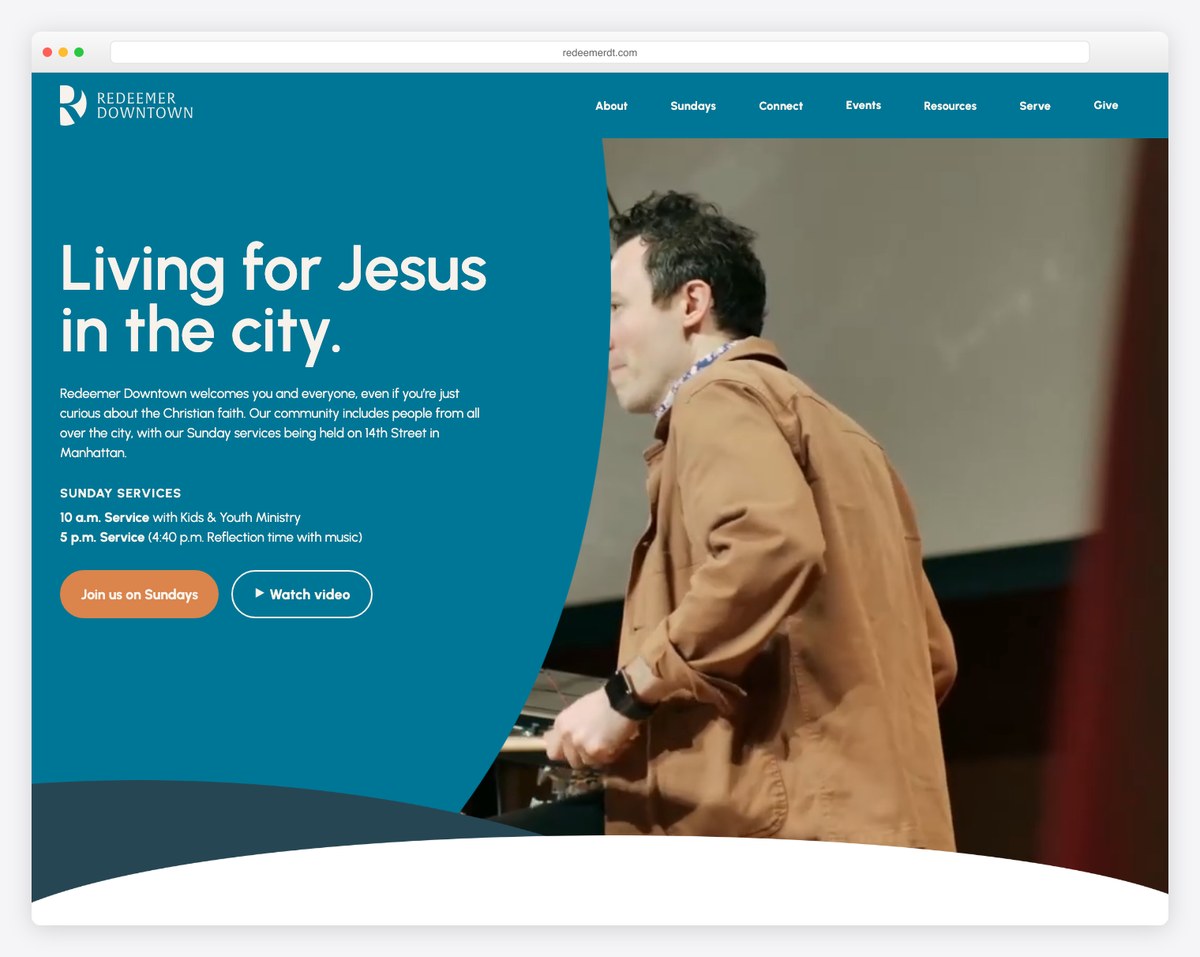
Redeemer Downtown — part of the Redeemer family Tim Keller planted — leads with “Living for Jesus in the city” on a sleek, contemporary Webflow build. It’s the clearest proof in this list that Reformed doesn’t mean dated: urban, modern, and confident, with a frictionless “Sundays / new here” path. The model for a contemporary-urban PCA church.
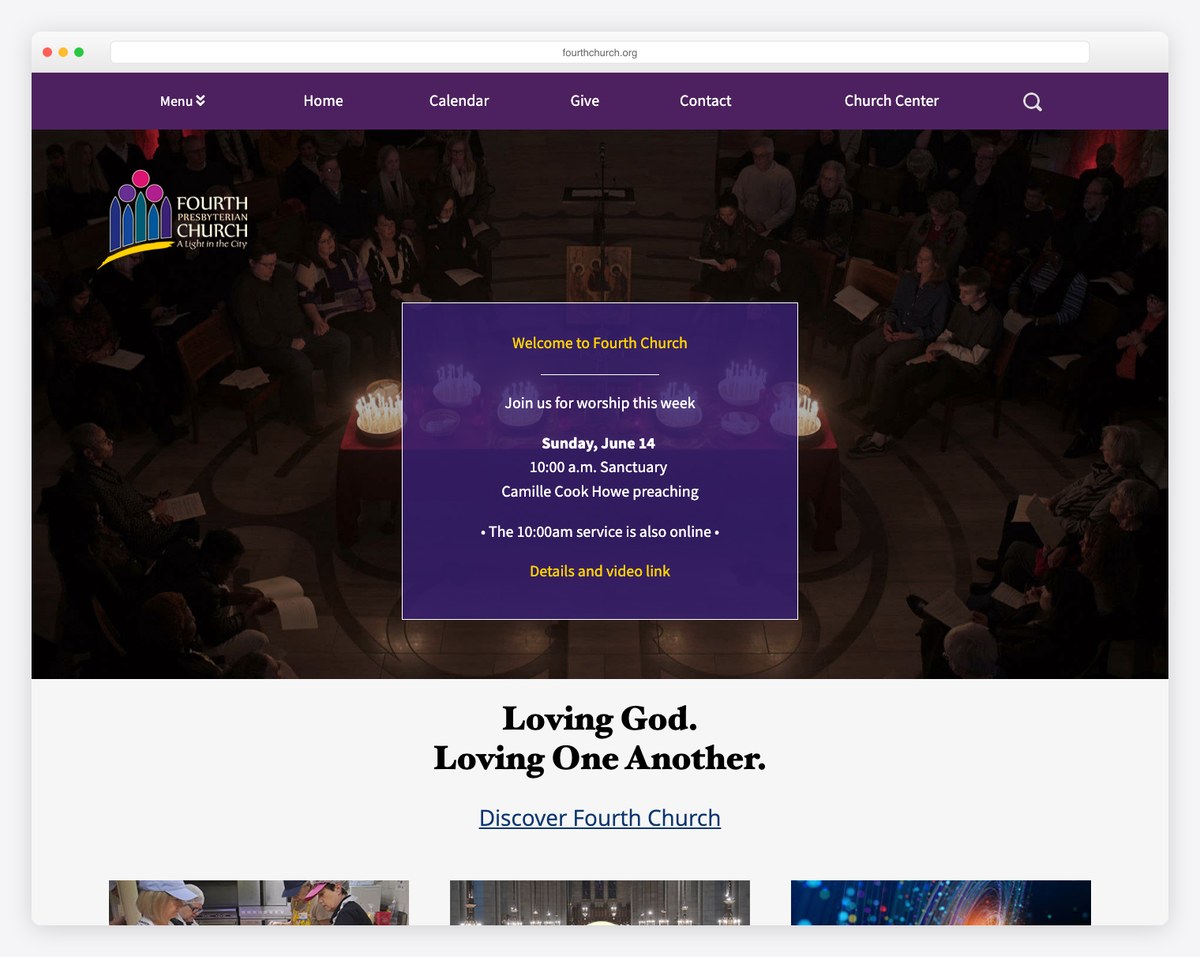
Fourth Presbyterian — the historic Gothic landmark on Chicago’s Michigan Avenue — pairs its architectural heritage with a warm, mission-minded tone (“Loving God. Loving Each Other.”). A great example of a grand, historic PC(USA) church that still feels open and current online.
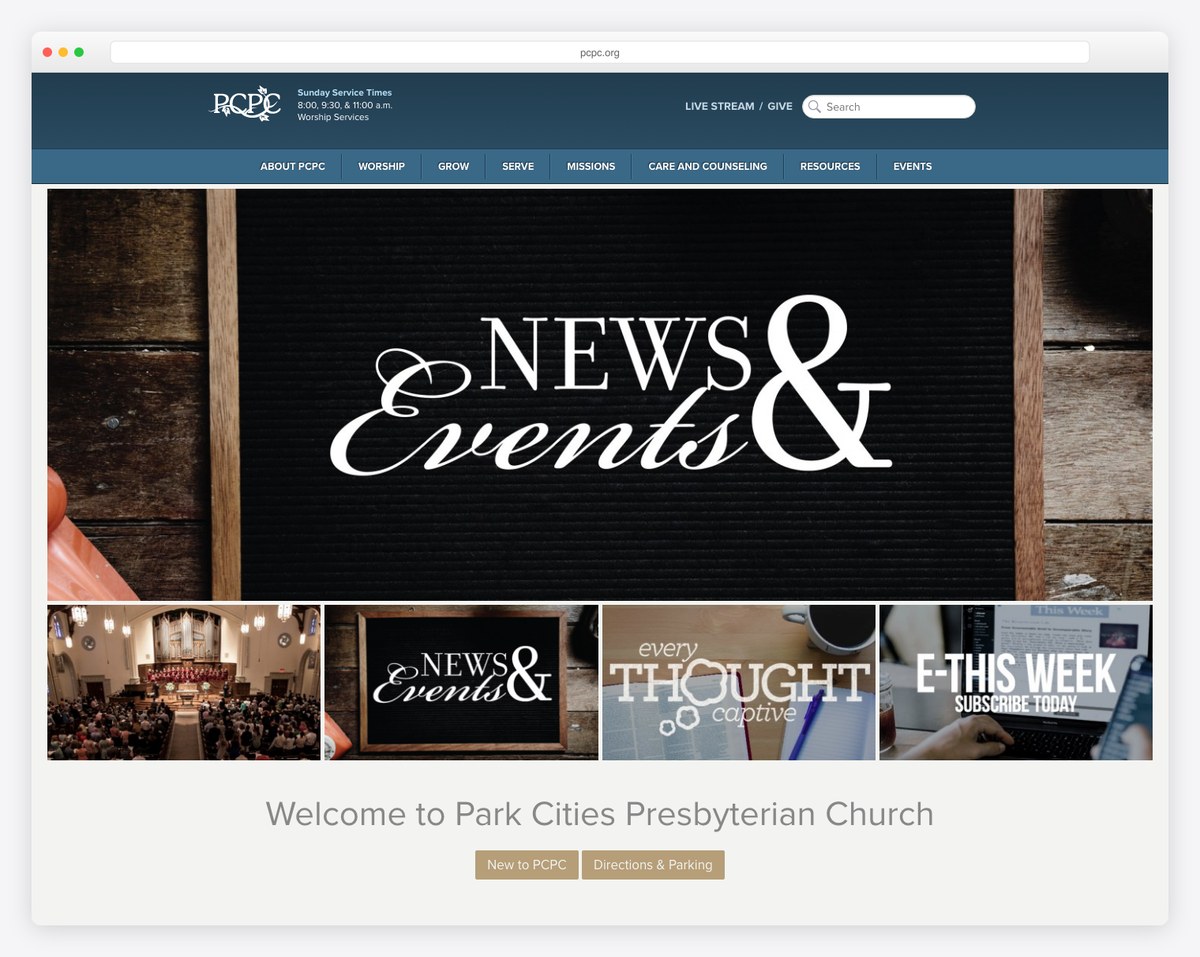
Park Cities Presbyterian is a large Dallas flagship that keeps a big, active church organized and warm — polished sanctuary photography, current news and events front and center, and a clear “new here” funnel. A strong reference for a sizable PCA congregation that needs to present a lot without clutter.
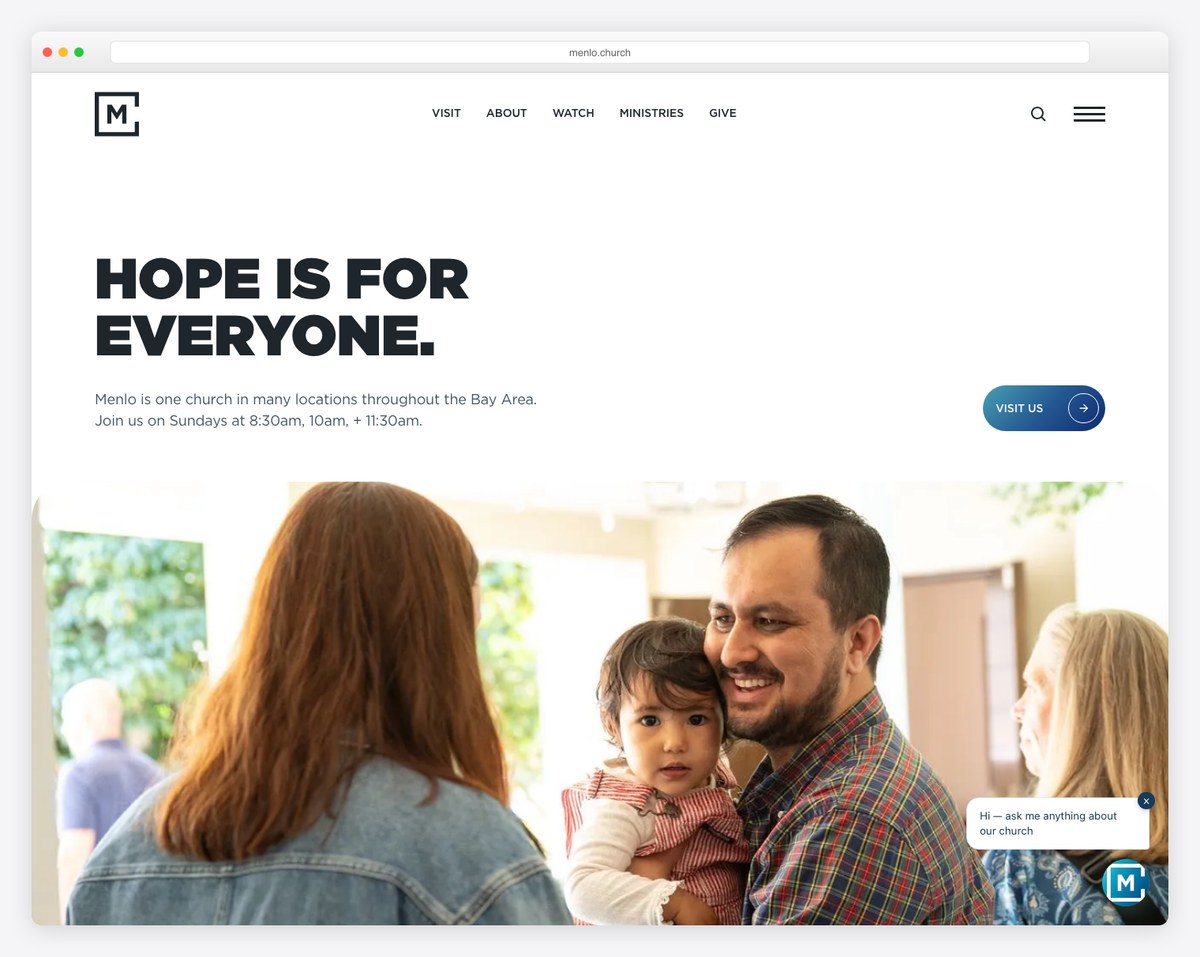
Menlo Church is the most contemporary-megachurch look in the set — a clean Webflow build with a welcoming “Hope is for everyone” hero and smooth multi-site navigation. A good model for an ECO or evangelical-Presbyterian church that wants a thoroughly modern, accessible feel.
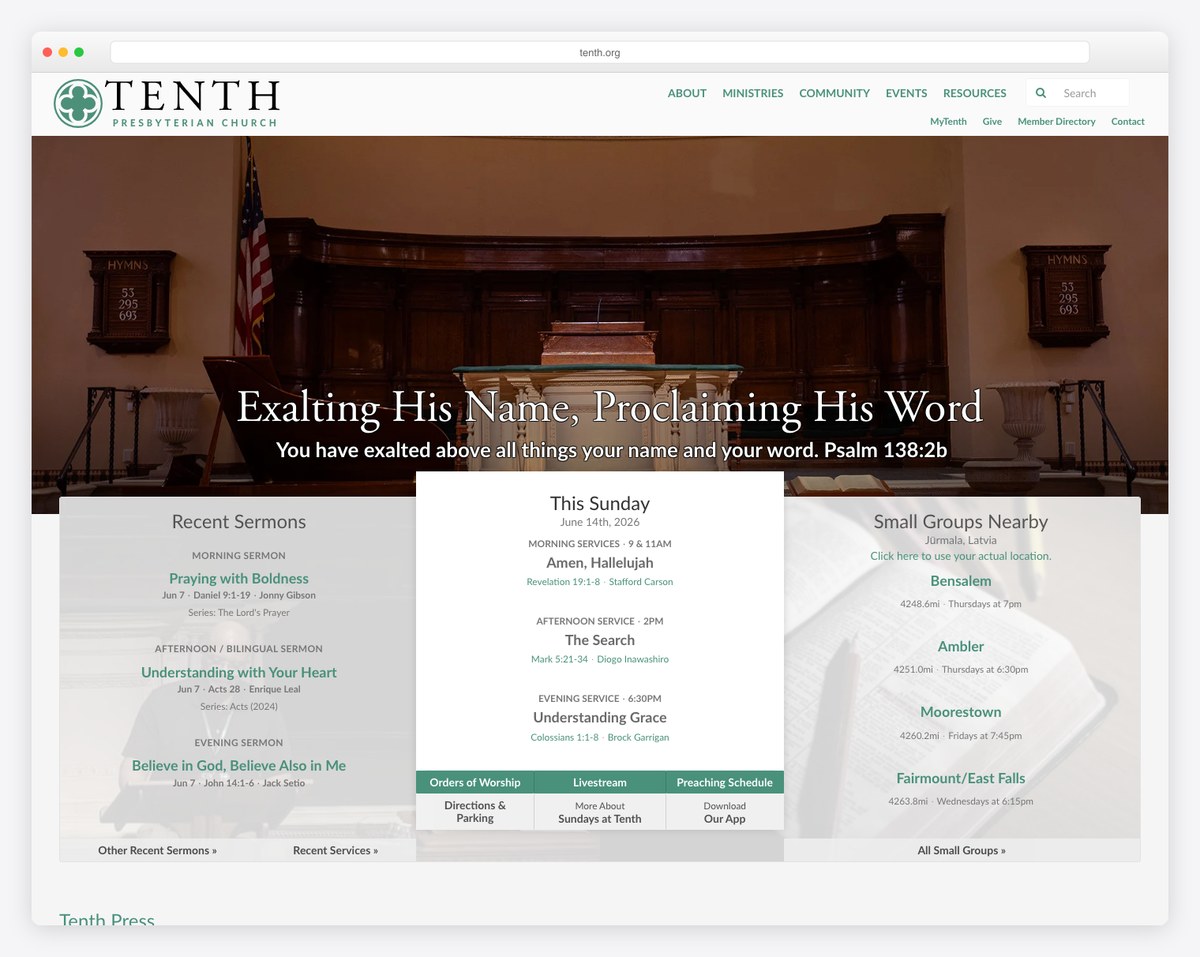
Tenth Presbyterian (in Philadelphia’s Rittenhouse Square since 1829) is the textbook “Word-centered” site — “Exalting His Name, Proclaiming His Word,” with preaching and a deep sermon library treated as the main event. The reference for a historic, sermon-first Reformed church.
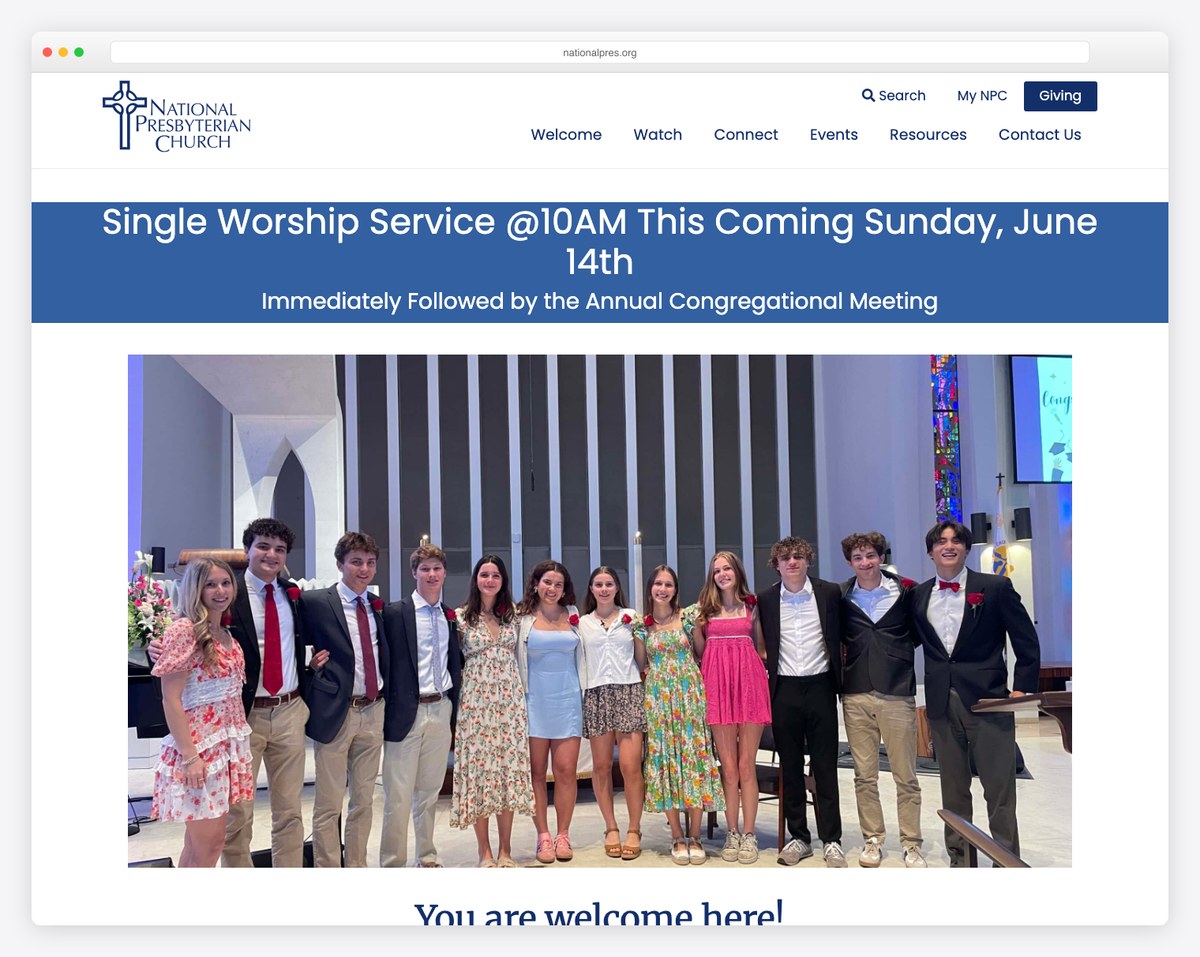
National Presbyterian carries a sense of institutional gravitas with a clean, welcoming design — “You are welcome here” over real congregation photos, plus a strong sermon archive. A polished example of a historic, civically prominent church that stays approachable.
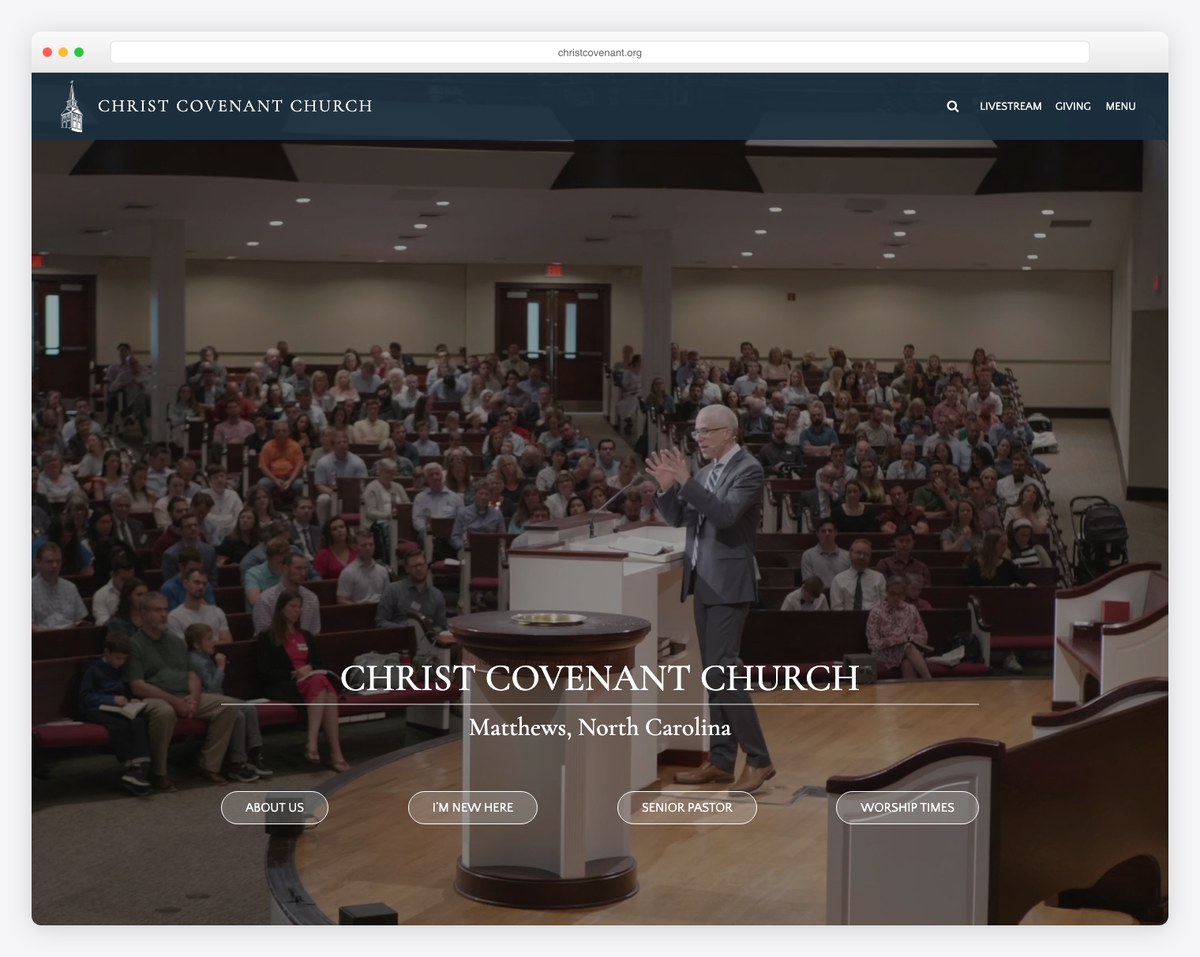
Christ Covenant states its identity right up front — “A Reformed Church” — and backs it with warm community imagery. It’s a good example of putting confessional clarity and a friendly welcome in the same breath, so visitors know exactly what they’re walking into.
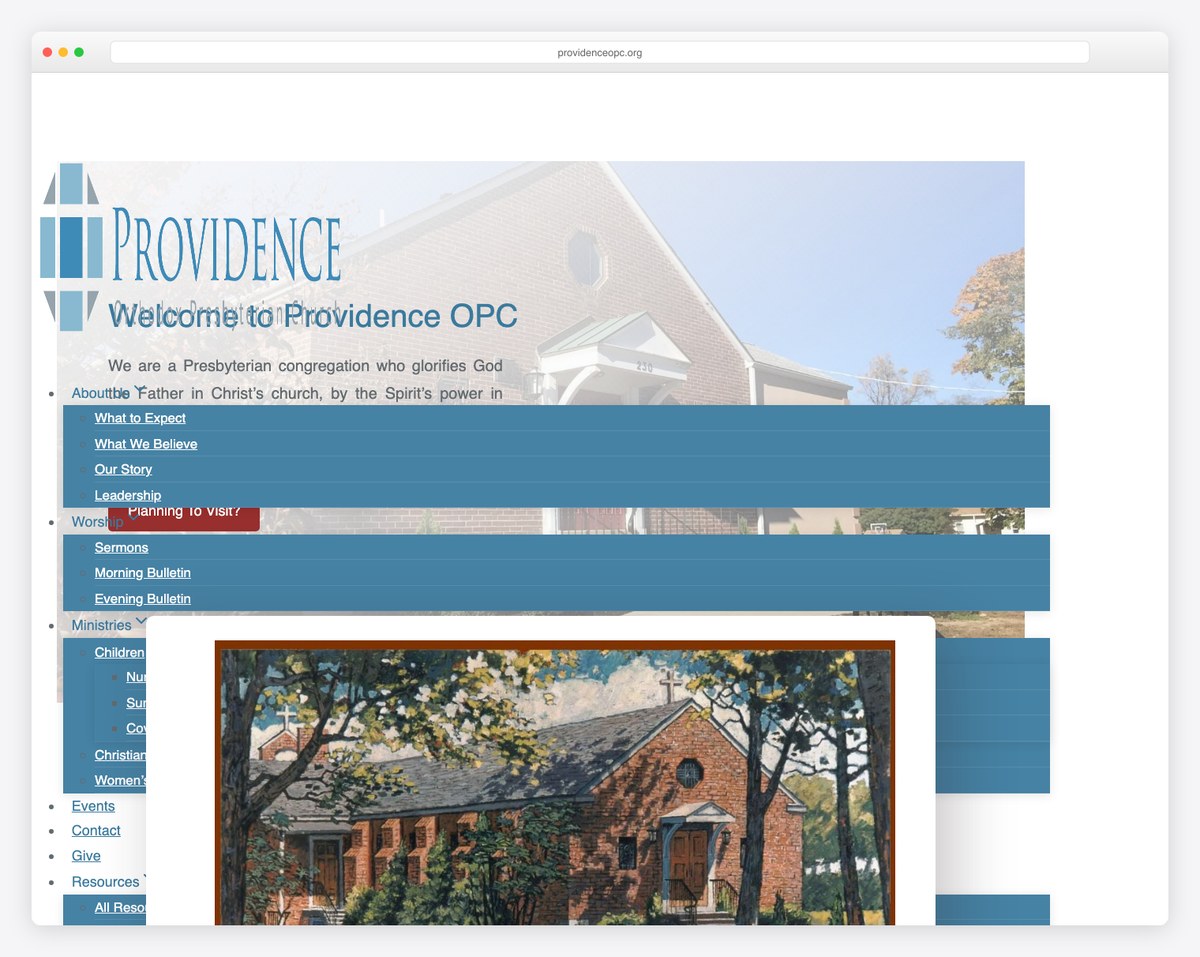
Providence OPC proves a smaller, strictly confessional church can have a genuinely good site — clean, welcoming, with its Westminster commitments stated clearly. A reassuring model for any small OPC or confessional Reformed congregation that thinks “good design” is out of reach.
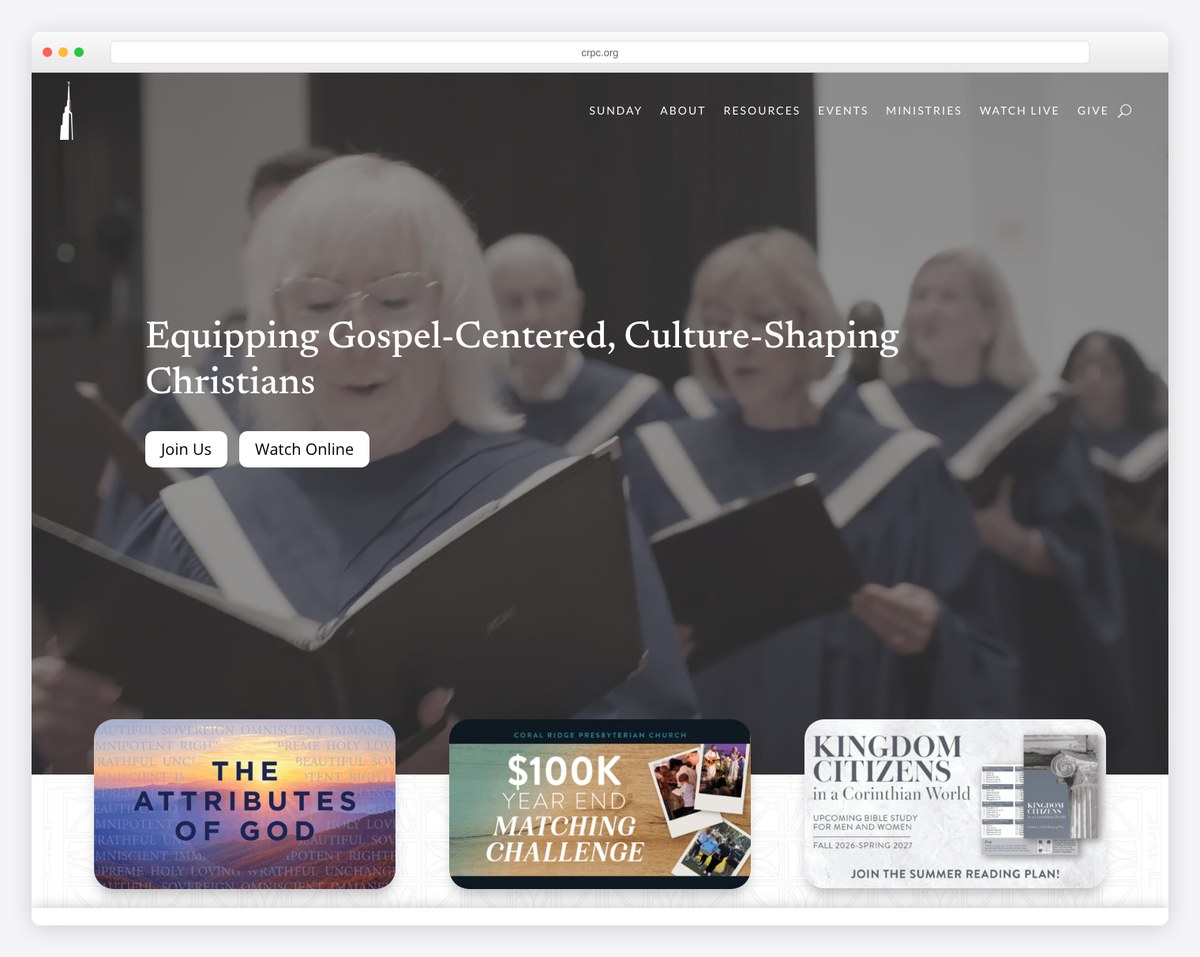
Coral Ridge — D. James Kennedy’s historic church with a long broadcast legacy — leads with a clear mission (“Equipping Gospel-Centered, Culture-Shaping Christians”) and strong media. A good example of a church with a media heritage carrying it into a modern, content-rich site.
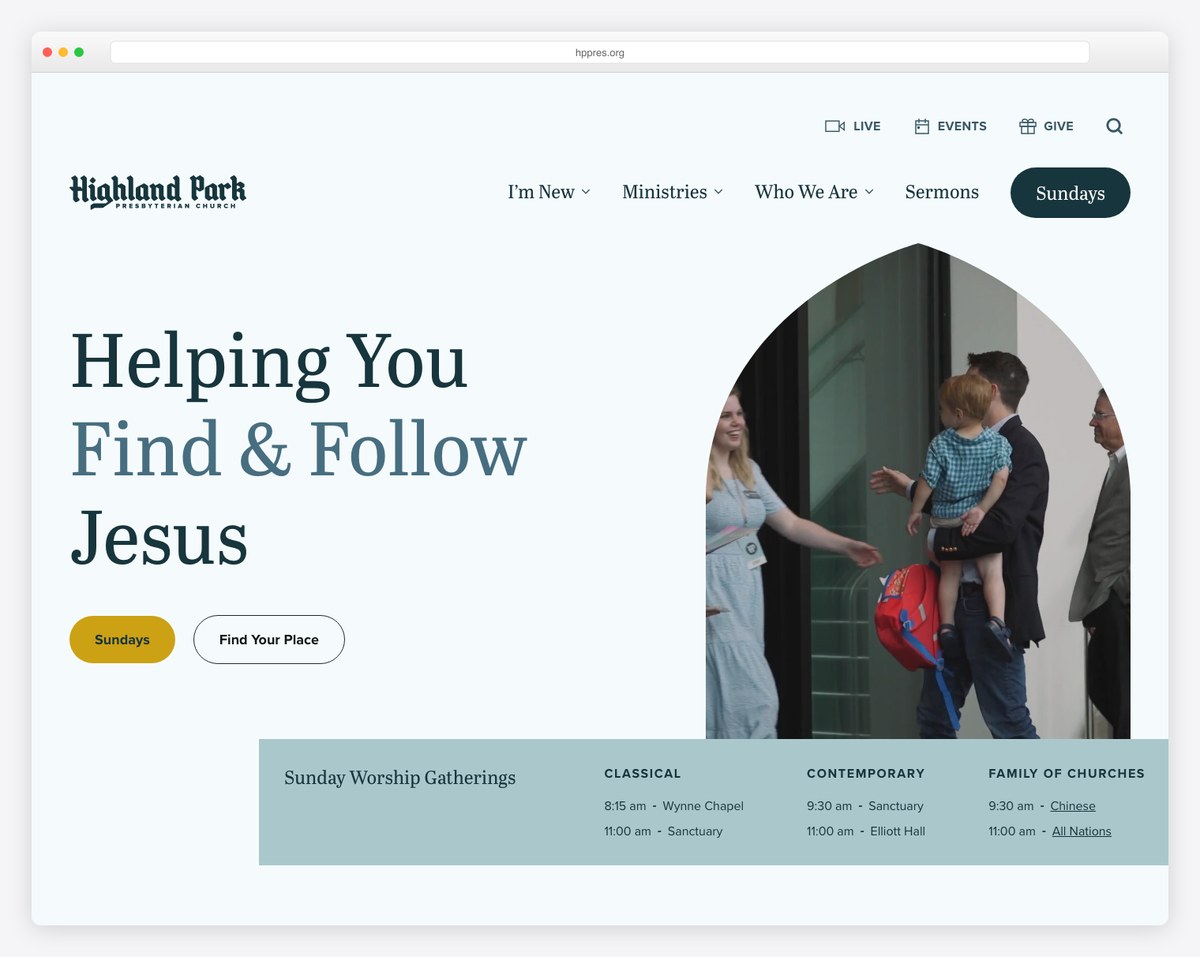
Highland Park Presbyterian pairs a polished, traditional-warm design with a simple, people-focused promise — “Helping You Find & Follow Jesus.” A strong example of an established flagship that reads as both refined and genuinely inviting.
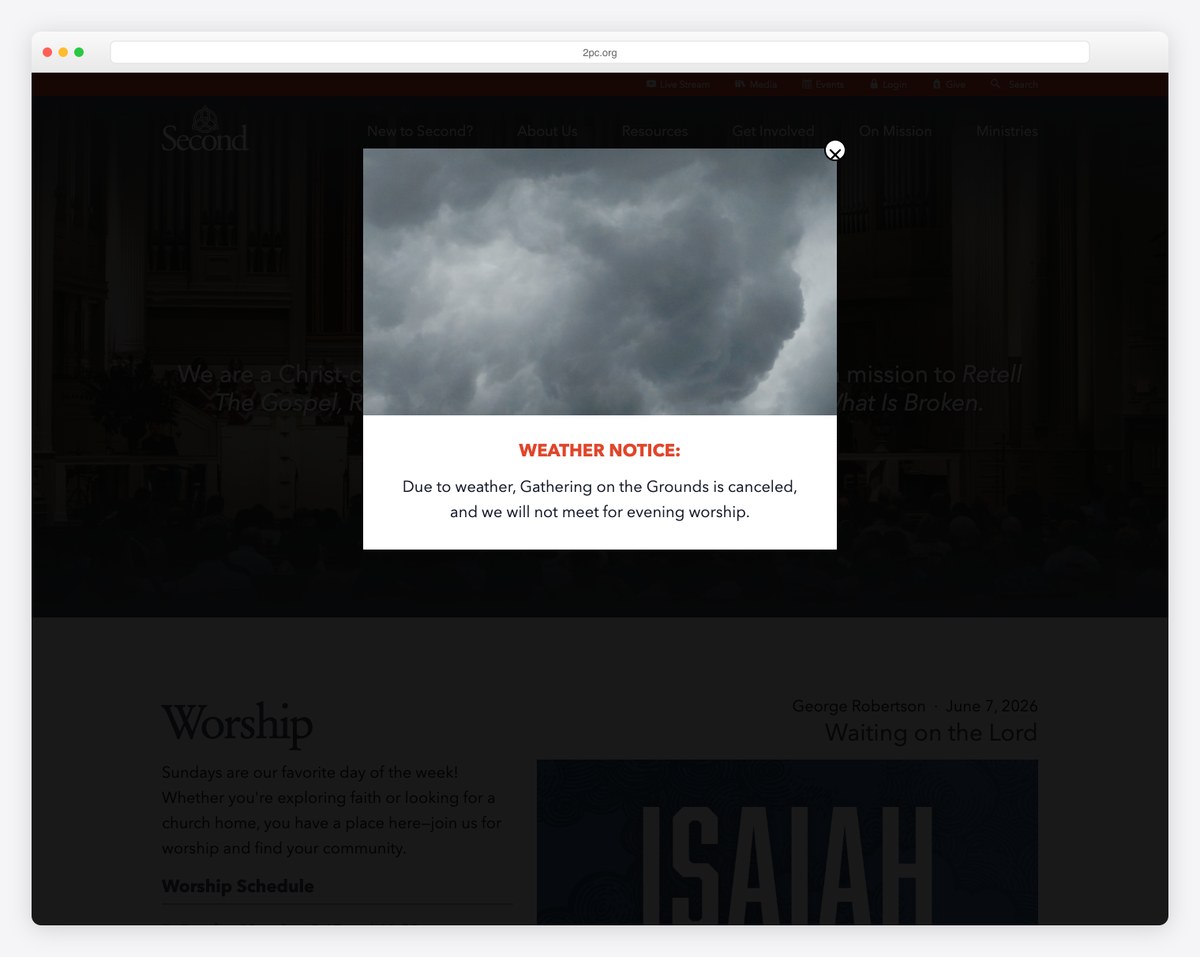
Second Presbyterian leads with its current sermon series in a bold, focused hero — a fitting choice for a large historic EPC church that puts preaching at the center. It’s a clean illustration of building the homepage around the Word rather than around programming.
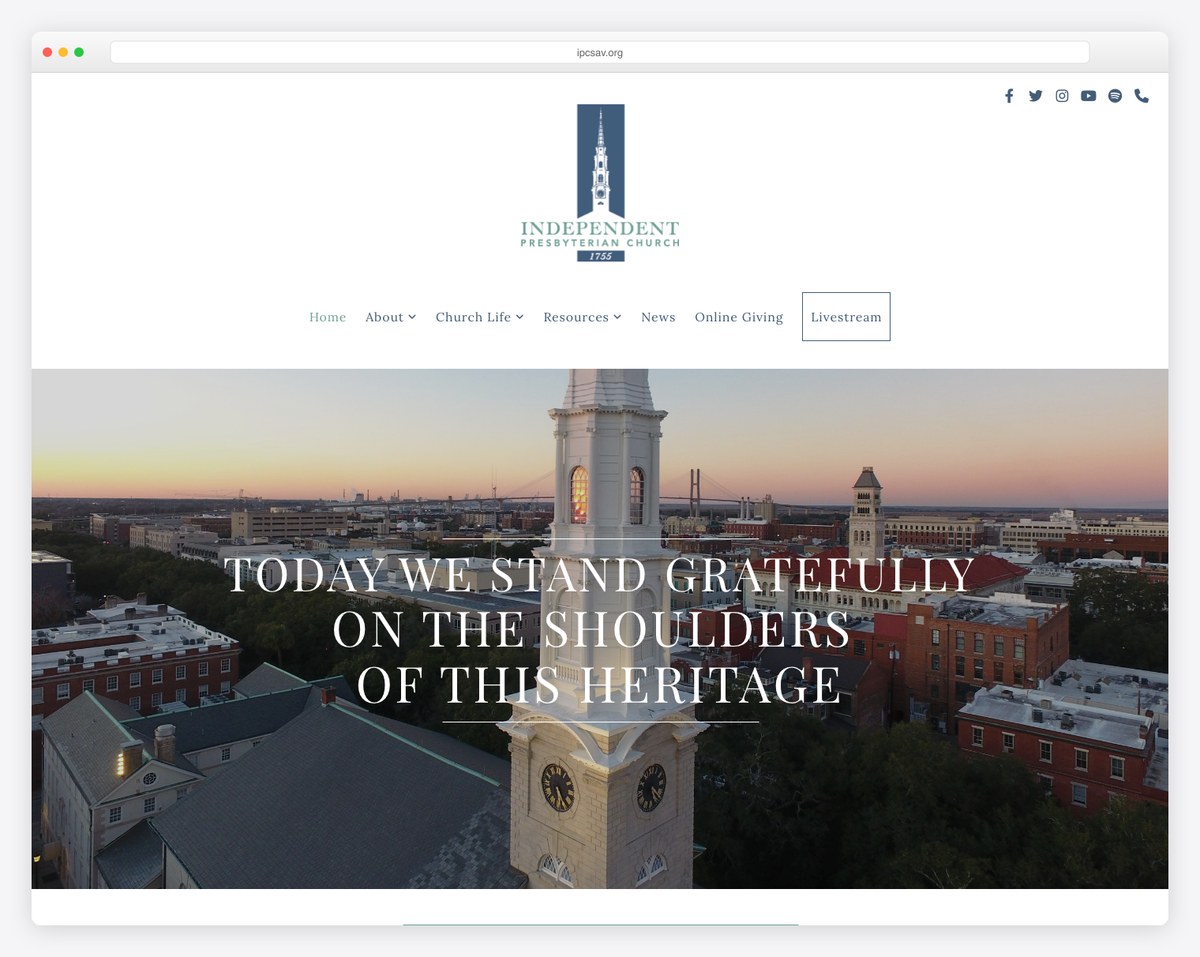
Independent Presbyterian — a historic Savannah landmark — honors its legacy explicitly (“we stand gracefully on the shoulders of this heritage”) while keeping a clean, modern layout. The model for a heritage church that wants its history to feel like an asset, not an anchor.
The throughline: state your tradition plainly, make sermons easy to find, and let historic identity coexist with a warm, modern welcome. These churches achieve it on WordPress, Webflow, Squarespace, and church-specific platforms alike — so the fundamentals in the checklist matter more than the tool. To choose yours, see our best church website builders guide and the best church WordPress themes. For more inspiration, browse our 50 best church website designs or the examples for Lutheran, Baptist, and Methodist churches.
For a Reformed or confessional congregation where the sermon is the point, Plainsong is a free template built around that: preaching front and centre, and an order of service that prints cleanly on a single sheet.
At minimum: your denomination clearly stated (PCA, PC(USA), EPC, and so on) with a plain-language beliefs page, service times and a “Plan Your Visit / What to Expect” path, a prominent and searchable sermon archive (audio, video, and notes), real photography that balances your building’s heritage with actual people, Christian education and Sunday school, local and global missions, secure online giving, and an events calendar. Because the Reformed tradition is preaching-centered, treat sermons as a first-class feature rather than an afterthought.
They’re the two largest Presbyterian denominations in the US and differ significantly. The PC(USA) — Presbyterian Church (U.S.A.) — is the largest and is mainline: broadly progressive, ecumenical, and inclusive, including in who it ordains. The PCA — Presbyterian Church in America — is the second largest and is conservative and evangelical, holding closely to the Westminster Standards and a traditional Reformed theology. The difference is theologically meaningful, which is why most Presbyterian churches state their denomination plainly on their site.
There’s no single best — the examples here are built on WordPress, Webflow, Squarespace, and church-specific platforms, and all look great. WordPress offers the most flexibility and is ideal for a deep sermon archive and full control; Webflow and Squarespace give the most polished design with less maintenance; church platforms bundle giving and media. Choose based on your church’s size, budget, and how much you want to maintain — our church website builders guide compares them in depth.
Make them prominent and easy to browse. Reformed and Presbyterian visitors often listen to a church’s preaching before they ever visit, so give sermons a clear top-level link, archive them by series, speaker, scripture, and date, and offer audio, video, and downloadable notes. A strong, searchable sermon library does more to convince a Reformed visitor than any amount of design — it’s the single highest-leverage feature on a Presbyterian website.

Church Website Examples
Church Website Examples
Church Website Examples
10 complete church website templates, MIT licensed. Browse every demo freely; we will email you whichever folder you want.
All templates