Church Website Examples
Anglican and Episcopal churches sit on a deep well of beauty — soaring architecture, the Book of Common Prayer, centuries of choral tradition, and the rhythm of the church calendar. The challenge online is to honor that heritage and reverence while still feeling welcoming to a newcomer who has never followed a liturgy. The best sites do both; the fastest way to design one is to study churches that already manage it.
Below are 12 real, current Anglican and Episcopal church websites — spanning The Episcopal Church (TEC), the Anglican Church in North America (ACNA), a Continuing Anglican cathedral, and the Reformed Episcopal Church — with what each does well and the platform it’s built on. We don’t sell a website builder, so this is a neutral look at real parishes, not a product pitch. First, a quick orientation to the bodies and a checklist of what the strongest sites share.
“Episcopal” and “Anglican” aren’t quite interchangeable in the US, and the distinction is theologically meaningful — so the best church sites state which body they belong to. Here’s a neutral, one-line orientation.
| Body | In a sentence |
|---|---|
| The Episcopal Church (TEC) | The historic, mainline US member of the worldwide Anglican Communion; broadly progressive, spanning Anglo-Catholic to Broad Church. |
| Anglican Church in North America (ACNA) | A theologically conservative province formed in 2009 by congregations that left TEC and the Anglican Church of Canada; outside the Communion but recognized by GAFCON and Global South provinces. |
| Continuing Anglican movement | Smaller traditionalist jurisdictions (such as the Anglican Province of America) that separated in the late 1970s, emphasizing the classic prayer book and Anglo-Catholic worship. |
| Reformed Episcopal Church (REC) | A Reformed-leaning Anglican body founded in 1873; today a sub-jurisdiction within the ACNA. |
| The Anglican Communion | The worldwide family of roughly 85 million Anglicans in communion with the Archbishop of Canterbury; TEC is its US member. |
Across bodies, the strongest sites resolve one tension well: they lead with the beauty of sacred space and liturgy while lowering the barrier for a visitor intimidated by the unfamiliar. They state their body plainly, surface the church calendar and sacraments, showcase their music, and — crucially — explain what a liturgical service is actually like. Here’s the full checklist.
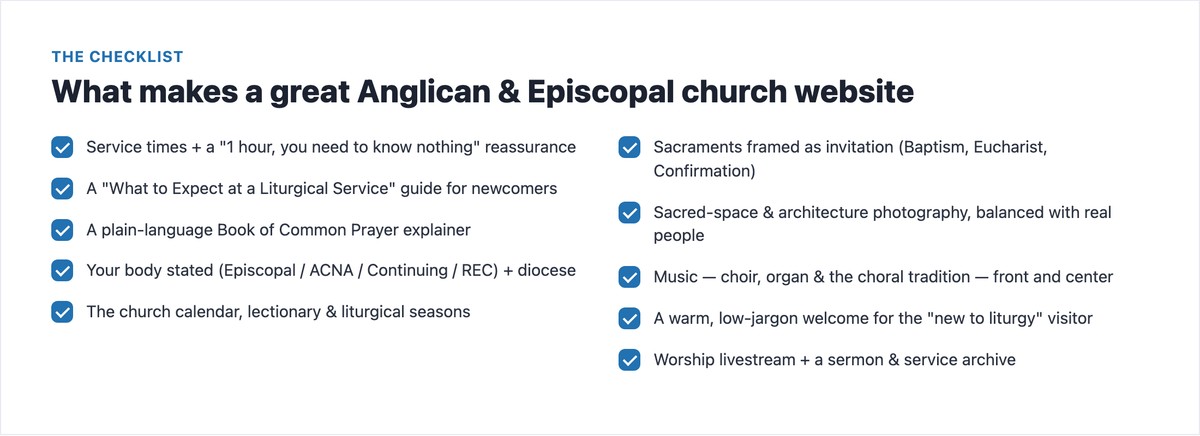
The most distinctively Anglican element is a warm “what to expect at a liturgical service” page — the rhythm of standing, sitting, and kneeling; whether and how to receive Holy Communion; what the vestments mean; and roughly how long it lasts. Liturgy is unfamiliar to most first-time and cross-denominational visitors, and a parish that explains it kindly removes a real barrier. For the rest of the structure, see our church homepage formula and Plan Your Visit guides.
All were live when we last checked, ordered to move across bodies and styles — grand cathedrals alongside small church plants, Anglo-Catholic alongside contemporary-evangelical Anglican. For each, note what it does well.
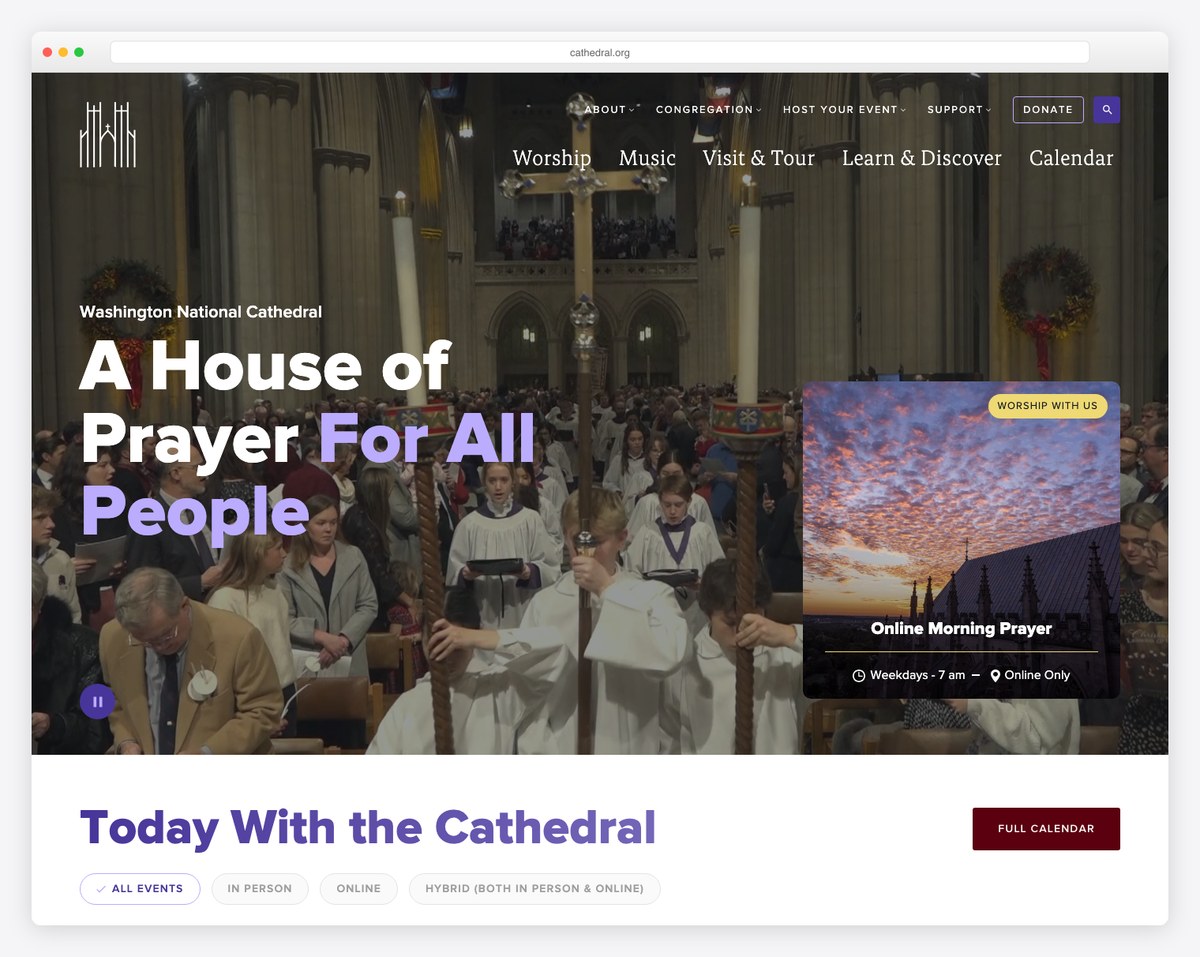
Washington National Cathedral leads with its breathtaking Gothic architecture and a unifying line — “A House of Prayer for All People” — while cleanly separating the “visit as a tourist” and “worship with us” paths that a national landmark has to serve. Strong events, livestream, and editorial depth. The reference for a grand, historic Episcopal church online.
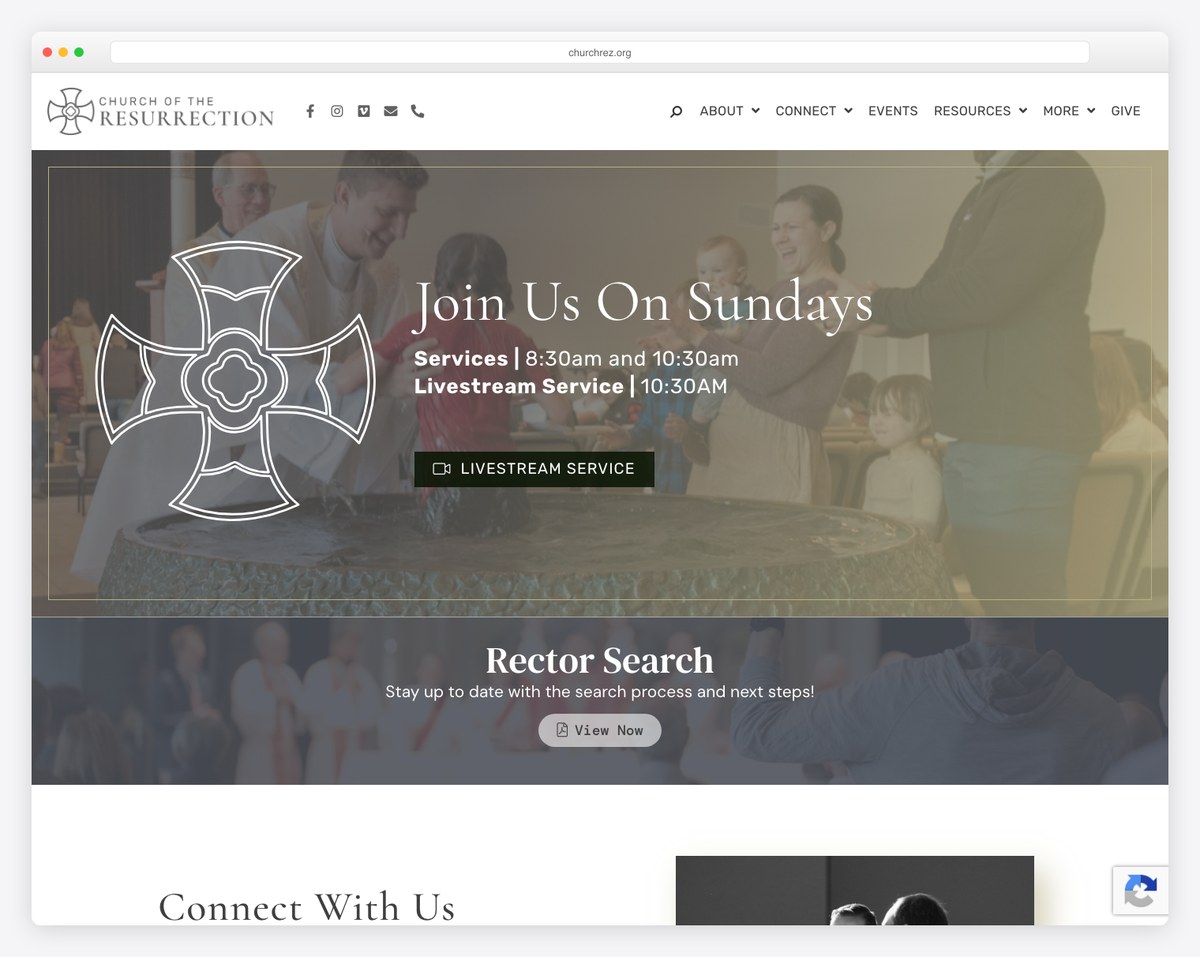
Church of the Resurrection — an ACNA cathedral — is the model of “liturgical yet accessible.” A reverent dark design with the Anglican cross, a clear “Join Us On Sundays,” and some of the best newcomer and “what to expect” content of any church in this list. If you want liturgy to feel inviting rather than intimidating, study this site.
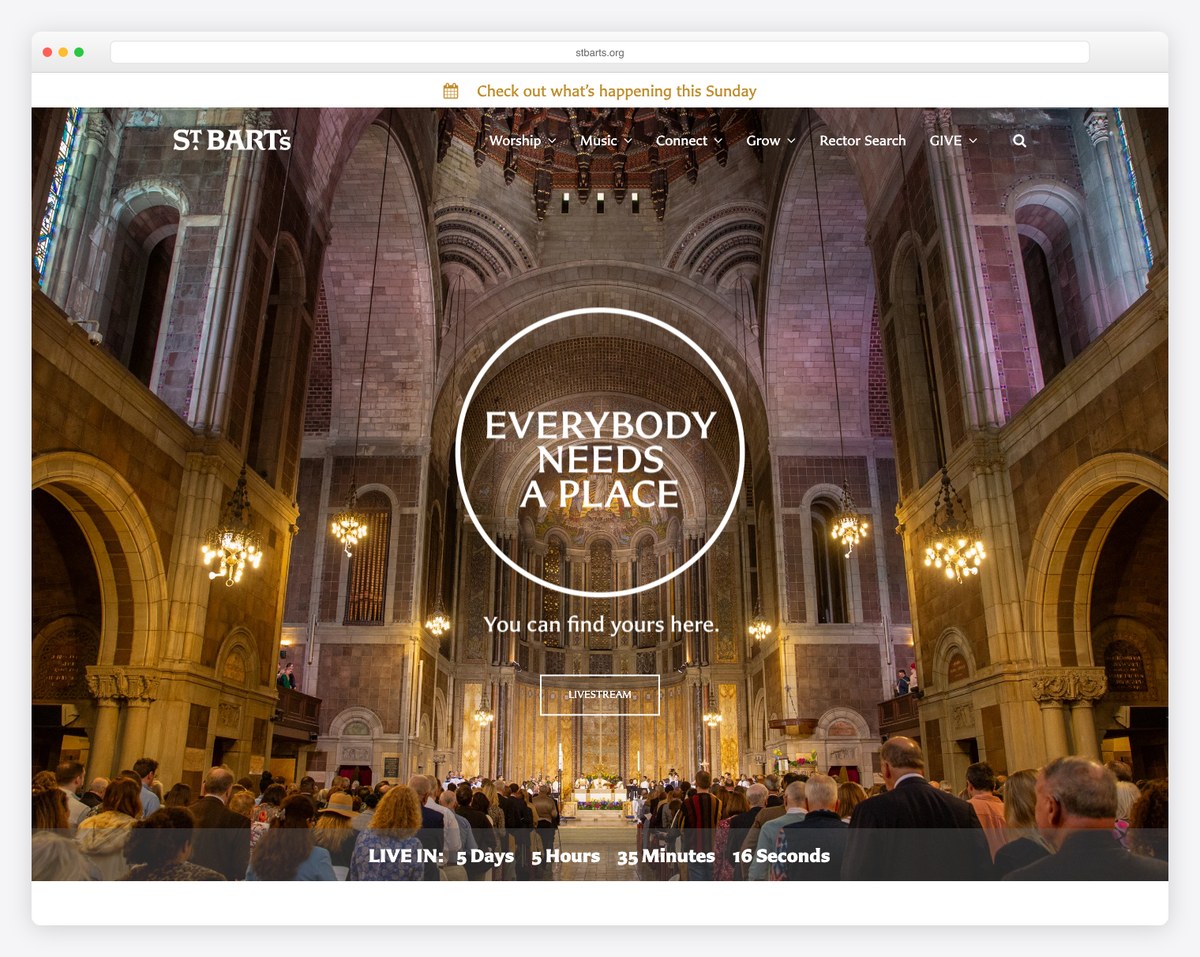
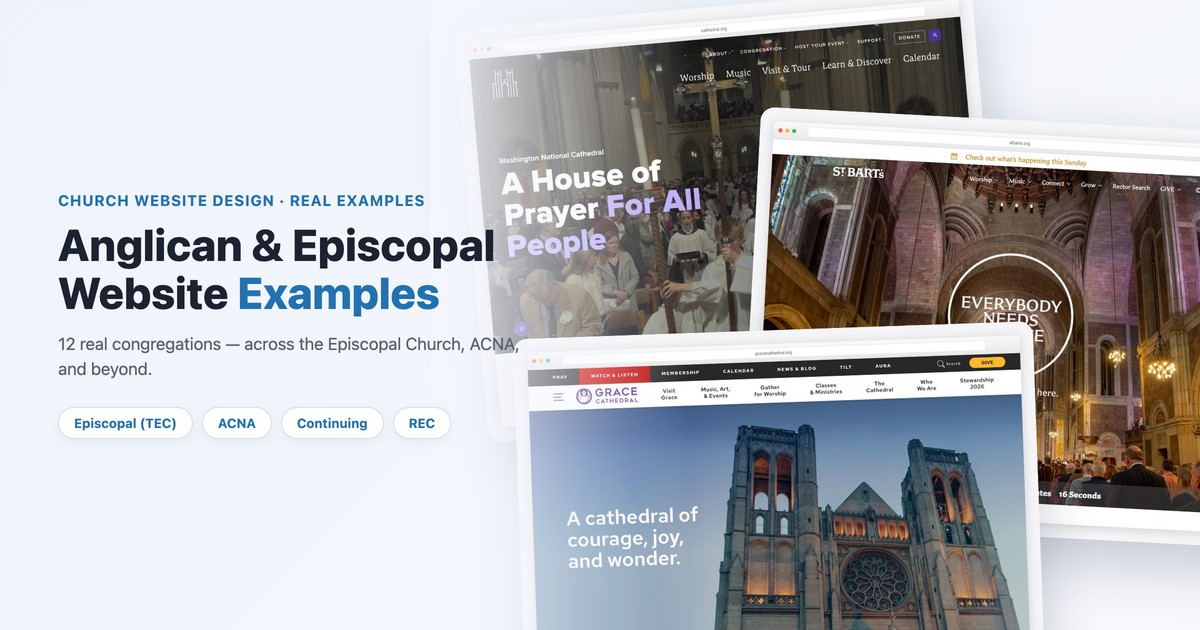
St. Bart’s pairs stunning Byzantine-Romanesque architecture with a genuinely warm “everybody in” welcome on Park Avenue. It shows how a landmark parish can feel grand and open at once — beautiful imagery up top, clear service times and an easy on-ramp for newcomers right behind it.
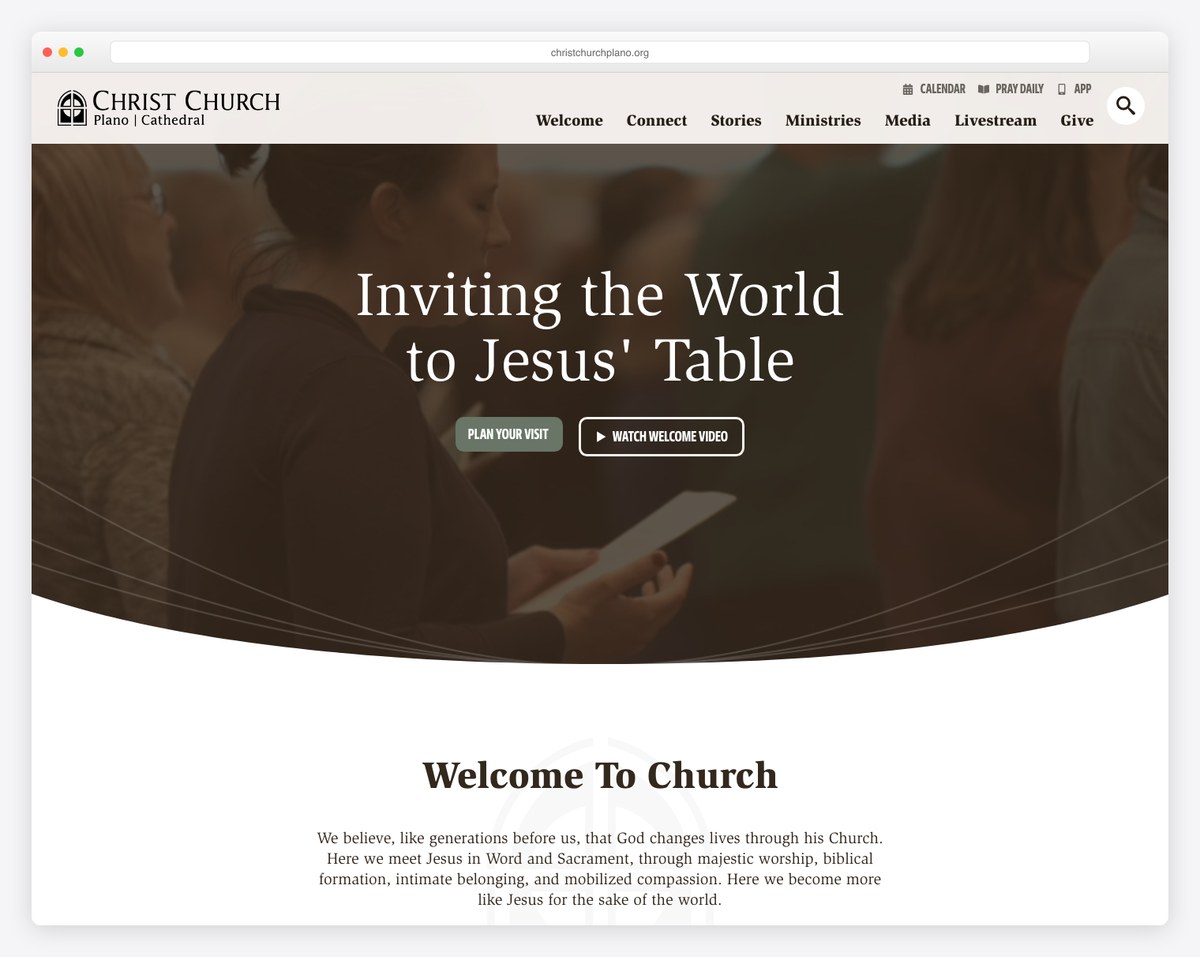
Christ Church Plano is a large suburban ACNA parish with a polished, ministry-rich site and an inviting line — “Inviting the World to Jesus’ Table.” It’s a strong example of contemporary evangelical-Anglican design: modern and accessible while still unmistakably sacramental.
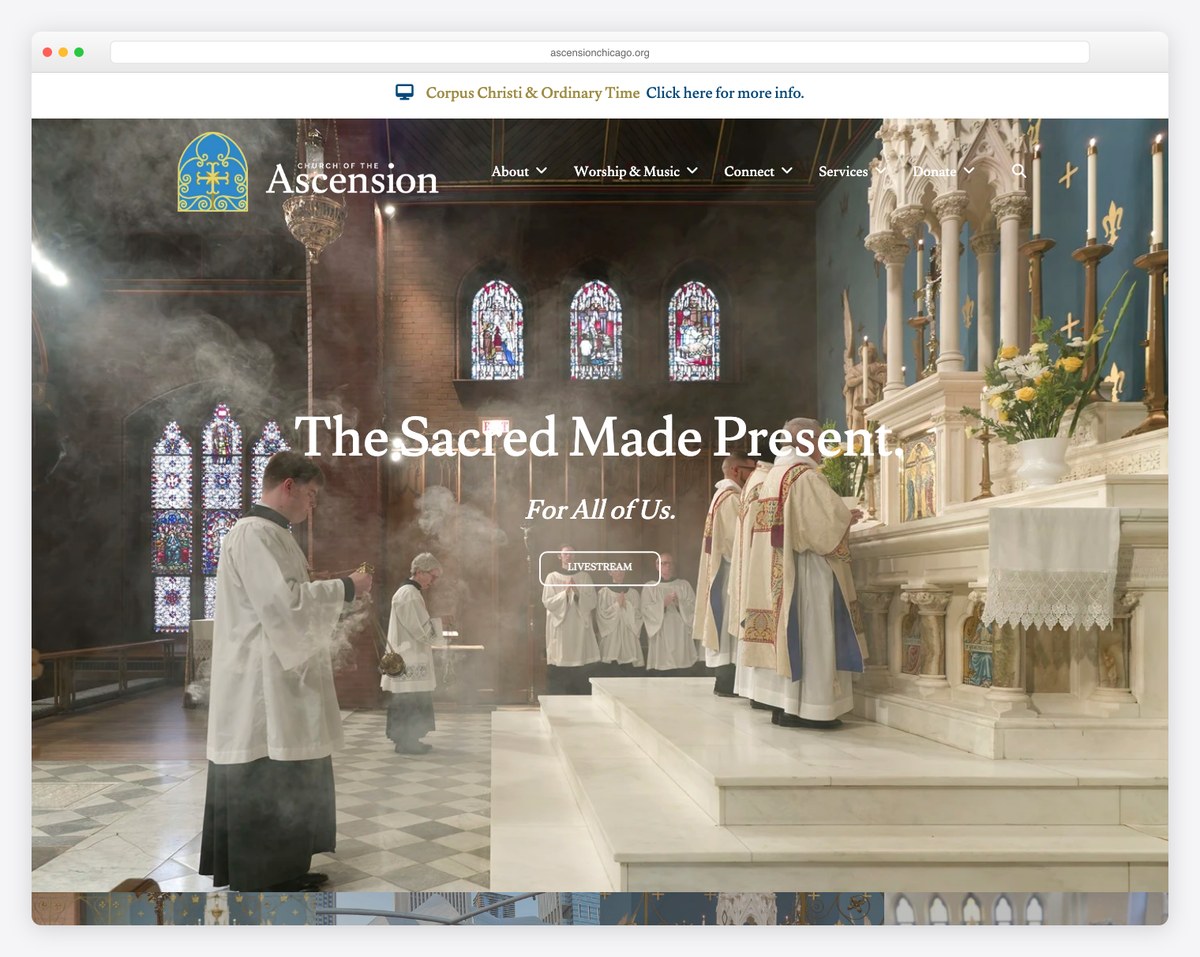
Church of the Ascension is high-church beauty done with restraint — “The Sacred Made Present,” elegant serif typography, and the quiet confidence of a deeply Anglo-Catholic parish. A masterclass in letting reverence and white space, rather than busyness, carry the design.
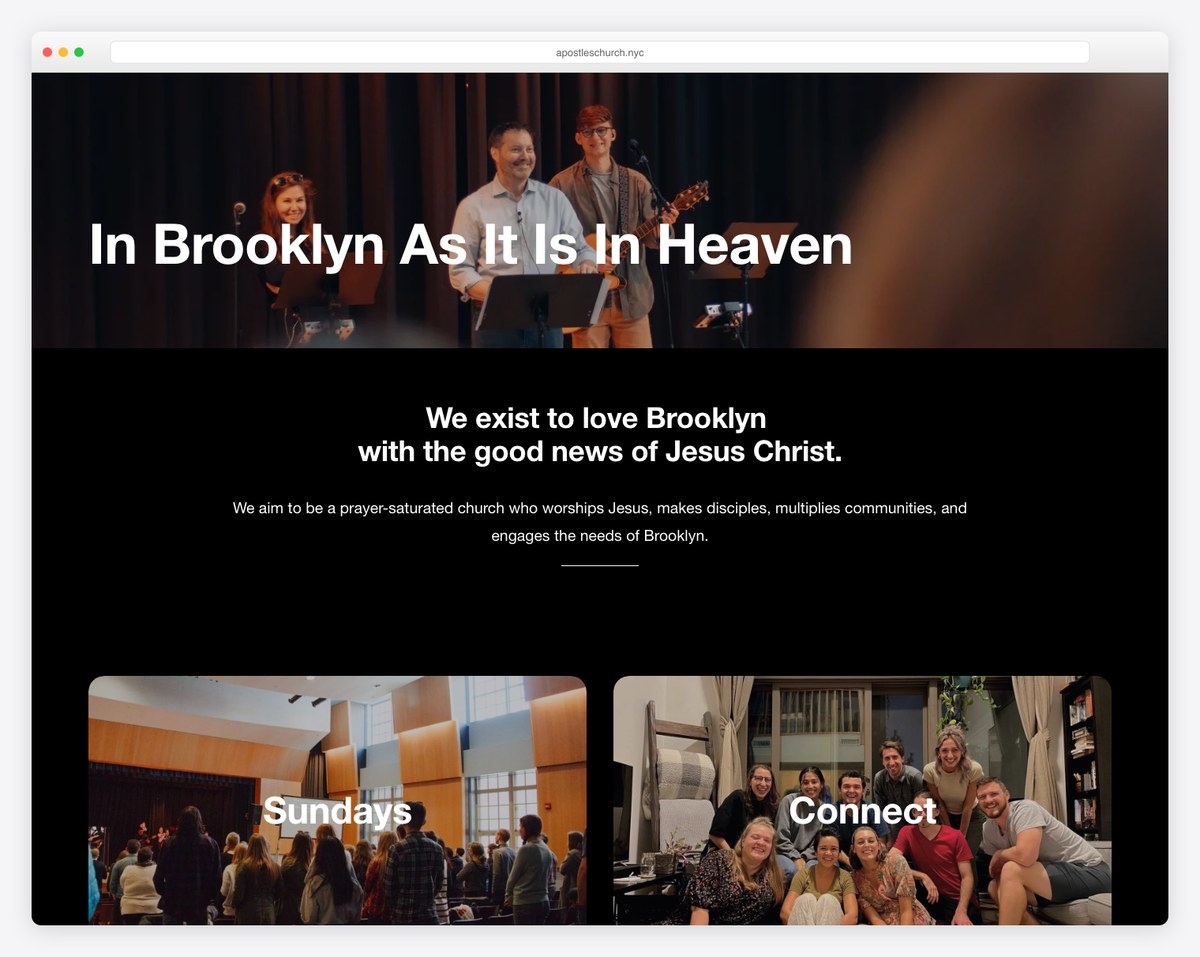
Apostles Church brings a striking urban-plant aesthetic — “In Brooklyn As It Is In Heaven” over cinematic imagery on a clean Squarespace build. Proof that an Anglican church plant can feel every bit as contemporary and design-forward as any non-denominational church in the city.
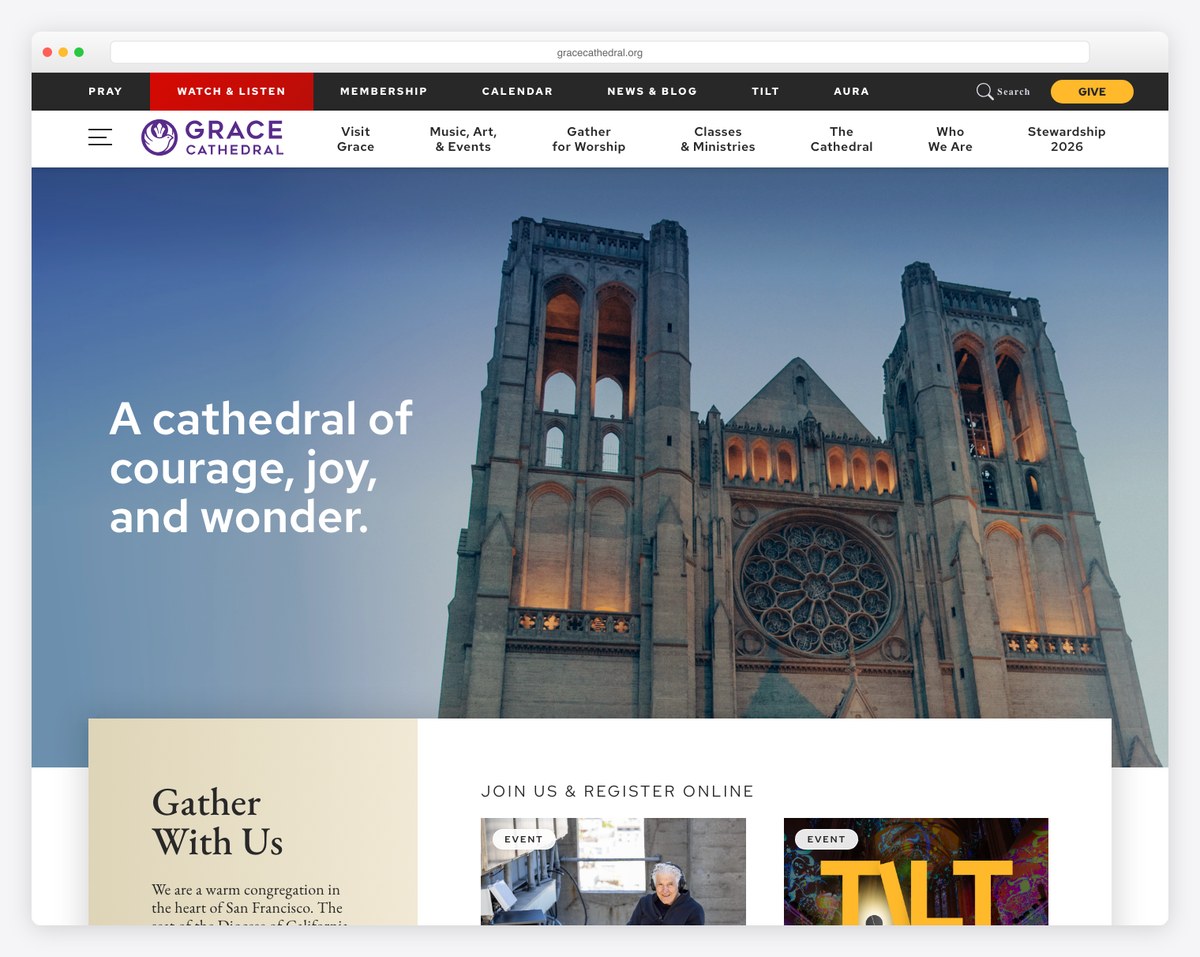
Grace Cathedral gives a landmark cathedral a bold, modern brand — “A cathedral of courage, joy, and wonder” — leaning into its labyrinth and arts identity. A great example of an old institution presenting itself in a confident, contemporary voice without losing its gravitas.
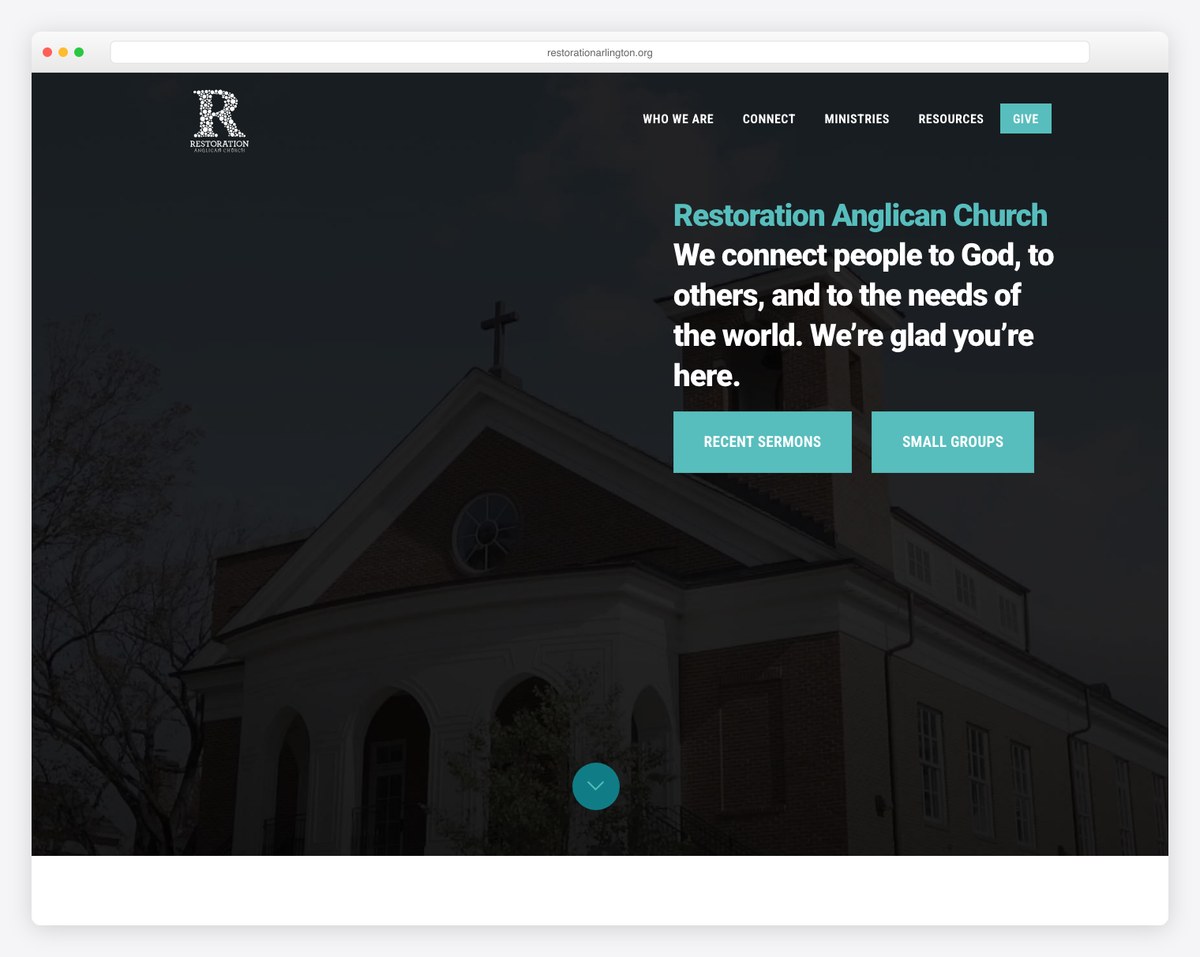
Restoration Anglican has the clean, modern church-plant look done right — a confident dark hero and a mission stated simply: “We connect people to God, to others, and to the needs of the world.” It pairs that contemporary feel with a clear liturgy explainer and a warm welcome.
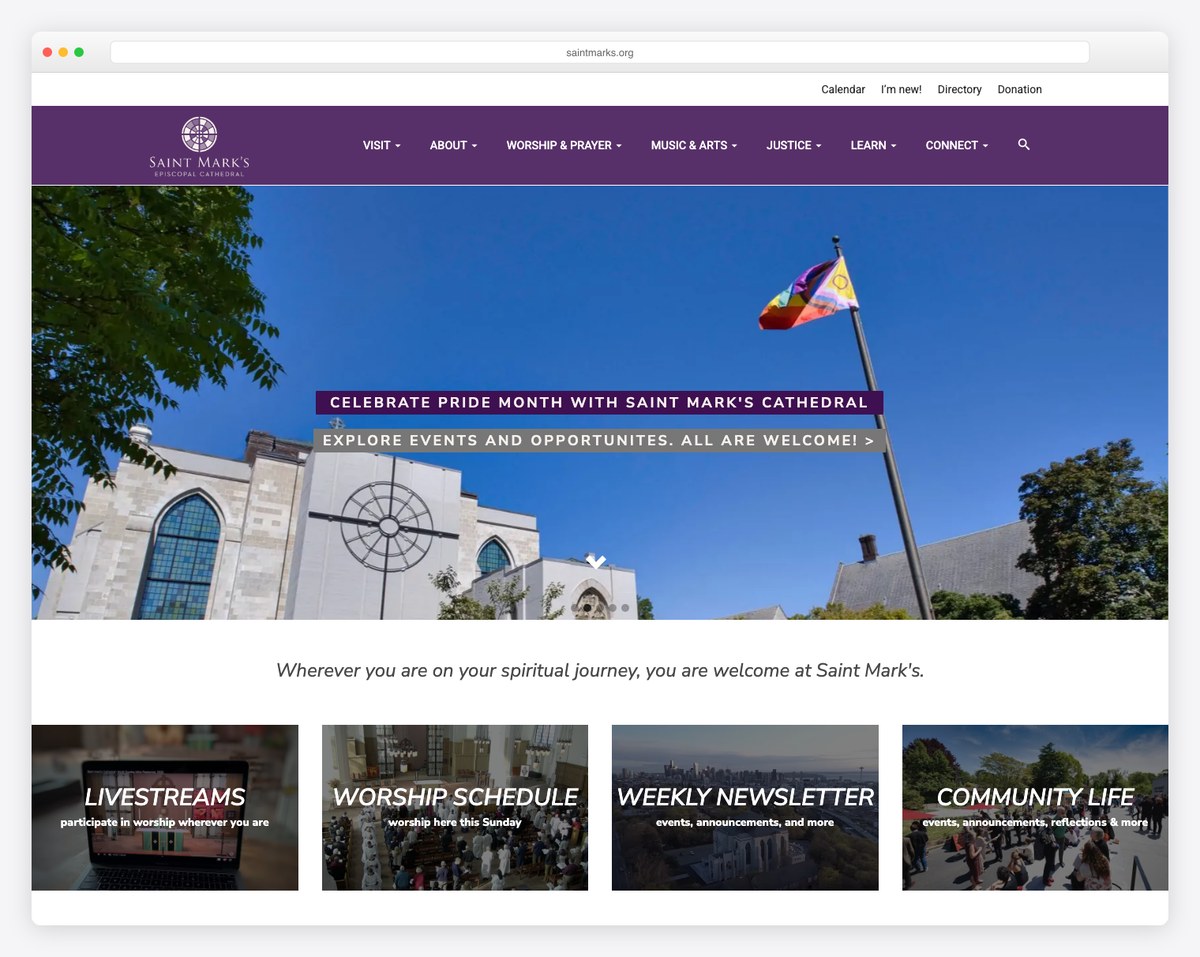
Saint Mark’s Cathedral shows that a modernist concrete cathedral can have a modern, welcoming site to match — clean navigation, its renowned Compline service surfaced, and reassuring newcomer cues. A strong reference for a cathedral that wants approachability alongside its musical and liturgical depth.
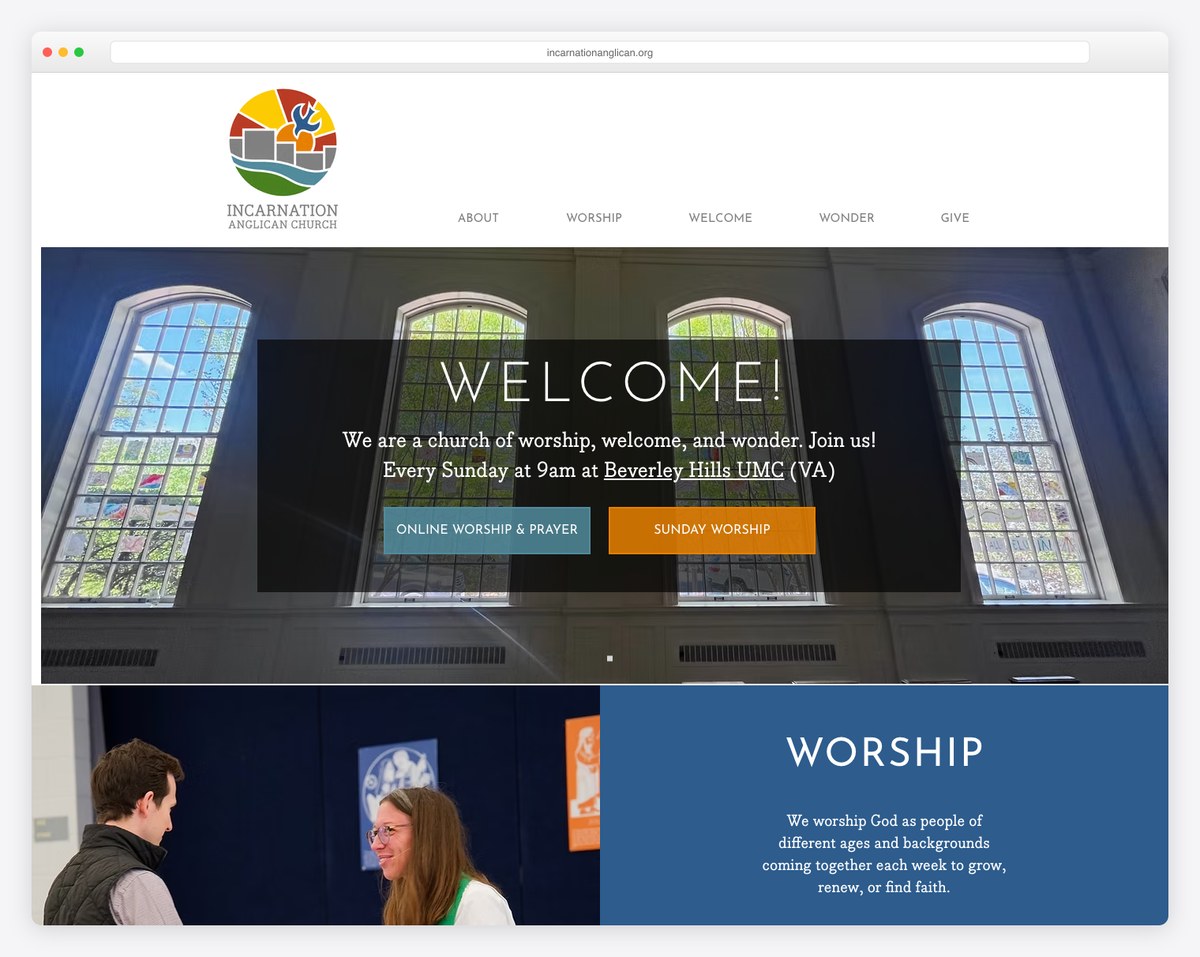
Incarnation Anglican proves a smaller church plant can have a genuinely polished site without a large budget — a clean, welcoming build on Wix with clear worship and “new here” paths. The encouraging example for any small parish that assumes good design is out of reach.
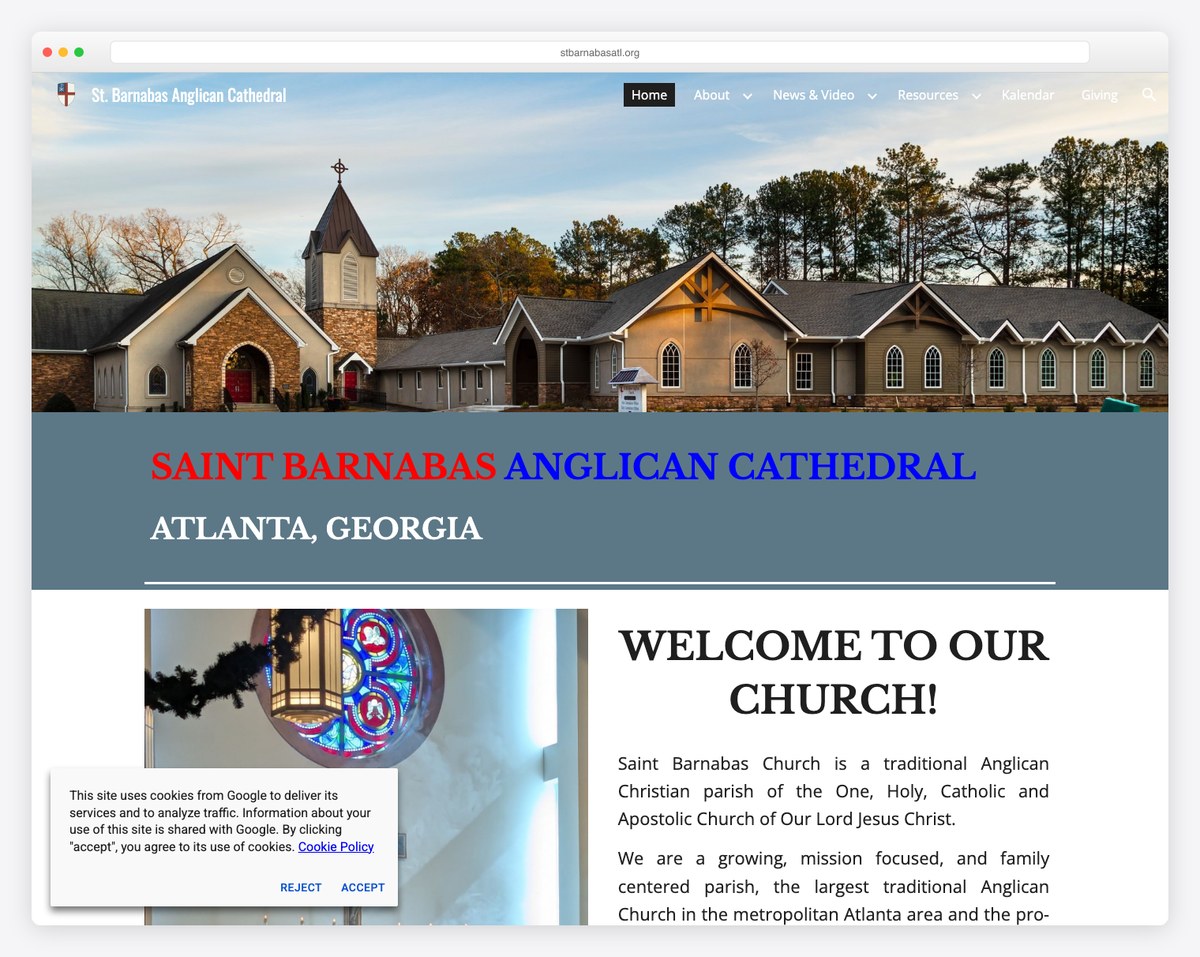
St. Barnabas, a pro-cathedral of the Anglican Province of America, represents the Continuing Anglican movement with a traditional, prayer-book-centered identity and a clear “Welcome to our Church” invitation. A fitting model for a traditionalist parish that wants warmth without modernizing away its character.
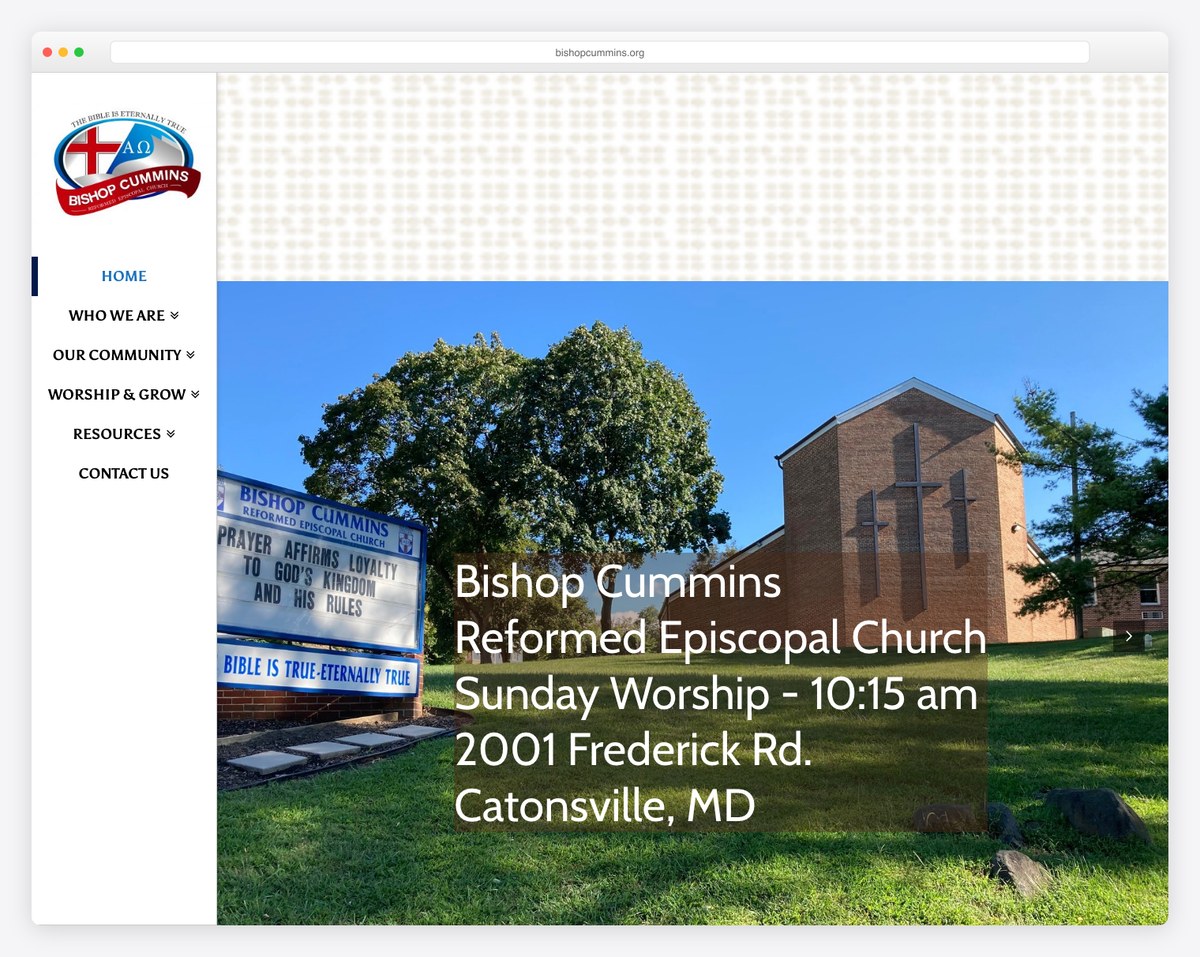
Bishop Cummins represents the Reformed Episcopal Church — a body older than the others here, founded in 1873 — with a heritage-forward design that still puts the essentials front and center: its name, its Reformed-Anglican identity, and a plain service time and address. A clean model for a historic parish in a smaller jurisdiction.
The throughline: name your body plainly, lead with the beauty of your space and liturgy, and pair it with a genuinely warm “what to expect” welcome. These parishes pull it off on WordPress, Squarespace, Wix, and church-specific platforms alike — so the fundamentals in the checklist matter more than the tool. To choose yours, see our best church website builders guide. For more inspiration, browse our 50 best church website designs or the examples for Catholic, Lutheran, and Presbyterian churches.
If you are rebuilding rather than just gathering ideas, Canterbury is a free template built for exactly this: a Church of England parish keeping the daily office. It works out the liturgical season from the date and colours the page accordingly, so the site is never showing Advent in Lent.
“Anglican” refers to the worldwide tradition descended from the Church of England, and to the global Anglican Communion. “Episcopal” in the US refers specifically to The Episcopal Church (TEC), the Communion’s American member. So every Episcopalian is Anglican, but not every US church that calls itself “Anglican” is Episcopal — many “Anglican” churches belong to the more conservative Anglican Church in North America (ACNA) or to Continuing Anglican bodies that are outside the Communion. Because the distinction is theologically meaningful, most churches state their body clearly on their website.
At minimum: your body clearly stated (Episcopal/TEC, ACNA, Continuing, or REC) and your diocese, service times with a warm “what to expect at a liturgical service” guide, a plain-language word about the Book of Common Prayer and the sacraments, the church calendar and liturgical seasons, real photography of your sacred space balanced with people, your music and choral program, a worship livestream and sermon archive, secure online giving, and an obvious “Plan Your Visit / I’m New” path. The single most valuable Anglican-specific addition is the “what to expect” guide, which lowers the barrier for visitors unfamiliar with liturgy.
There’s no single best — the examples here are built on WordPress, Squarespace, Wix, and church-specific platforms, and all look great. WordPress offers the most flexibility and is ideal for large parishes with deep content and a sermon archive; Squarespace gives the most polished design with little maintenance; Wix is the easiest and most affordable, well suited to a smaller church plant. Choose based on your parish’s size, budget, and how much you want to maintain — our church website builders guide compares them in depth.
A liturgical, Communion-centered service that follows the Book of Common Prayer: a structured rhythm of prayers, Scripture readings, hymns (often with choir and organ), a sermon, and the celebration of Holy Communion (the Eucharist). You’ll stand, sit, and at times kneel along with the congregation, and the service typically lasts about an hour. Everyone is welcome to attend, and you don’t need to know the liturgy in advance — most parishes print or project everything you need to follow along, which is exactly why a good “what to expect” page on the website helps so much.

Church Website Examples
Church Website Examples
Church Website Examples
10 complete church website templates, MIT licensed. Browse every demo freely; we will email you whichever folder you want.
All templates