Baptist church websites have a distinct character — sermon-centric, missions-focused, and community-driven. Whether you’re Southern Baptist, American Baptist, Independent Baptist, or part of another Baptist fellowship, your website needs to communicate both your doctrinal identity and your welcoming spirit. The best Baptist church websites do this without looking dated or feeling inaccessible to visitors unfamiliar with Baptist traditions.
We reviewed dozens of Baptist church websites across different sizes and conventions to find the ones that balance strong content with modern design. Here are the best examples, along with actionable tips for your own site.
In This Guide
What Makes Baptist Church Websites Unique
Sermon-Centric Content
Baptist churches place heavy emphasis on preaching. Your sermon archive isn’t just a nice-to-have — it’s a core feature. Visitors often listen to sermons online before visiting in person. A well-organized sermon library with series groupings, audio/video options, and search functionality can be the deciding factor for someone choosing between your church and another.
Baptism Information
Believer’s baptism is central to Baptist identity. Your website should clearly explain what your church believes about baptism, how to be baptized, and how to sign up. Many Baptist churches feature baptism stories and photos — this content is powerful for both members and visitors exploring what baptism means.
Sunday School and Education
Sunday School (or Bible study groups, life groups, etc.) is a distinctive feature of Baptist church life. Your website should make it easy for newcomers to find a group. List classes by age group, topic, day/time, and location. Include a brief description and contact person for each group so visitors know what to expect.
Missions Emphasis
Baptist churches are historically missions-focused. A missions page showcasing your church’s local and global partnerships communicates your values and inspires generosity. Include missionary profiles, project descriptions, and giving opportunities. Some churches feature a mission trip calendar — helpful for members interested in serving.
Warm, Welcoming Tone
Baptist churches are known for hospitality. Your website’s copywriting should reflect that warmth — friendly language, clear invitations, and a genuine welcome for visitors. Avoid insider language that makes newcomers feel like outsiders. Write like you’re talking to a neighbor, not delivering a theological lecture.
Baptist Church Website Examples
1. The Village Church (Flower Mound, TX)
URL: thevillagechurch.net
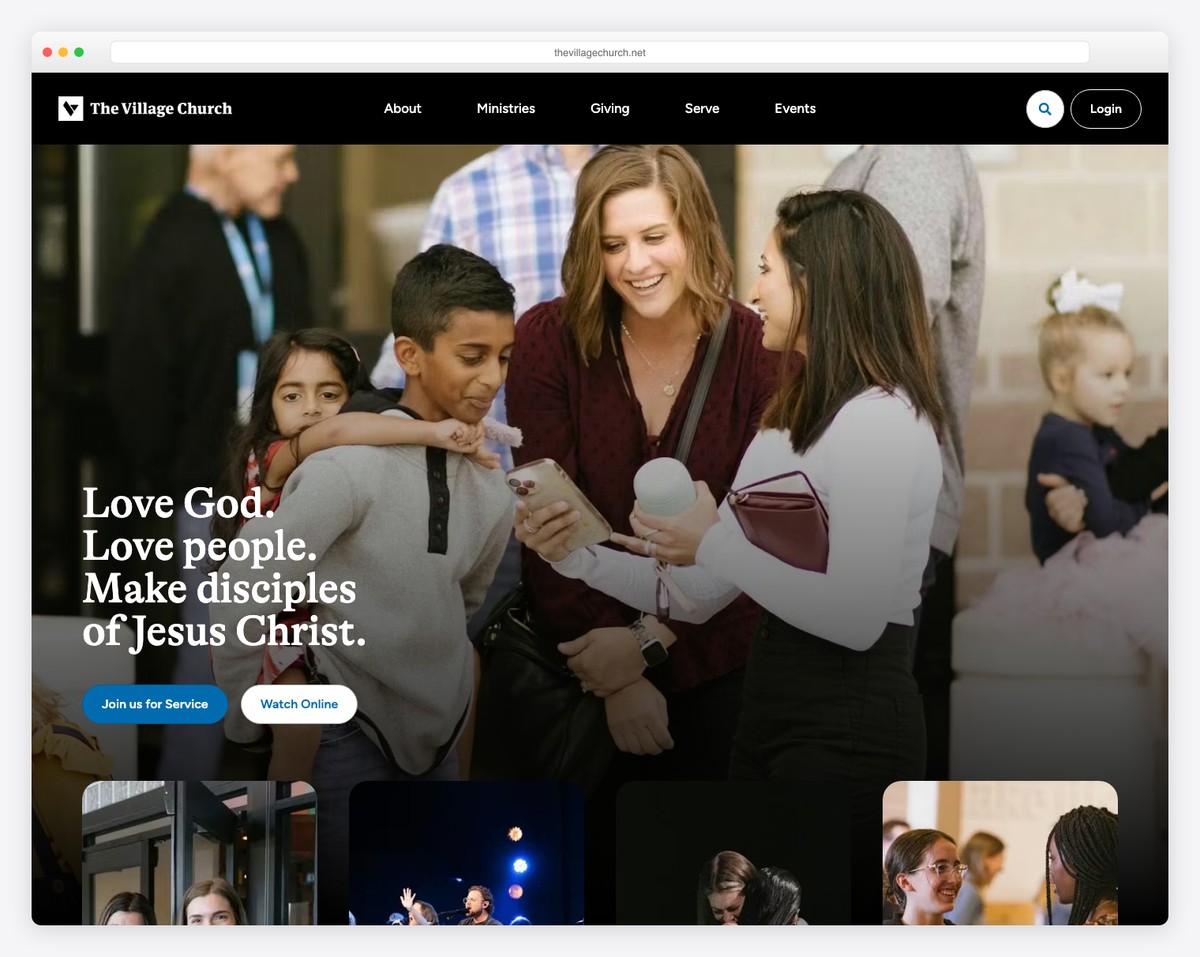
What’s great: Clean, modern design with strong sermon content front and center. The sermon archive is meticulously organized by series, speaker, book of the Bible, and topic. The “Plan a Visit” page is detailed and welcoming — addressing parking, kids, dress code, and what to expect. The church’s beliefs page is thorough without being academic. Navigation handles the large volume of content gracefully.
2. First Baptist Church Dallas (Dallas, TX)
URL: firstdallas.org
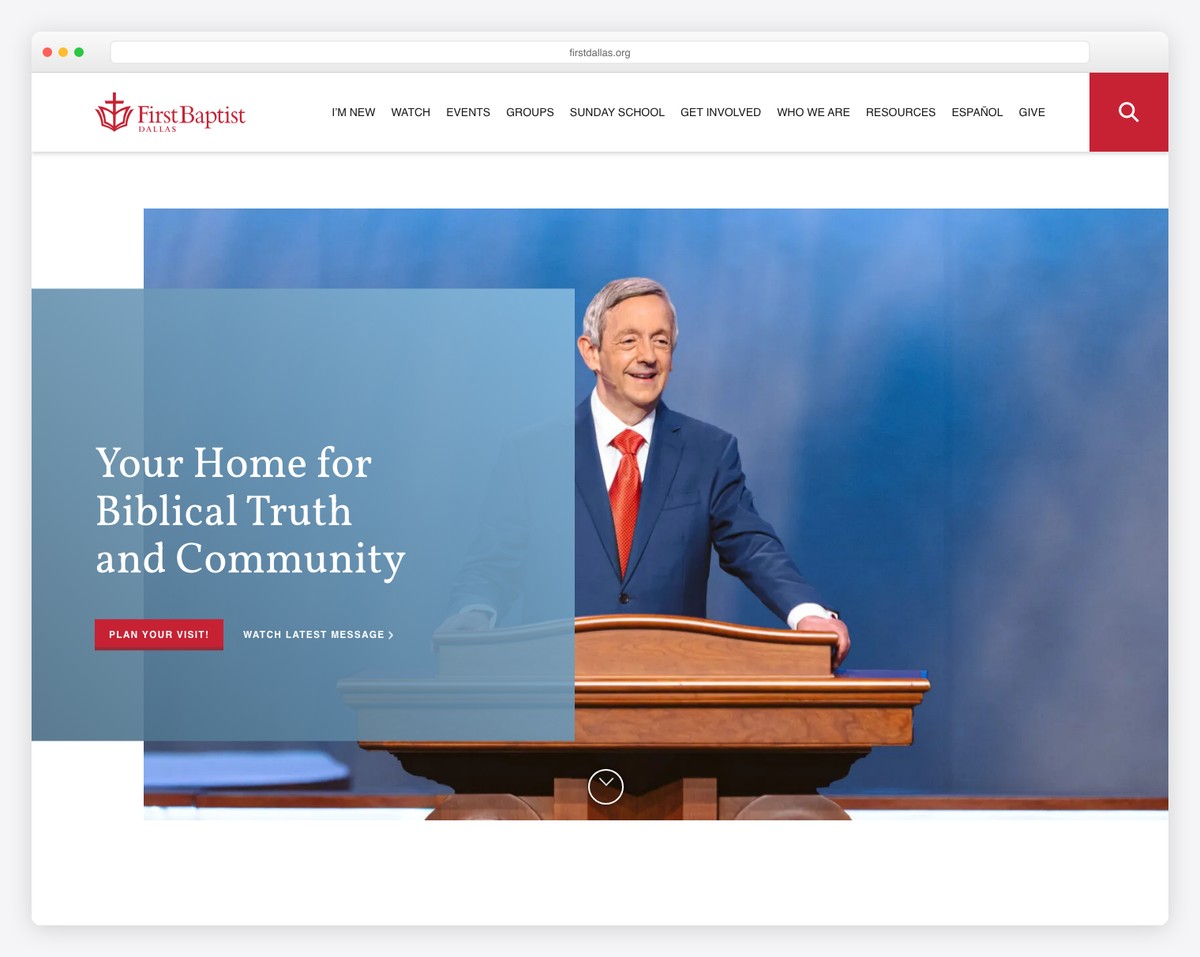
What’s great: A large Baptist church website that manages complexity well. The homepage immediately communicates service times, upcoming events, and featured sermon content. The ministries section is comprehensive — organized by life stage and interest area. The campus information includes maps and directions, which is essential for a multi-building church. Live stream is prominently featured.
3. Immanuel Baptist Church (Louisville, KY)
URL: immanuelbaptist.org
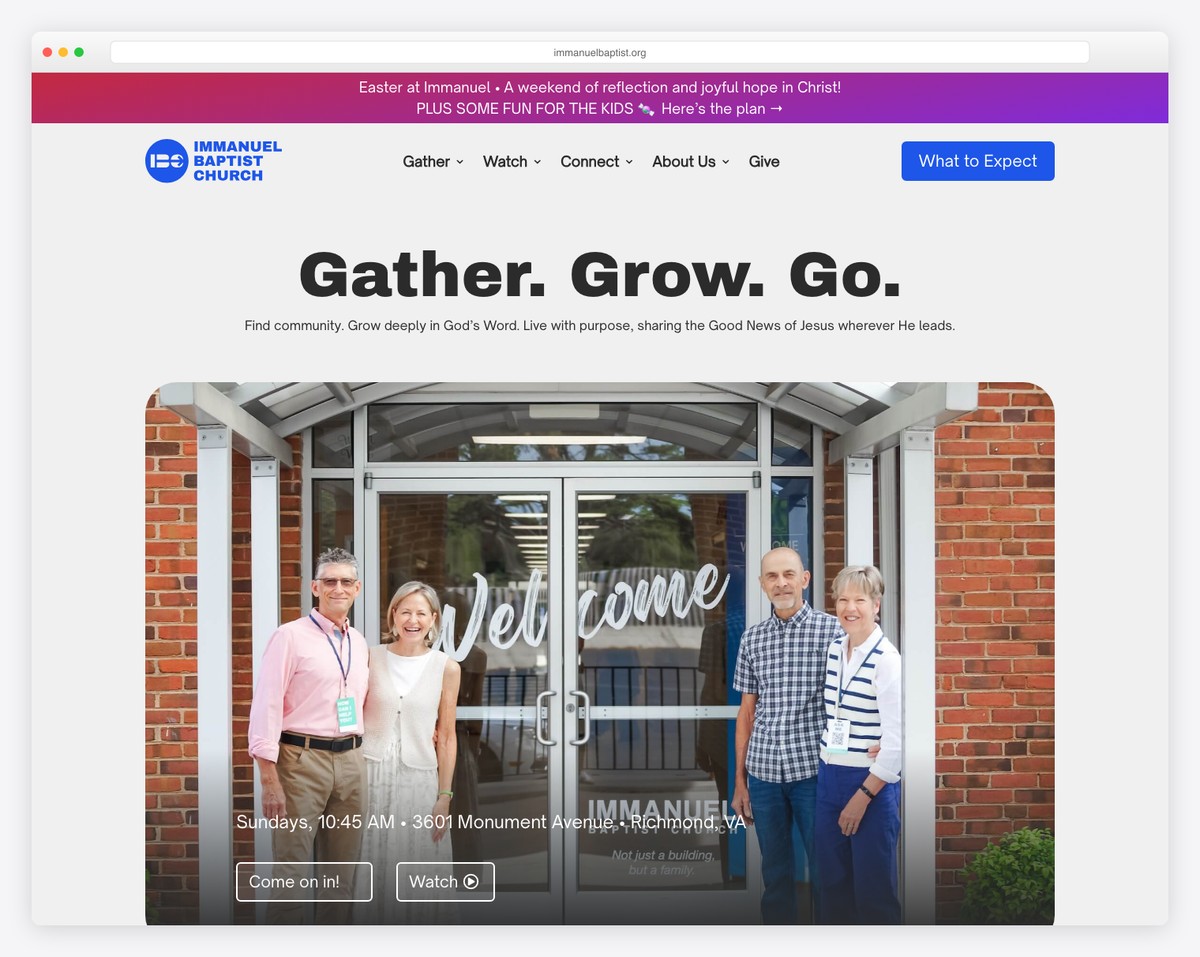
What’s great: Mid-sized church website that demonstrates you don’t need a mega-church budget for good design. The homepage is focused: welcome message, service times, and a clear “Plan Your Visit” call-to-action. The sermon page is well-organized with recent series featured prominently. The “What We Believe” page explains Baptist distinctives in approachable language.
4. McLean Bible Church (Vienna, VA)
URL: mcleanbible.org
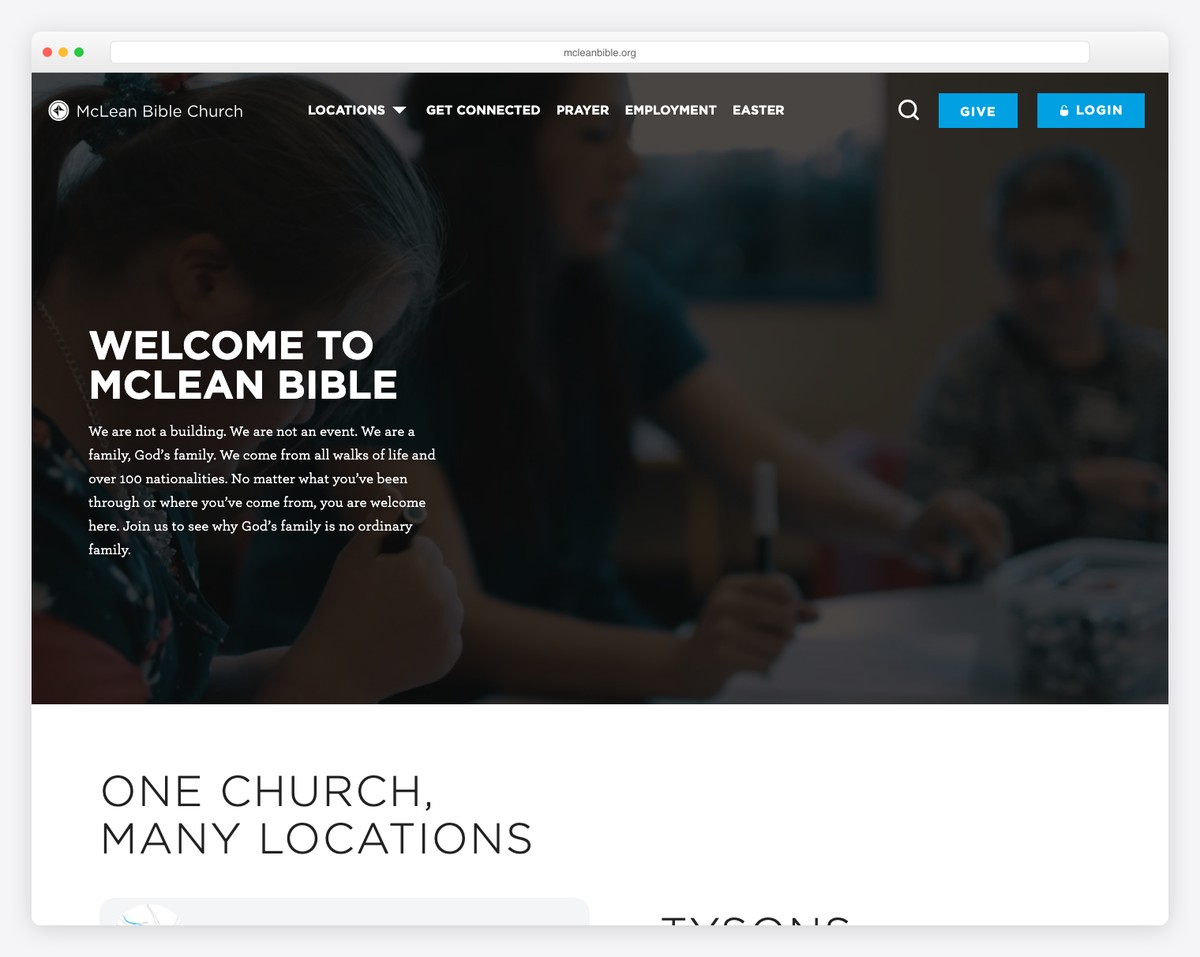
What’s great: Multi-campus church with an excellent website that handles campus-specific information well. Each campus has its own page with location, service times, and staff. The sermon and teaching content is exceptional — video, audio, notes, and discussion guides. The small groups finder makes it easy for newcomers to connect. The “Next Steps” pathway guides visitors from first visit to membership.
5. First Baptist Church Jacksonville (Jacksonville, FL)
URL: fbcjax.com
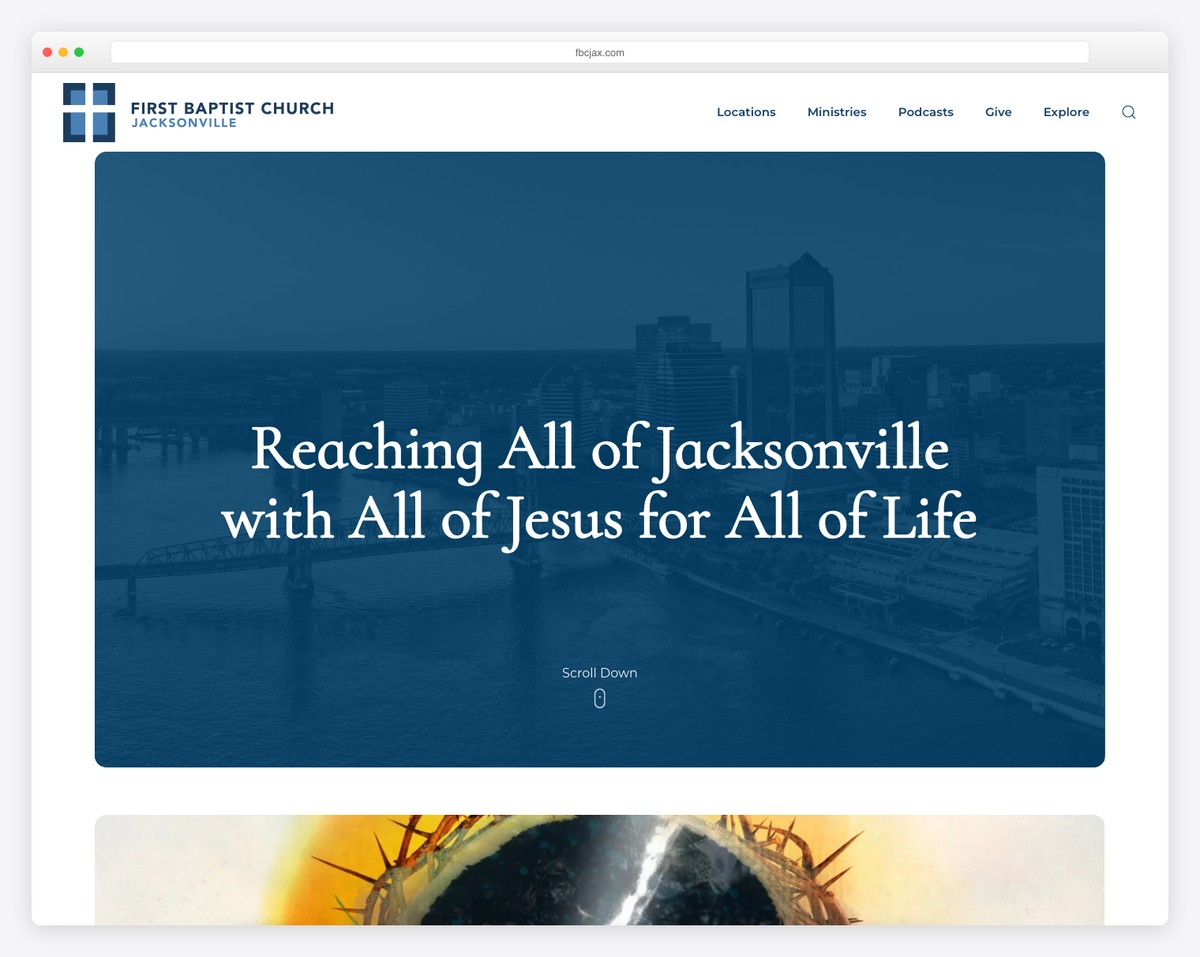
What’s great: Strong visual design with quality photography throughout. The welcome section addresses first-time visitors directly with practical information. The ministries page organizes programs by age group — children, students, adults, seniors — making it easy for families to see everything available. The missions section is detailed, reflecting Baptist missions emphasis with partner profiles and trip information.
6. Summit Church (Durham, NC)
URL: summitchurch.com
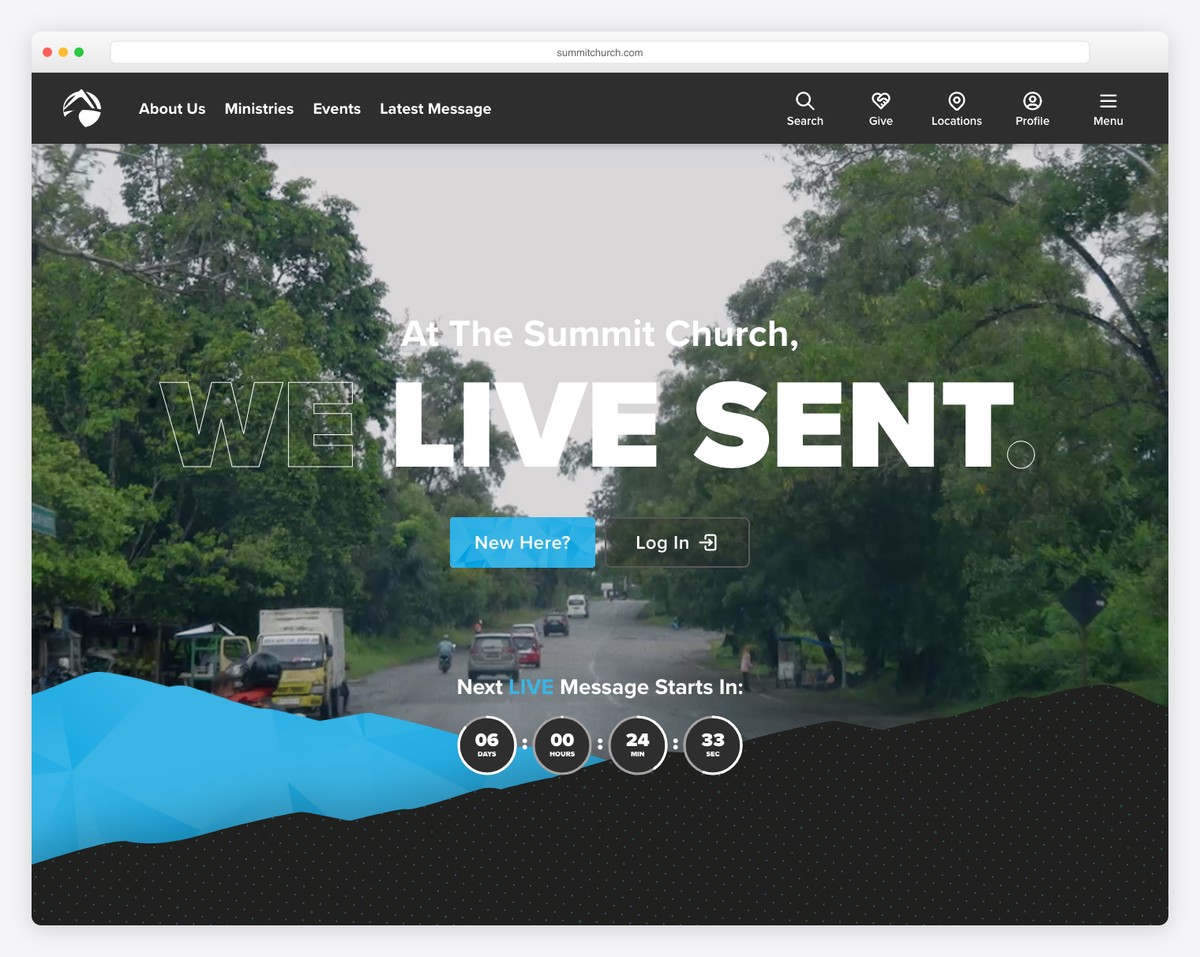
What’s great: Contemporary design that appeals to a younger demographic while maintaining Baptist identity. The homepage is bold and visually driven — large imagery, minimal text, clear calls-to-action. Sermon content is the primary focus with an excellent media player. The church planting and missions content reflects Summit’s strong sending culture. The “Get Involved” section provides clear next steps.
7. Bellevue Baptist Church (Memphis, TN)
URL: bellevue.org
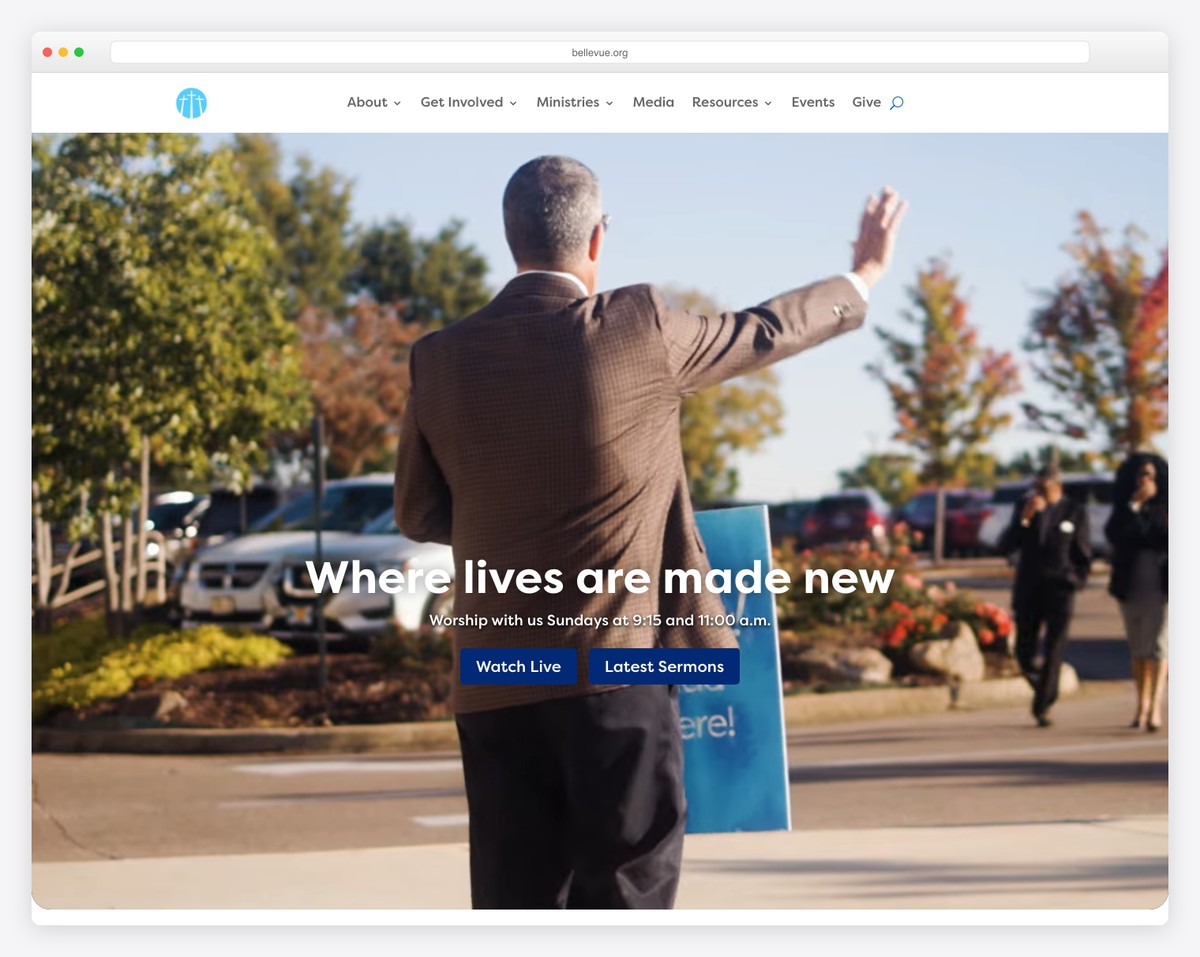
What’s great: Classic large Baptist church website that manages a vast amount of content. The homepage highlights current sermon series, upcoming events, and quick links to the most-visited pages. The adult education section is comprehensive, listing Sunday School classes with descriptions, teachers, and meeting locations. The recreation ministry section (common in larger Southern Baptist churches) is well-organized.
8. The Austin Stone Community Church (Austin, TX)
URL: austinstone.org
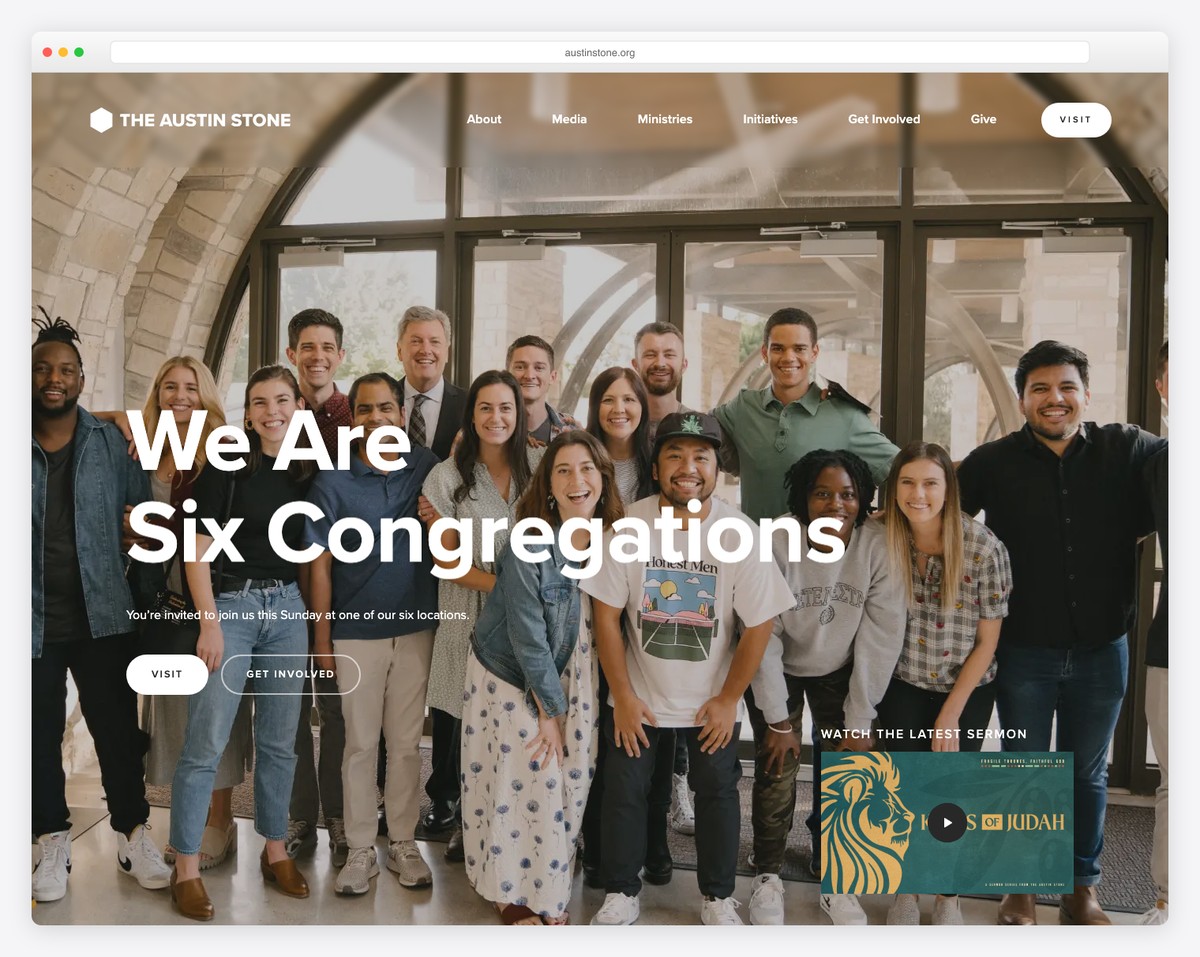
What’s great: Clean, modern design with strong brand identity. The multi-campus information is handled elegantly — each campus feels connected but has its own personality. The “Stories” section features real testimonies from church members, which is compelling content for visitors. The equipping and training section reflects a deep commitment to discipleship. The design feels more like a brand website than a typical church site.
9. Capitol Hill Baptist Church (Washington, DC)
URL: capitolhillbaptist.org
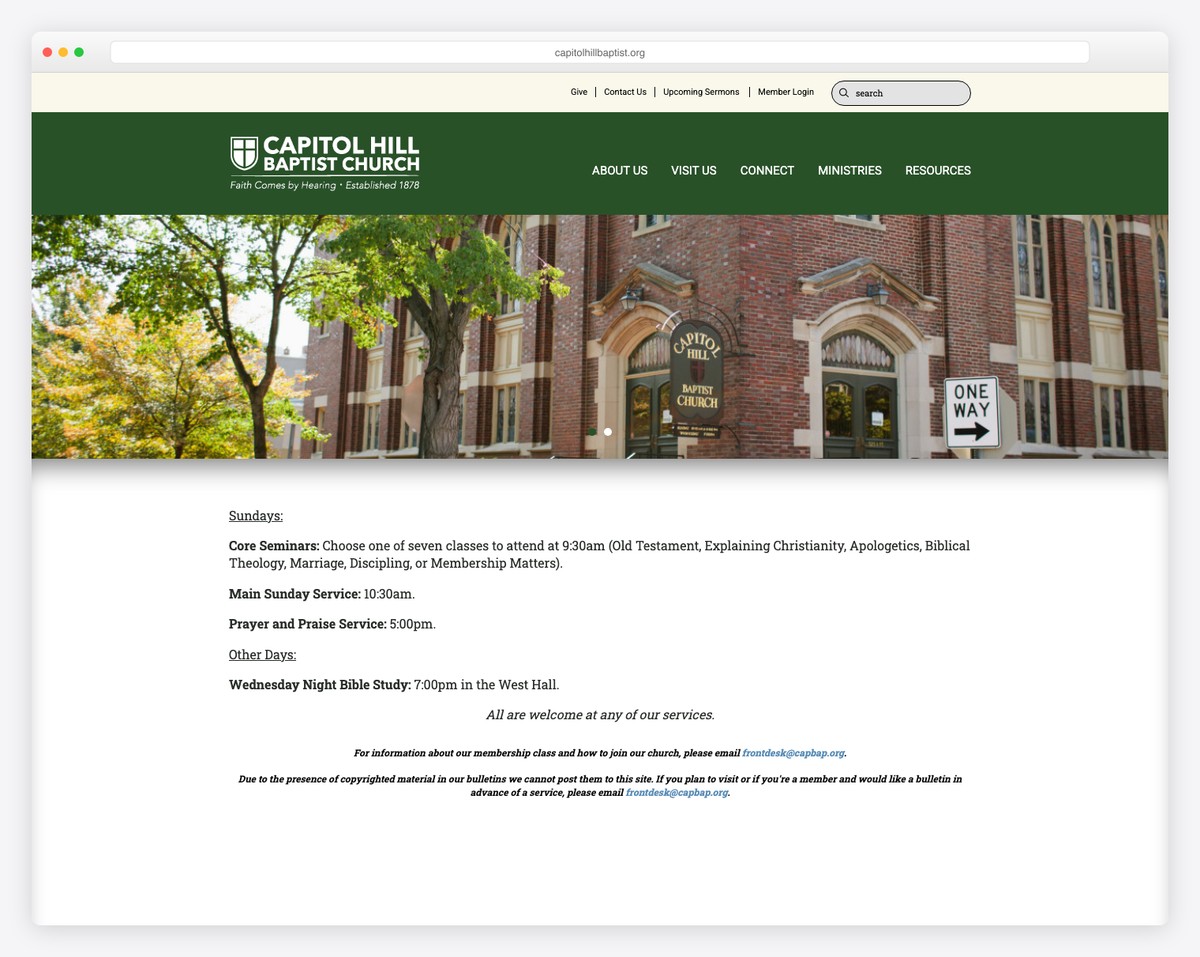
What’s great: Content-rich website that reflects the church’s emphasis on careful biblical teaching. The sermon archive is extensive and well-organized. The “About” section includes detailed information about church membership, governance, and beliefs — reflecting Baptist polity. The website is straightforward and functional rather than flashy, which fits their identity perfectly. Proves that good design doesn’t have to mean trendy design.
10. Cross Church (Northwest Arkansas)
URL: crosschurch.com
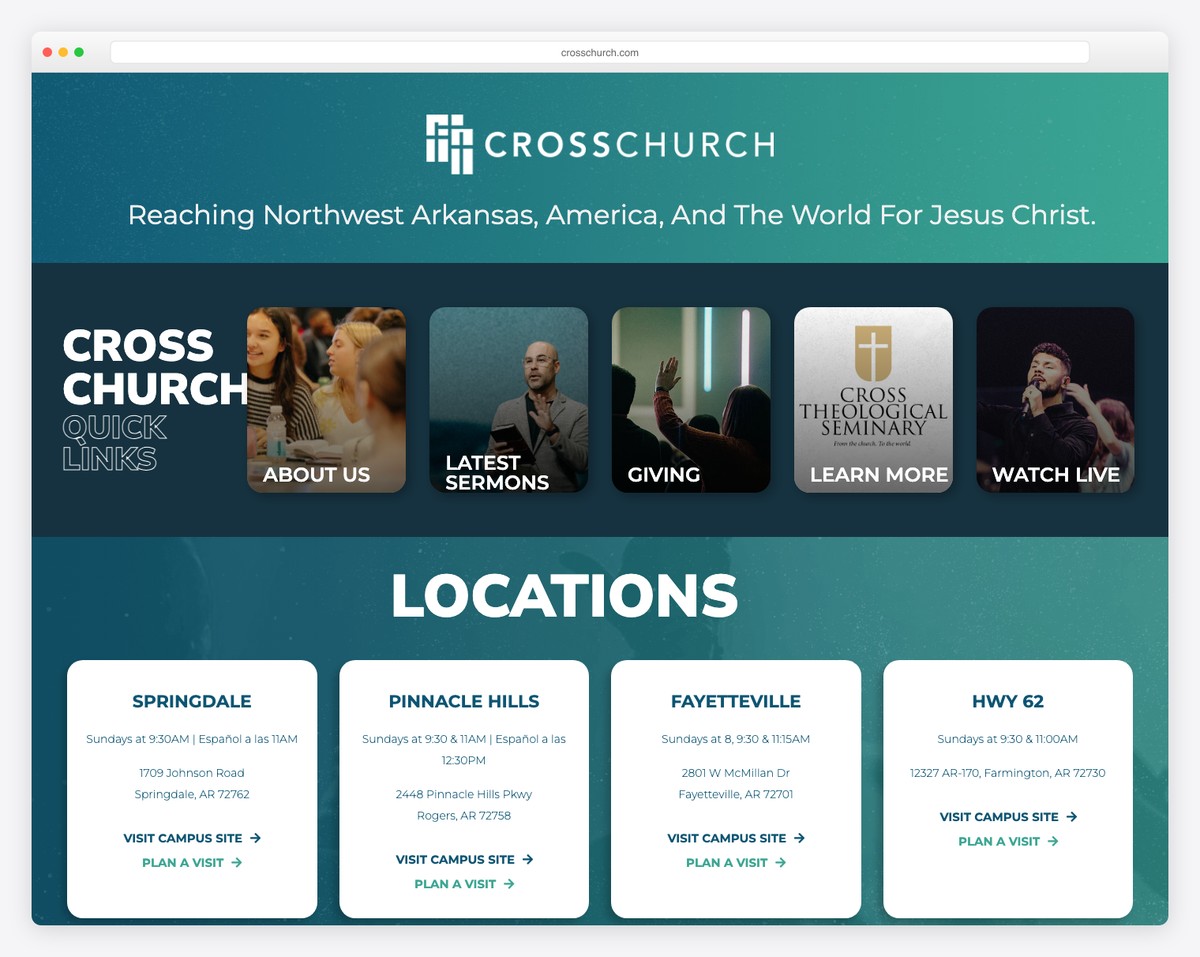
What’s great: Multi-campus website with strong visual branding. The homepage prominently features the current sermon series with high-quality artwork. The “I’m New” section is thorough — what to wear, where to park, what happens during the service, and kids’ ministry details. The missions page is particularly strong, reflecting Baptist missions commitment with global partner information and giving opportunities.
Design Tips for Baptist Church Websites
Make Sermons the Star
Feature your current sermon series on the homepage with series artwork, the latest sermon title, and a clear “Watch/Listen” button. Your sermon archive should be searchable and filterable by series, speaker, date, and Bible reference. Many visitors will explore your sermons before visiting in person — make this content easy to find and easy to consume.
Create a Clear “What We Believe” Page
Baptist churches have distinctive beliefs — believer’s baptism, congregational governance, the authority of Scripture, the priesthood of all believers. Your beliefs page should explain these clearly for people who may not know what “Baptist” means. Avoid assuming doctrinal knowledge. Link to your denomination’s confession of faith if applicable (like the Baptist Faith and Message for SBC churches).
Highlight Connection Opportunities
Sunday School, small groups, Bible studies — whatever you call them, make it easy for newcomers to find a group. A group finder tool (filter by day, time, age group, topic) is ideal for larger churches. For smaller churches, a simple list with descriptions is sufficient. Include a contact person for each group so visitors can ask questions before showing up.
Feature Baptism Content
Create a dedicated baptism page that explains your church’s beliefs about baptism, shares the process for being baptized, and includes a sign-up form or contact information. Consider adding a photo gallery or video of recent baptisms — this visual content communicates the joy and community of your church better than any description.
Invest in the Visitor Experience
Your “Plan a Visit” or “I’m New” page should answer every question a first-time visitor might have: What should I wear? Where do I park? What’s the service like? Is there childcare? How long is the service? What Bible translation do you use? Address these honestly and warmly. For more on this, see our church homepage formula.
Choosing a Platform for Your Baptist Church Website
Baptist churches with extensive sermon libraries and multiple ministries often do well with WordPress — its flexibility handles large content volumes and offers dedicated sermon plugins. Smaller Baptist churches can thrive on Squarespace or Tithe.ly, which offer simpler management with less maintenance overhead.
For a full comparison of your options, see our church website builders guide. And if you’re ready to start building, our step-by-step guide walks you through the process from start to finish.
Frequently Asked Questions
Should we include our denominational affiliation on the website?
Yes. Be transparent about your denominational affiliation (SBC, ABC, CBF, Independent, etc.). Some churches try to downplay this to seem more welcoming, but visitors appreciate honesty. Include it on your About page and consider a brief explanation of what that affiliation means. People researching churches want to know what they’re walking into.
How should we handle Wednesday night services on the website?
Wednesday night services or programs are a Baptist tradition that visitors may not expect. Include Wednesday evening in your service times section with details about what happens — prayer meeting, Bible study, youth programs, children’s activities, choir rehearsal. For visitors, the Wednesday night schedule demonstrates the depth of your church’s community life beyond Sunday morning.
Should we include Vacation Bible School information year-round?
Keep VBS information live on your site from the announcement through the event, then replace it with a recap (photos, highlights) for a few weeks after. During the off-season, you can either remove the page or keep a general “VBS is every summer — check back in spring for details” placeholder. VBS pages can rank well in local search, so keeping a year-round page with updated dates each year is an SEO-smart approach.
How do multi-campus Baptist churches handle their website?
The best approach is one website with campus-specific pages. Each campus gets its own page with service times, location, staff, and campus-specific announcements. Shared content (sermons, beliefs, missions) lives on the main site. Some multi-campus churches use a campus selector on the homepage so visitors immediately see information relevant to their location. This approach avoids maintaining multiple separate websites.
What should a missions page include?
A Baptist church missions page should include: your missions philosophy, local mission partners and projects, international missionaries your church supports (with appropriate security considerations for sensitive locations), upcoming mission trips with application info, Cooperative Program giving information (for SBC churches), and ways to give specifically to missions. Photos and stories from mission trips make this page come alive.
Leave a Reply