Church Website Examples
Hispanic and Latino churches are among the fastest-growing in the United States — and their websites face a challenge most don’t: serving two languages and two generations at once. First-generation members are often Spanish-dominant; their US-raised children are bilingual or English-dominant. The best Hispanic church websites handle that gracefully, letting each person choose the language they’re most comfortable in. The fastest way to design one is to see how real churches do it.
Below are 12 real, current Hispanic, Spanish-language, and bilingual church websites — across Pentecostal/Assemblies of God, Catholic, Baptist, Adventist, and non-denominational traditions — with what each does well and how it handles the bilingual question. We don’t sell a website builder, so this is a neutral look at real iglesias, not a product pitch. First, the four ways churches handle two languages, and a checklist of what the strongest sites share.
Latinos are roughly one in five US residents and a young, fast-growing share of the country’s Christians — concentrated in Roman Catholicism and, increasingly, in Pentecostal and Assemblies of God churches (several of the largest Hispanic congregations in the US are AG). The defining web-design fact is generational language shift: a single site shouldn’t force either generation to navigate in a language they don’t prefer. There are four proven ways to solve it.
| Approach | What it is | Best for |
|---|---|---|
| Spanish-only (iglesia) | The whole site is in Spanish | Spanish-dominant, first-generation congregations |
| Bilingual toggle | One site with an English / Español switch | Mixed-generation churches |
| Side-by-side bilingual | Both languages shown together on the page | Smaller, fully integrated bilingual churches |
| English-primary + Spanish | An English site with a dedicated Spanish section or campus | Large English churches adding a Spanish ministry |
There’s no single right answer — the best choice depends on your congregation. You’ll see all four approaches in the gallery below.
Whatever approach you choose, the strongest sites share a pattern: they make the language choice obvious, translate fully rather than tokenly, label service times by language, and use real photography of their own community. Here’s the full checklist.
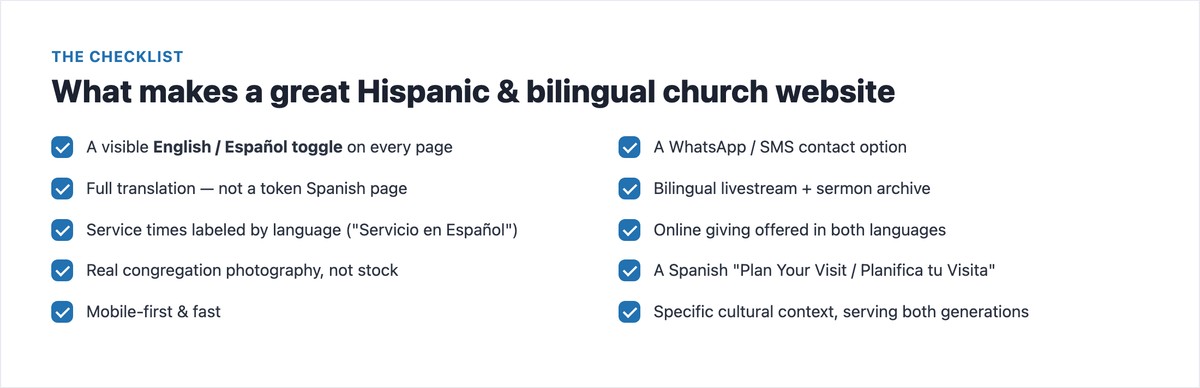
Two details separate the best from the rest. First, service times labeled by language — “Servicio en Español 9:30 AM, English Service 11:00 AM” — so no one shows up to the wrong service. Second, a WhatsApp or text contact option, which sees very high adoption in Latino communities and often works better than email. And because Latino web traffic skews heavily mobile, every one of these sites has to be fast and mobile-first. For the rest of the structure, see our homepage formula and Plan Your Visit guides.
All were live when we last checked, chosen to show all four language approaches across a range of traditions and church sizes. For each, note how it handles the two-language question.
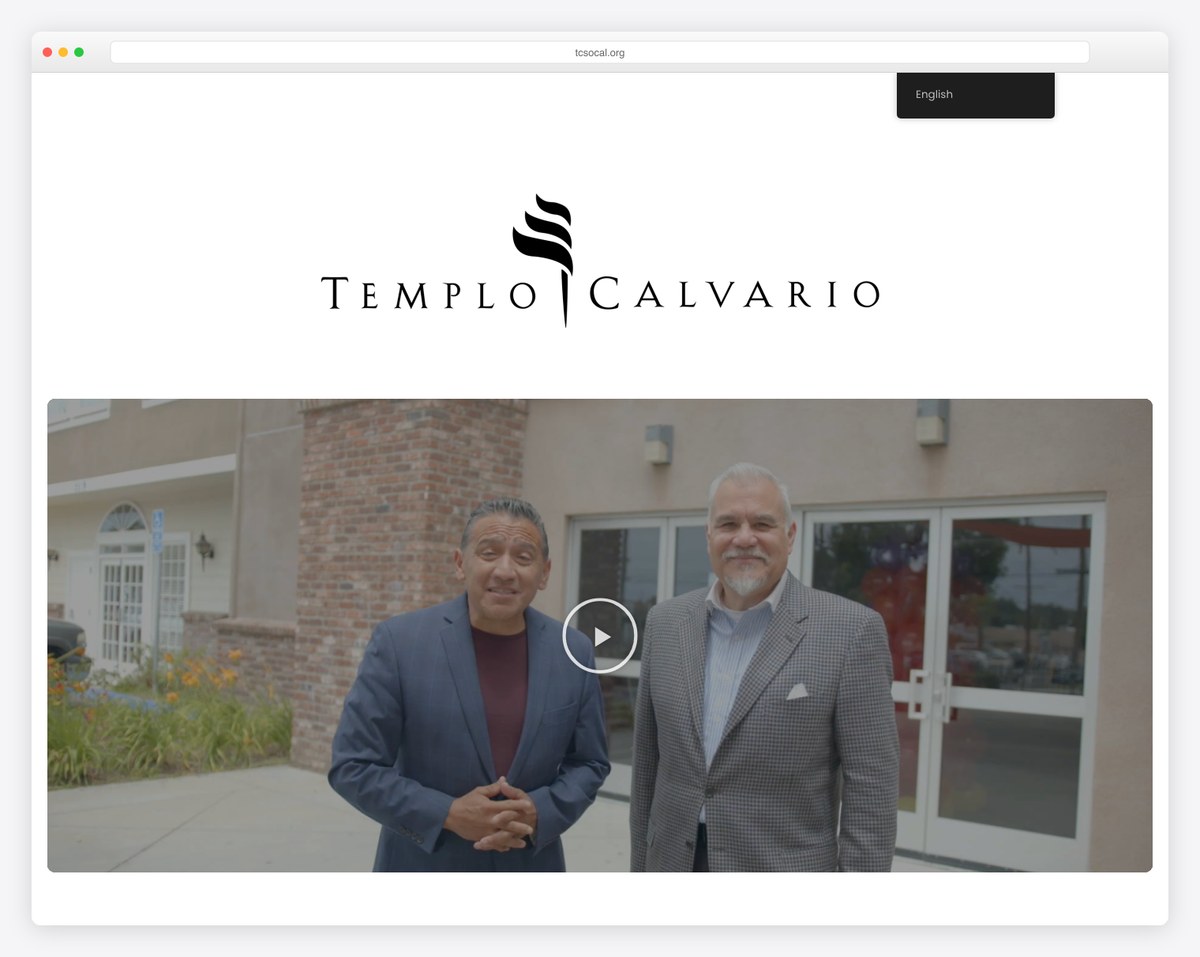
Templo Calvario — one of the largest Hispanic Assemblies of God churches in the country (founded in 1936) — runs a clean WordPress site with a persistent English/Español toggle and parallel taglines (“Ministering to the Needs of the People / Ministrando a las Necesidades de la Comunidad”). The model for an established Hispanic church serving both languages equally.
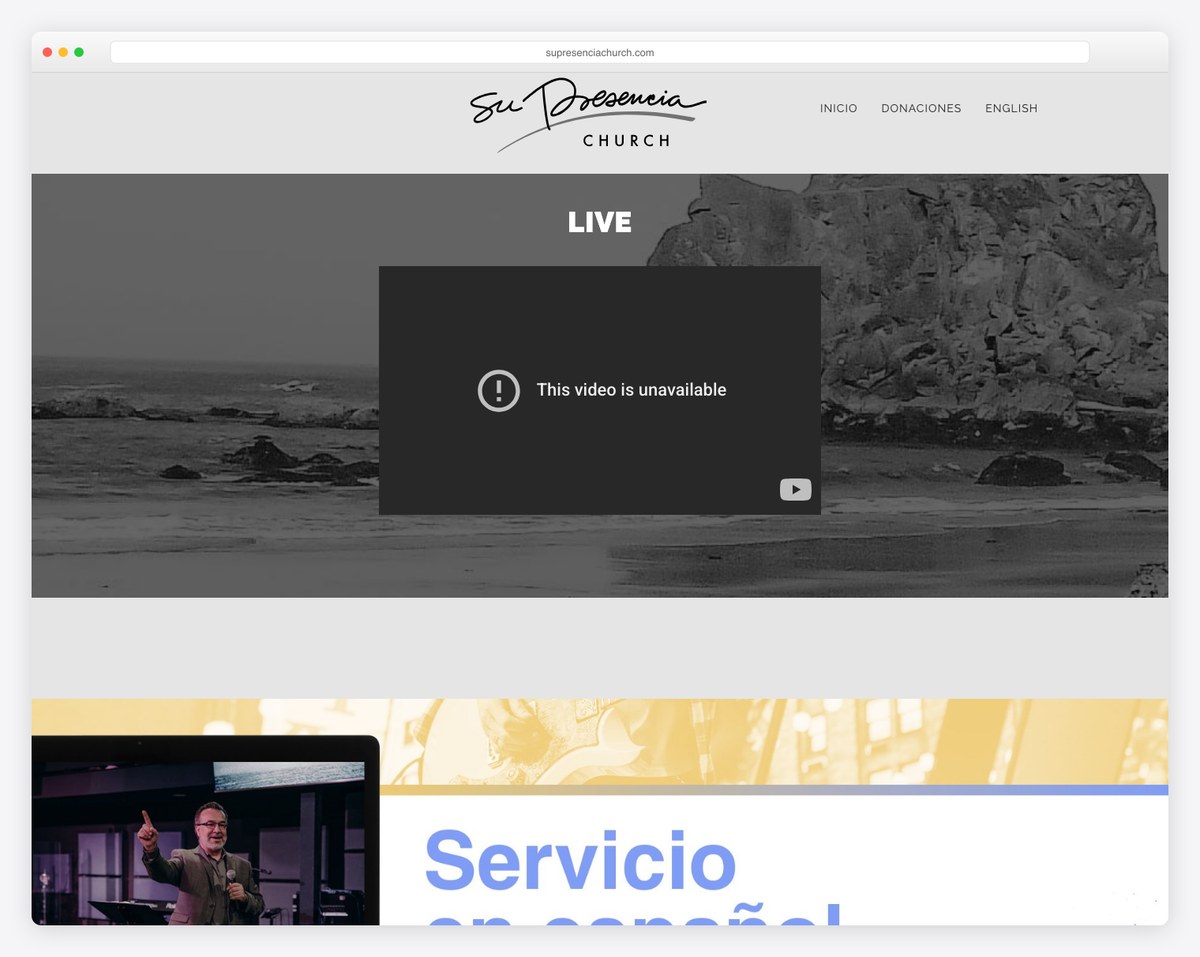
Su Presencia (El Lugar de Su Presencia, Texas) flips the usual default — it’s Spanish-first with a clean English toggle, reflecting a Colombian-rooted megachurch culture. Modern worship imagery, a prominent livestream, and a strong “connection groups” call to action. A great template for a church whose primary language is Spanish but who still welcomes English speakers.
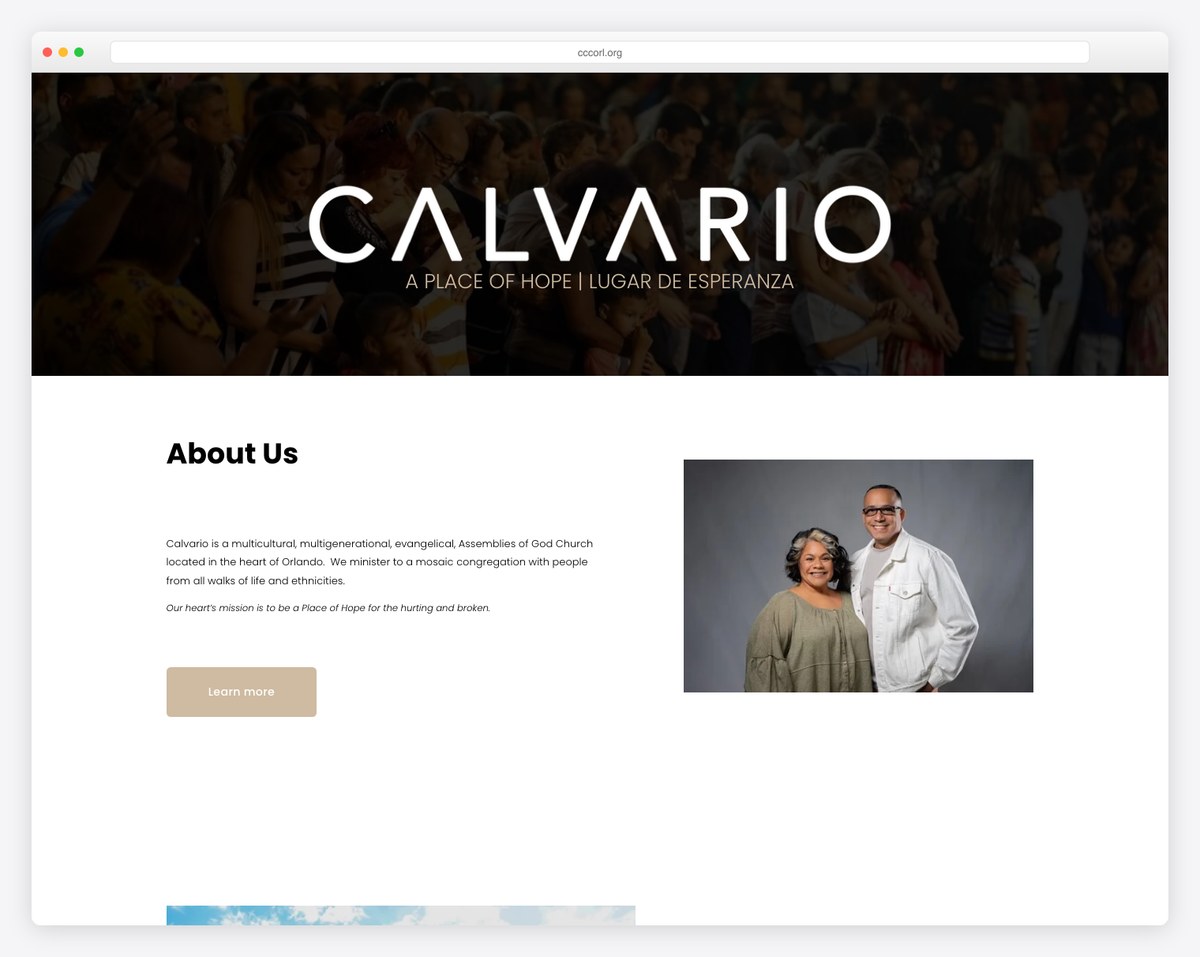
Calvario City Church uses an elegant, minimal Squarespace design with side-by-side bilingual headings (“A Place of Hope | Lugar de Esperanza”) and — crucially — service times labeled explicitly as Bilingual, Español, and English. A polished example of a multigenerational Hispanic church making both languages first-class.
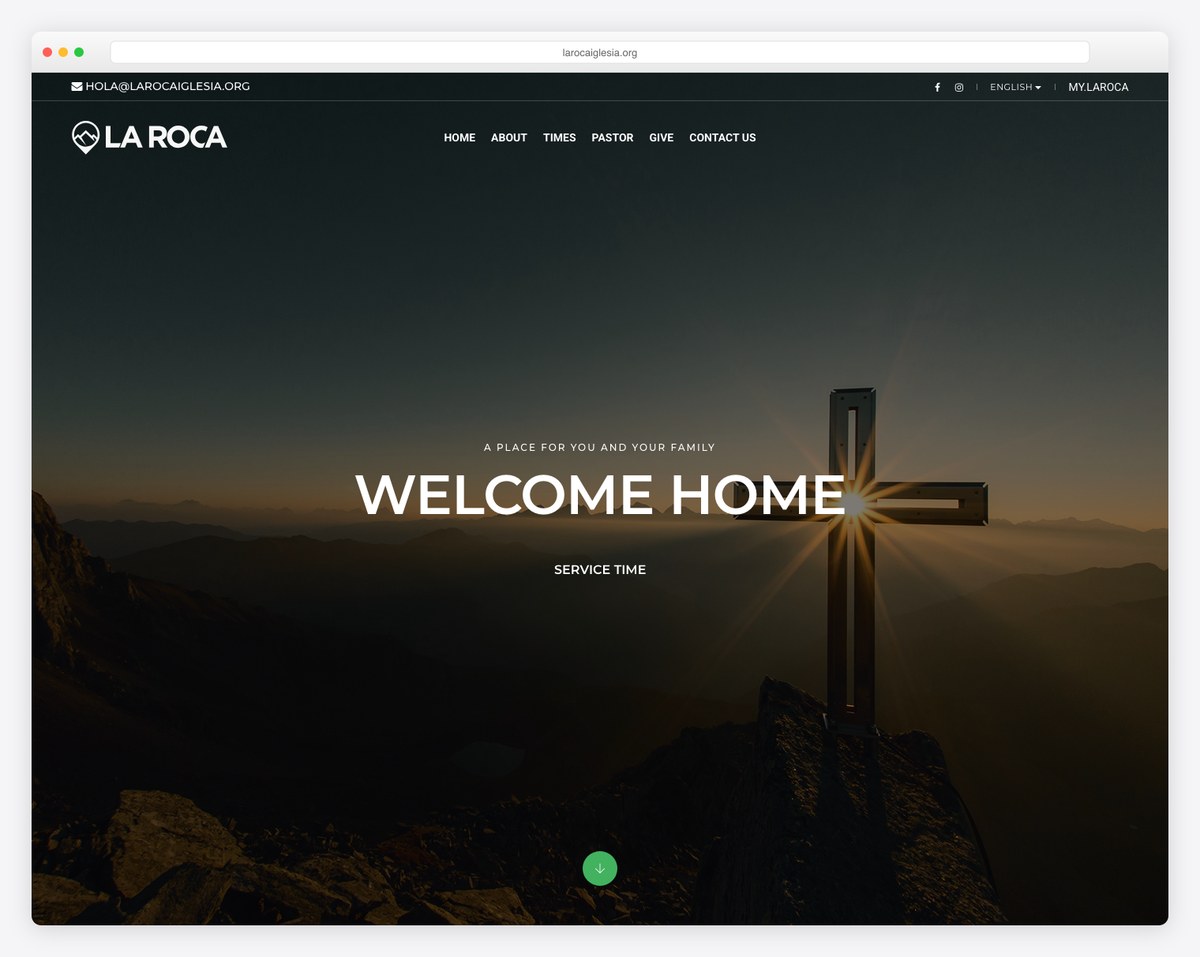
La Roca shows the bilingual toggle done cleanly — a calm “Welcome Home” hero, dual-language navigation, and separate /en and /es URL paths so each language has its own properly-indexed pages (good for SEO as well as UX). A strong, approachable model for a mid-size Hispanic congregation.
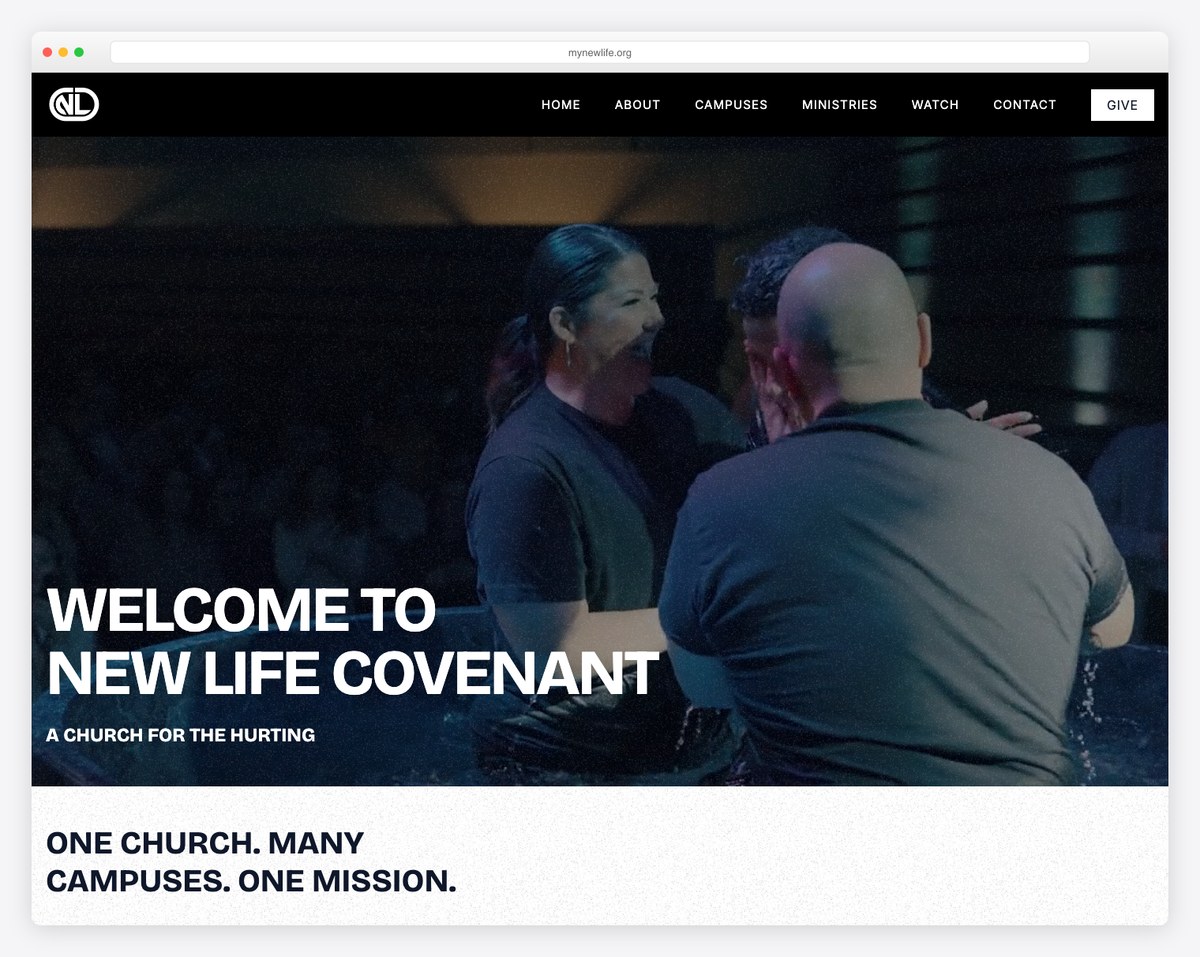
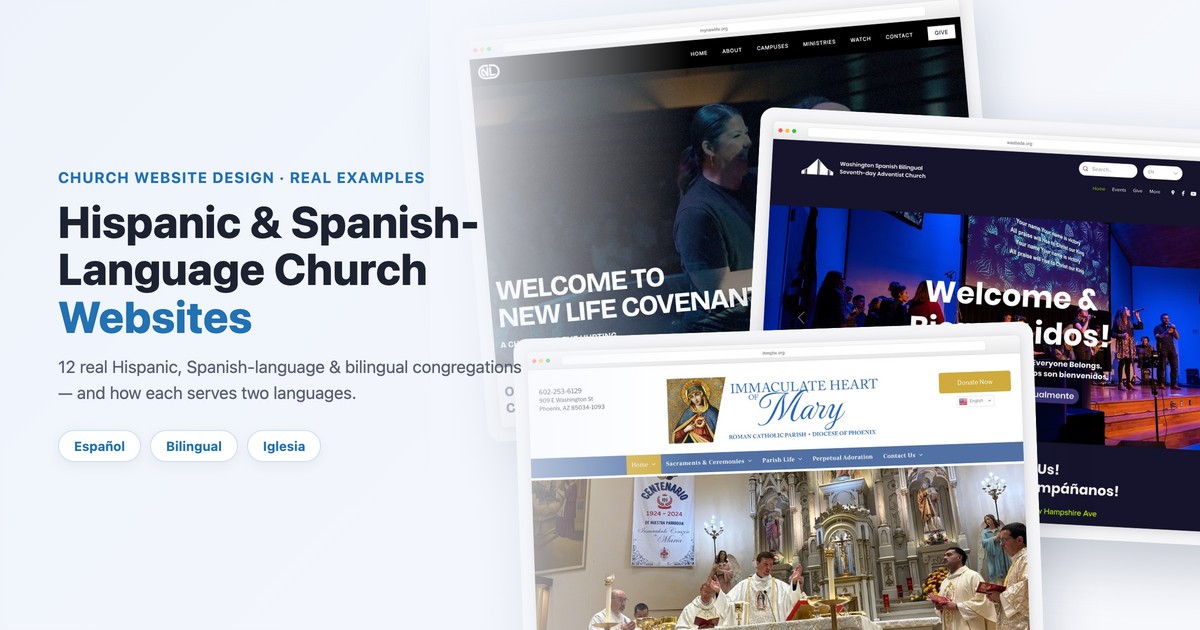
New Life Covenant — among the largest, heavily Latino AG churches in the US — takes the English-primary + Spanish campus route: a modern, multi-site site with a clear dedicated entry point for its Spanish-speaking congregation. The pattern for a large church integrating a Spanish ministry without splitting into two brands.
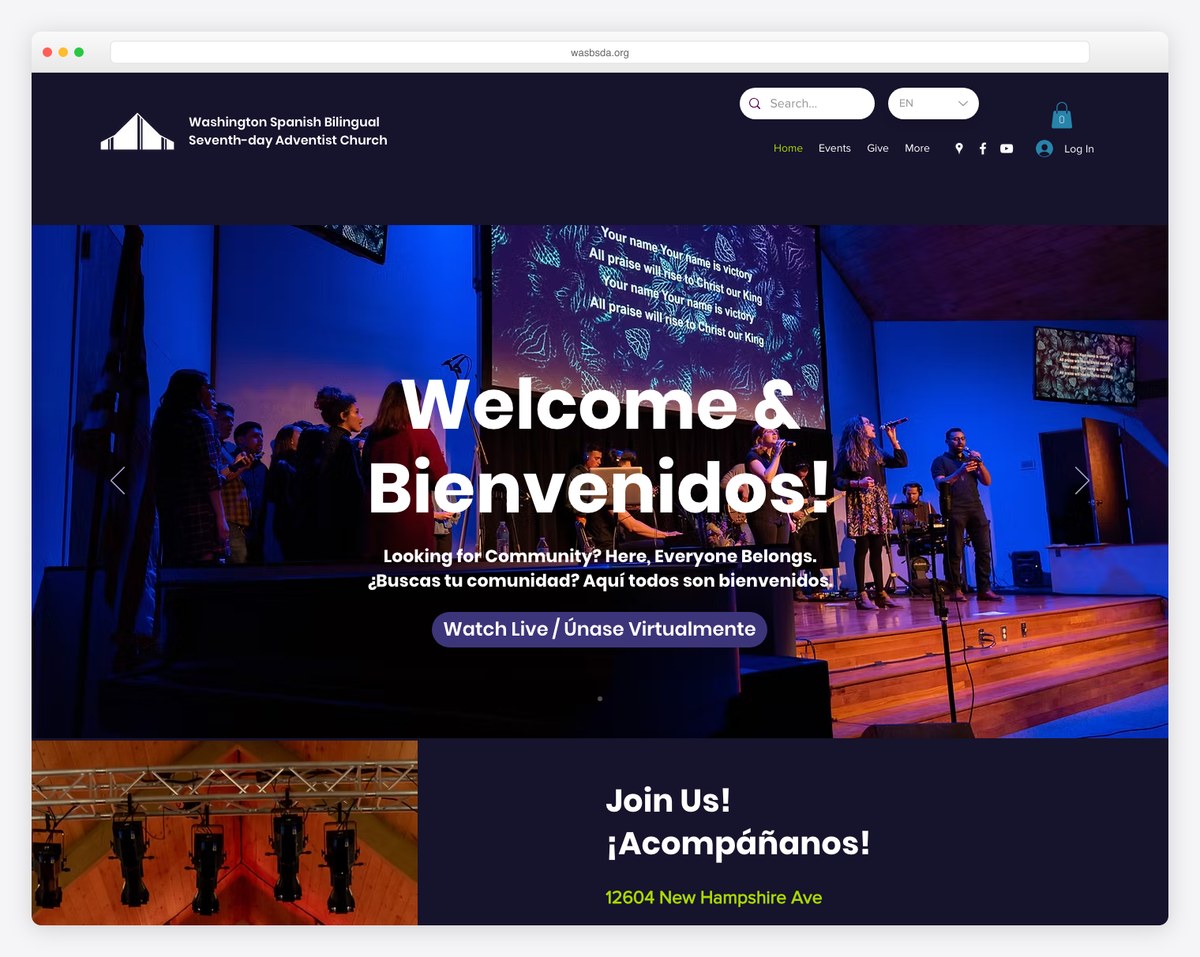
Washington Spanish Bilingual is the gold standard for labeling: a “Welcome & Bienvenidos!” hero, service times split clearly by language, and a livestream and giving in both. Built on Wix, it proves a bilingual Adventist church can communicate two service tracks without any confusion.
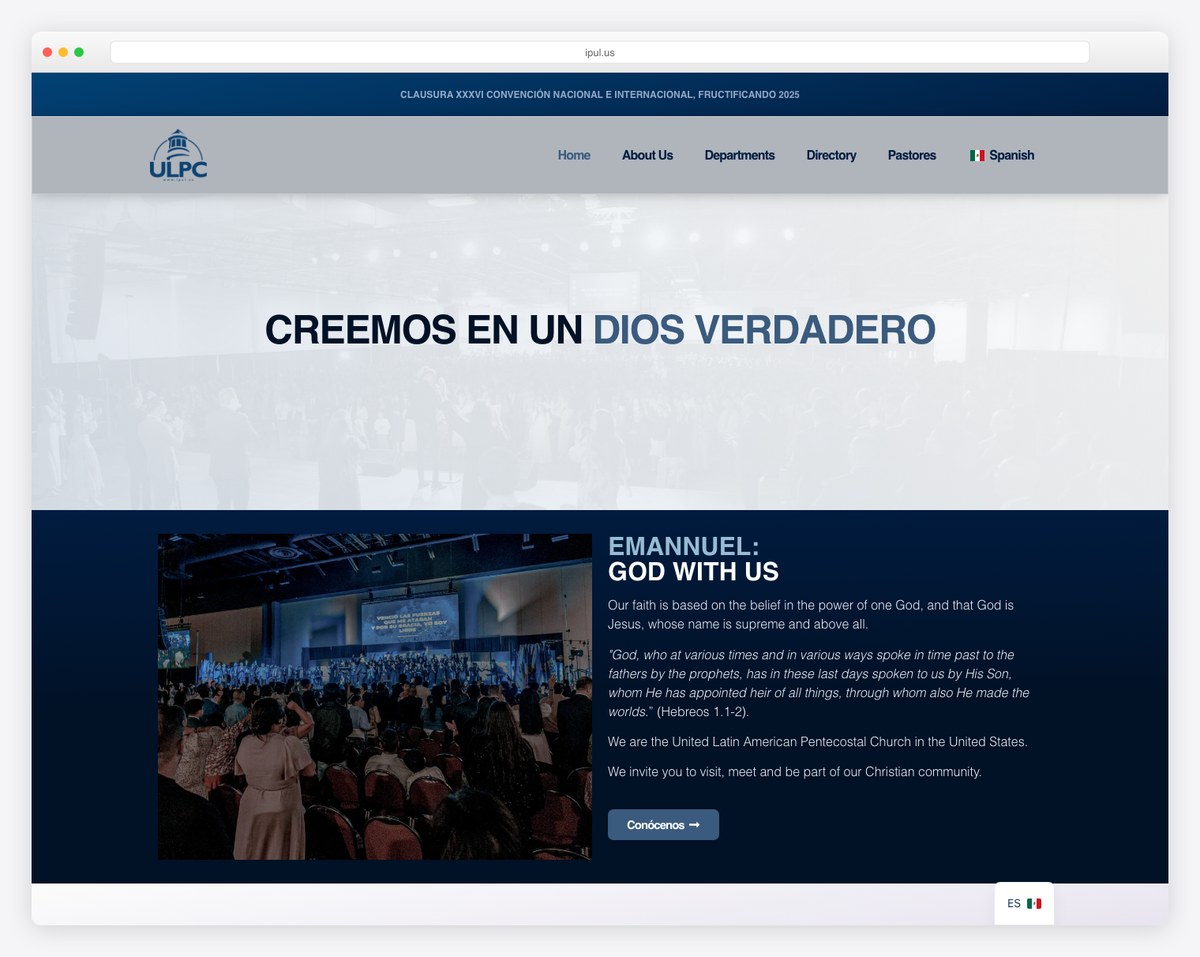
IPUL USA (Iglesia Pentecostal Unida Latinoamericana) leads with a bold Spanish-first declaration of faith — “Creemos en un Dios verdadero” — with an English toggle, representing the large Latino Apostolic/Oneness Pentecostal world. A confident example of a Spanish-first network site.
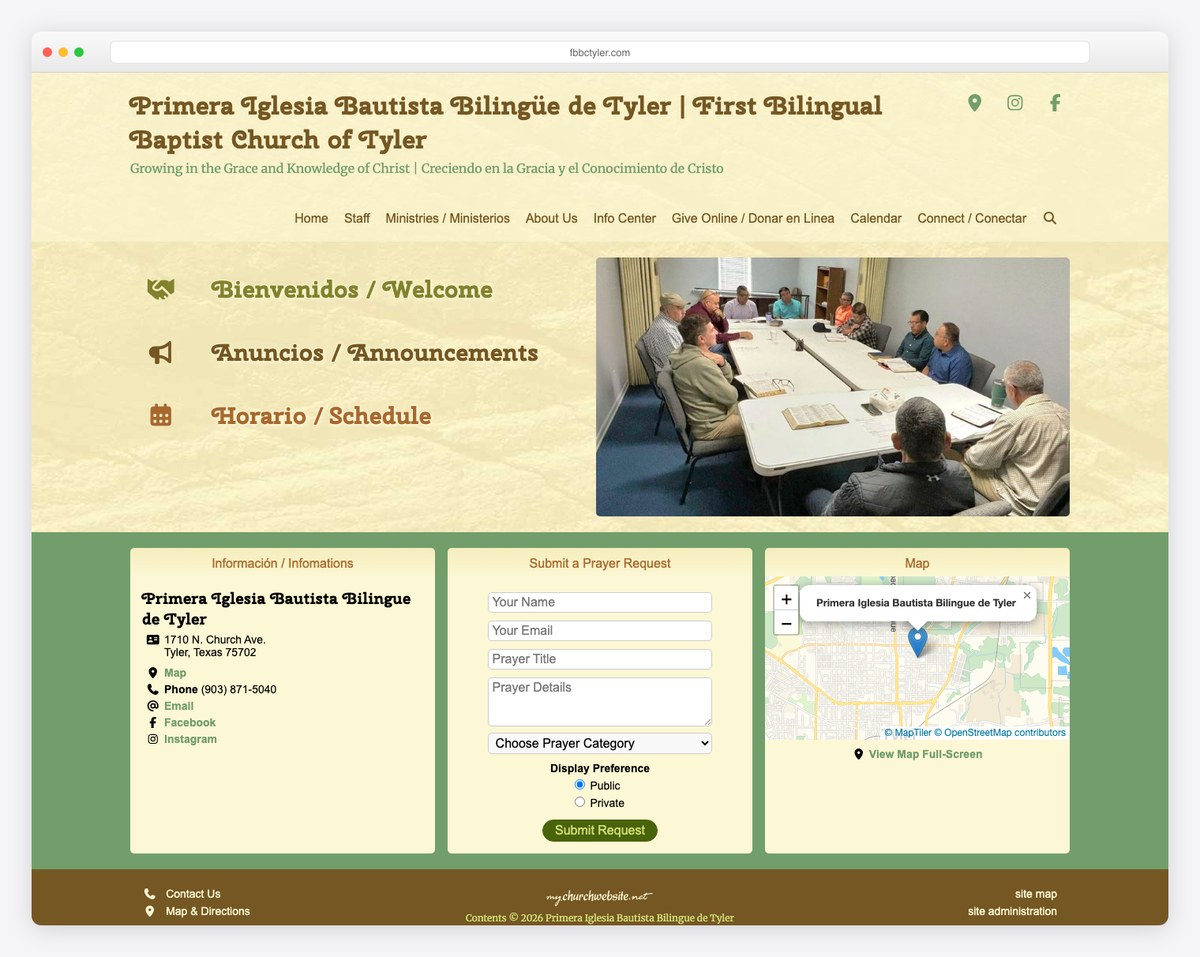
Primera Iglesia Bautista Bilingüe de Tyler puts both languages right in its name and across its navigation (“Ministerios / Ministries”). It’s a clean, functional, fully parallel bilingual site — a good model for a Hispanic Baptist congregation that wants nothing lost in either language.
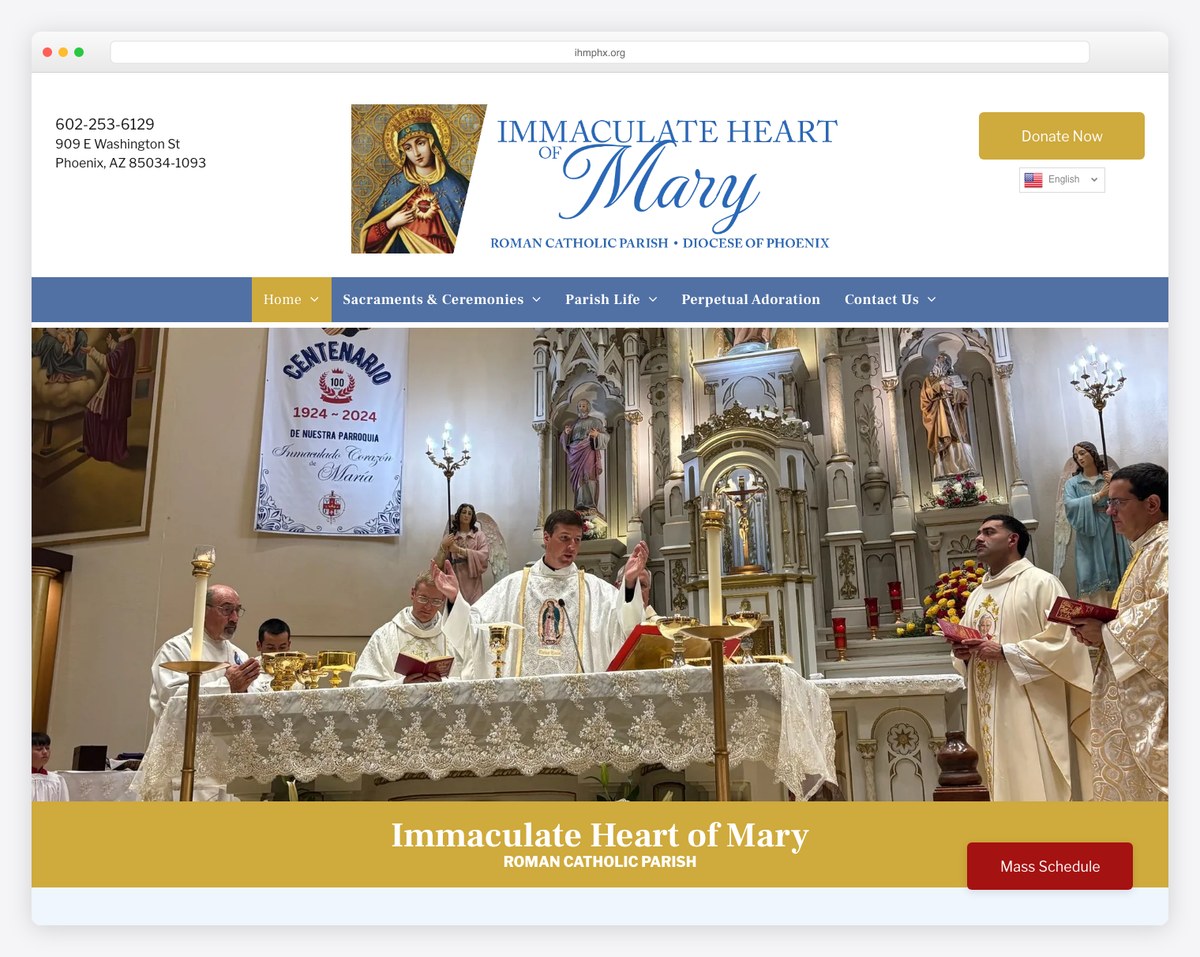
Immaculate Heart of Mary represents the Catholic side of Hispanic worship — still the largest single tradition among US Latinos — with an explicit English/Español toggle and a Mass schedule heavy with Spanish liturgies. A clear model for a parish serving a large Spanish-speaking community.
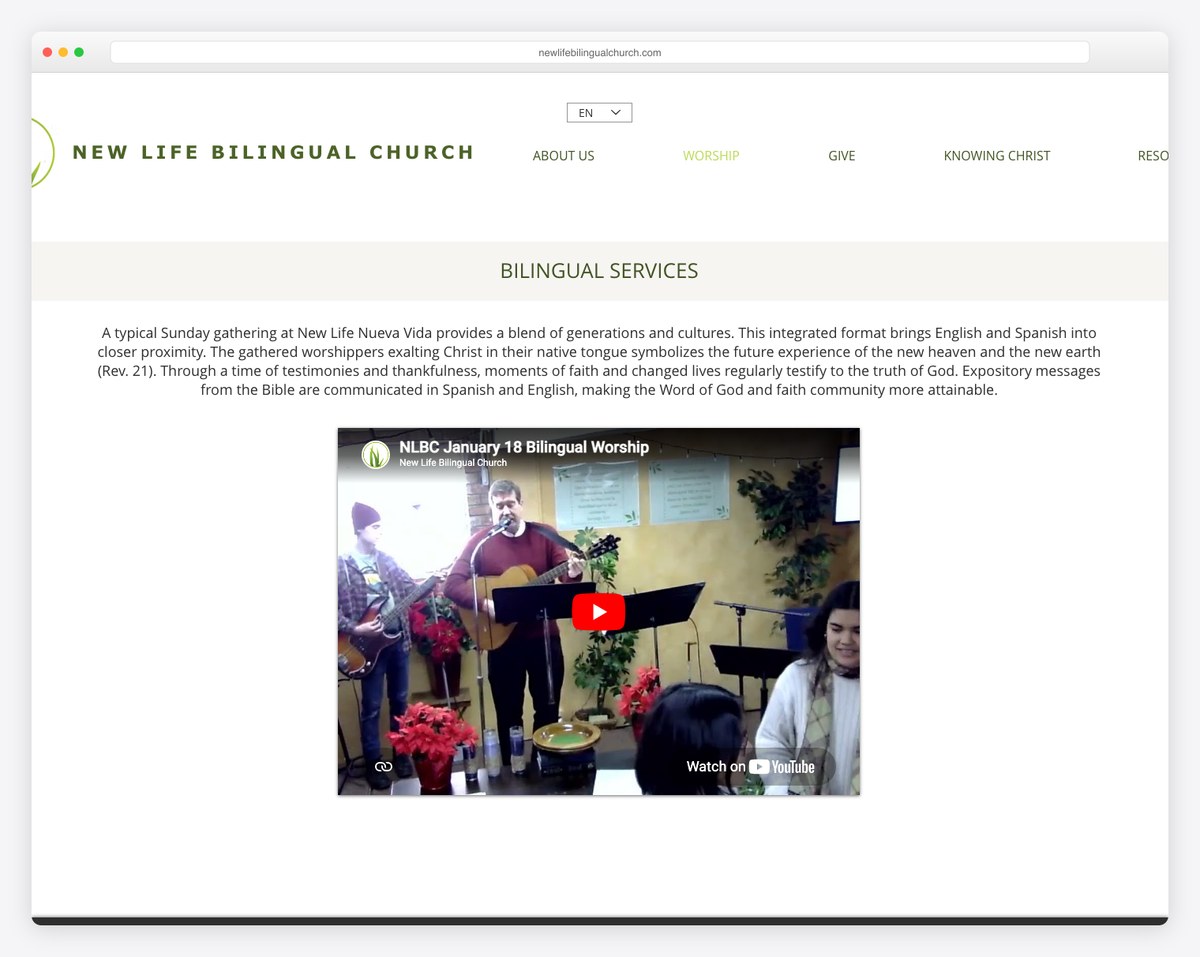
New Life Bilingual Church builds its whole identity around worshiping in both languages in one service, and the site frames that theologically — “a blend of generations and cultures.” A minimalist Wix build that shows the fully-integrated bilingual model, where the two languages aren’t separated at all.
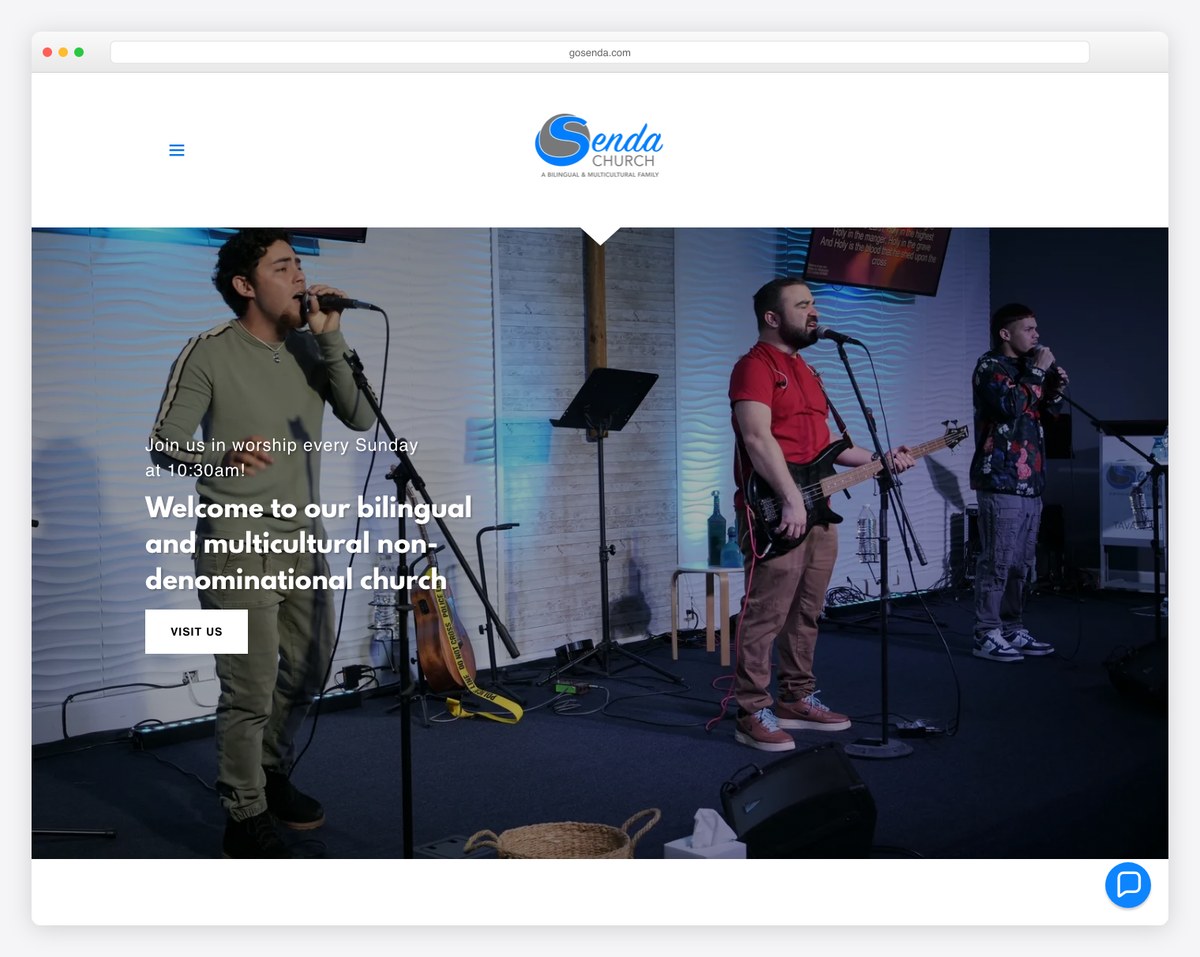
Senda Church leads with warm, real congregation photography and a single Sunday service offered in Spanish with English translation. A good example of a smaller Hispanic church that feels genuinely welcoming — and a reminder that authentic photos of your own people beat any stock image.
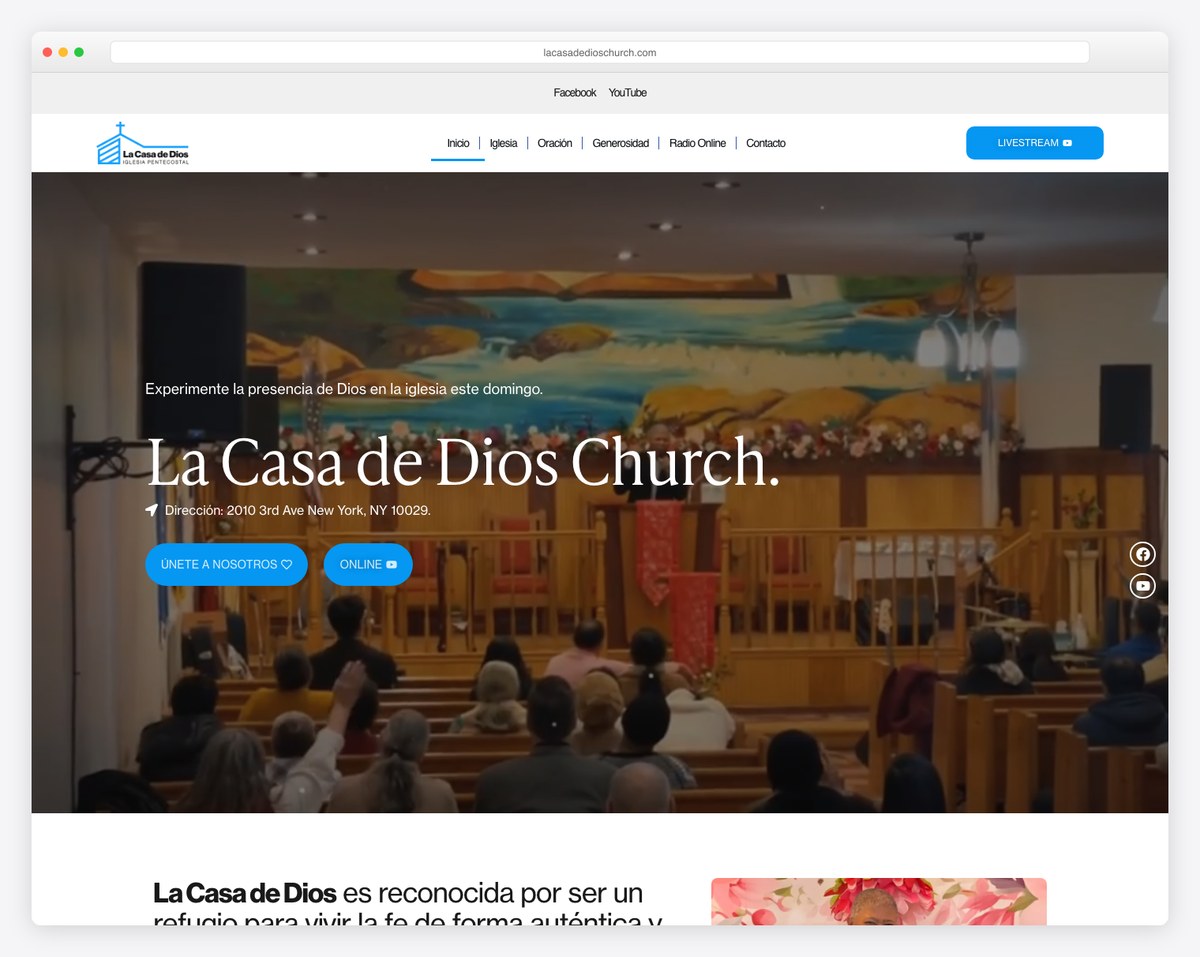
La Casa de Dios is a Spanish-first New York Latino church that leads with family and community — “un lugar para la Familia.” It’s a strong example of a Spanish-only (iglesia) site that’s warm and current rather than dated, serving a Spanish-dominant urban congregation.
The throughline: pick the language approach that fits your congregation, make the choice obvious, translate fully, and label your services by language. These churches pull it off on WordPress, Squarespace, Wix, and church-specific platforms alike. To choose yours, see our best church website builders guide. For more inspiration, browse our 50 best church website designs or the examples for Pentecostal, Catholic, and non-denominational churches.
If you need the site itself to work in both languages, Commons is a free template written in English and Spanish throughout rather than machine-translated afterwards.
Pick one of four approaches based on your congregation: a Spanish-only site (for Spanish-dominant churches), a bilingual toggle that lets visitors switch between English and Español, a side-by-side layout showing both languages together, or an English-primary site with a dedicated Spanish section or campus. Whichever you choose, translate the content fully (not just one page), put the language choice where no one can miss it, label your service times by language, and use real photos of your own congregation. Most modern builders — WordPress, Squarespace, Wix — support multilingual sites.
It depends on your congregation. If your members are mostly Spanish-dominant first-generation, a Spanish-first or Spanish-only site serves them best. If you have a mix of Spanish-dominant parents and bilingual or English-dominant children, a bilingual site (with a toggle or side-by-side text) lets each generation use the language they prefer. The key is not to force either group to navigate in a language they’re less comfortable in — the best Hispanic church sites give people the choice.
Beyond the basics every church site needs: an obvious English/Español language choice, fully translated content, service times clearly labeled by language (“Servicio en Español”), real photography of your community rather than stock, a WhatsApp or text contact option (widely used in Latino communities), a bilingual livestream and sermon archive, online giving available in both languages, and a Spanish “Plan Your Visit” path. Because Latino web traffic is heavily mobile, the site must be fast and mobile-first.
The examples here are built on WordPress, Squarespace, Wix, and church-specific platforms, and all handle two languages well. WordPress with a multilingual plugin (like Polylang or WPML) offers the most control and clean per-language URLs; Squarespace and Wix both have built-in multilingual features that are easier to set up. For a larger church, a dedicated Spanish microsite or campus page can be simpler than translating an entire site. Choose based on your size, budget, and how much you want to maintain.

Church Website Examples
Church Website Examples
Church Website Examples
10 complete church website templates, MIT licensed. Browse every demo freely; we will email you whichever folder you want.
All templates