Non-denominational churches have a unique advantage when it comes to their website: total brand freedom. Without a denominational identity to conform to, you can build a website that reflects exactly who you are as a church community. But that freedom comes with a challenge — you have to define and communicate your identity from scratch. There’s no denominational shorthand visitors can rely on to understand your theology, culture, or worship style.
The best non-denominational church websites solve this by being clear about what they believe, showing (not just telling) their culture, and making it effortless for first-time visitors to take the next step. Here are real examples that get it right, plus practical tips for your own site.
What Makes Non-Denominational Websites Different
Brand Identity Freedom
Catholic parishes have centuries of visual tradition. Baptist churches have established cultural expectations. Non-denominational churches start with a blank canvas. This means your logo, colors, typography, photography style, and overall aesthetic define your church’s personality online. The best non-denominational websites have intentional branding — a cohesive visual identity that communicates who you are before visitors read a single word.
Contemporary Expectations
People searching for non-denominational churches often expect a contemporary worship experience. Your website design should match that expectation — modern, clean, visually driven, and mobile-first. A non-denominational church with a website that looks like it was built in 2012 creates a disconnect between the online experience and the in-person experience visitors are hoping for.
The “What We Believe” Imperative
When a visitor sees “Baptist” or “Methodist” or “Catholic,” they have at least a rough idea of what to expect theologically. “Non-denominational” tells visitors nothing about your beliefs. Your beliefs page isn’t optional — it’s essential. Write it in plain language that a non-churched person can understand. Cover the basics: who God is, who Jesus is, what the Bible is, what salvation means, and how your church practices baptism and communion.
Community Focus
Non-denominational churches often emphasize community and relationships over institutional structures. Your website should reflect this — real photos of real people (not stock images), stories from members, and clear pathways to connect with community through groups, serving, and events. The features that build connection matter more than features that broadcast information.
Pastoral Personality
In many non-denominational churches, the lead pastor’s personality and teaching style are a significant draw. Your website should feature your pastor authentically — not just a headshot and bio, but video clips, teaching excerpts, or a personal welcome video. People want to get a sense of who will be teaching before they visit. This is the digital equivalent of meeting someone at the door.
Non-Denominational Church Website Examples
1. Life.Church (Edmond, OK)
URL: life.church
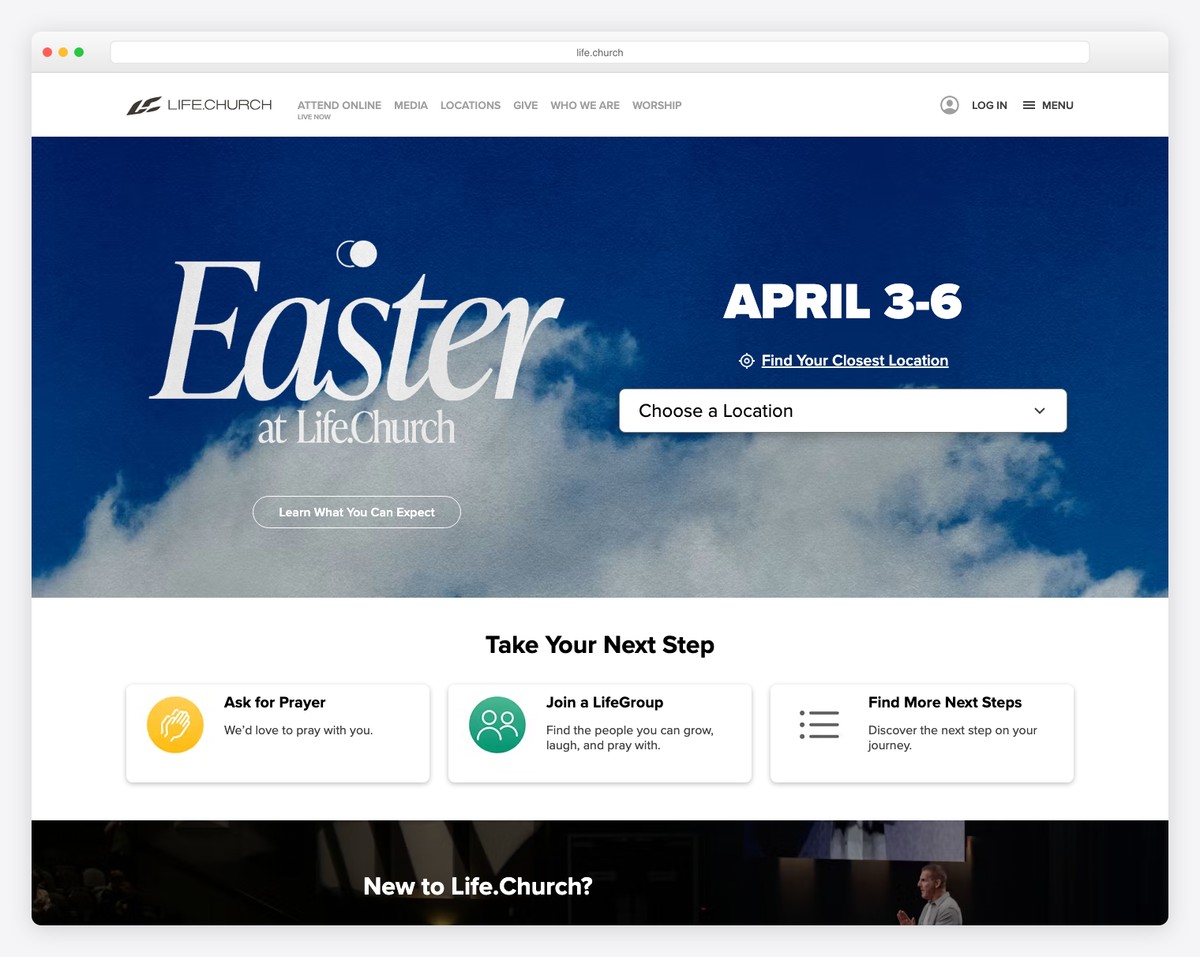
What’s great: The gold standard for non-denominational church websites. Stunning design, intuitive navigation, and a visitor experience that feels like a tech company’s site in the best way. The “Plan a Visit” flow is exceptional — location selector, service time picker, and a personal follow-up. Sermon content is presented beautifully with series artwork. The site manages the complexity of 40+ campuses seamlessly.
2. Transformation Church (Tulsa, OK)
URL: transformationchurch.us
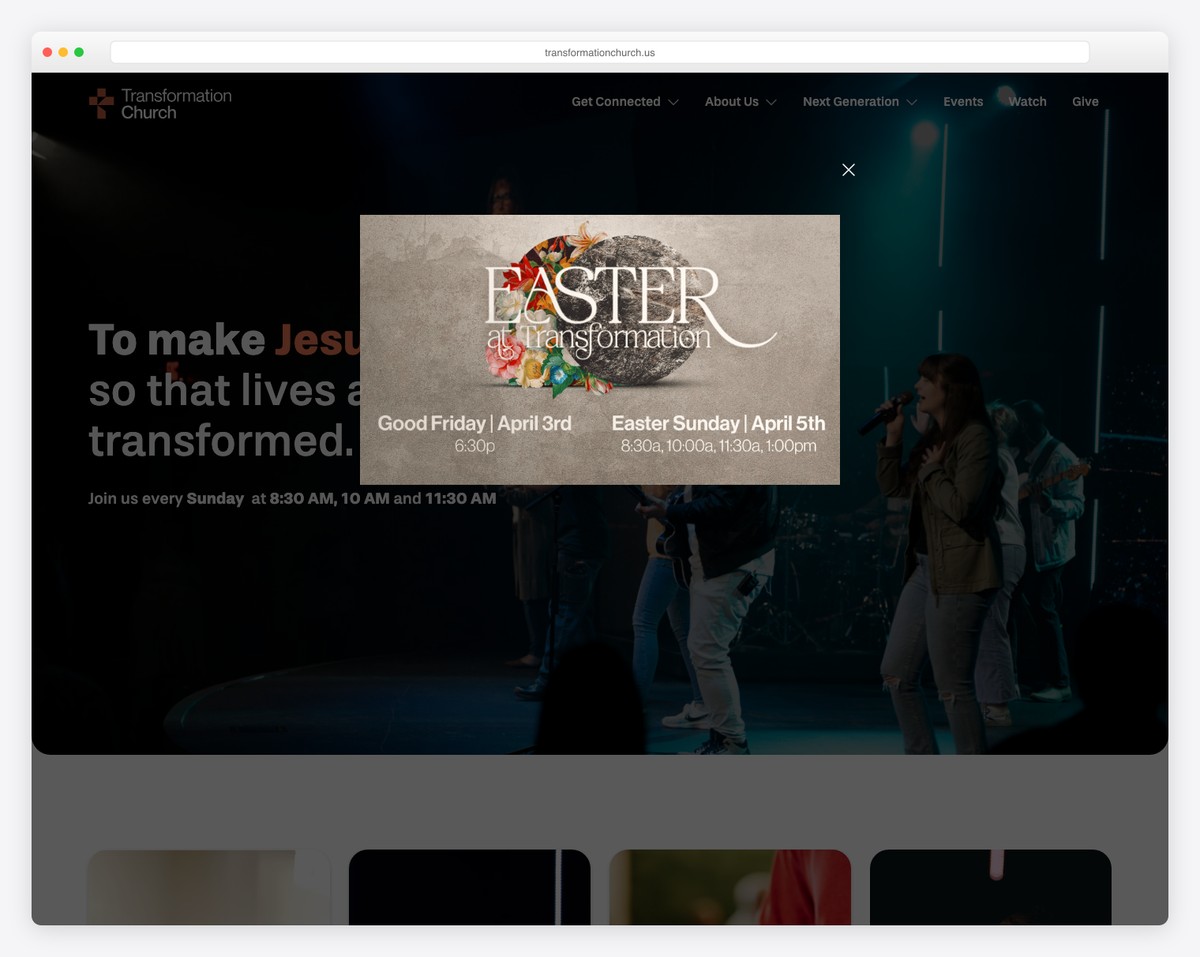
What’s great: Bold visual design that matches the church’s energetic, contemporary personality. The homepage makes an immediate impression with full-screen video and dynamic typography. The “TC University” section for discipleship content is innovative. The brand identity is consistent across every page — colors, fonts, tone. Strong example of a church whose website authentically reflects its in-person experience.
3. Elevation Church (Charlotte, NC)
URL: elevationchurch.org
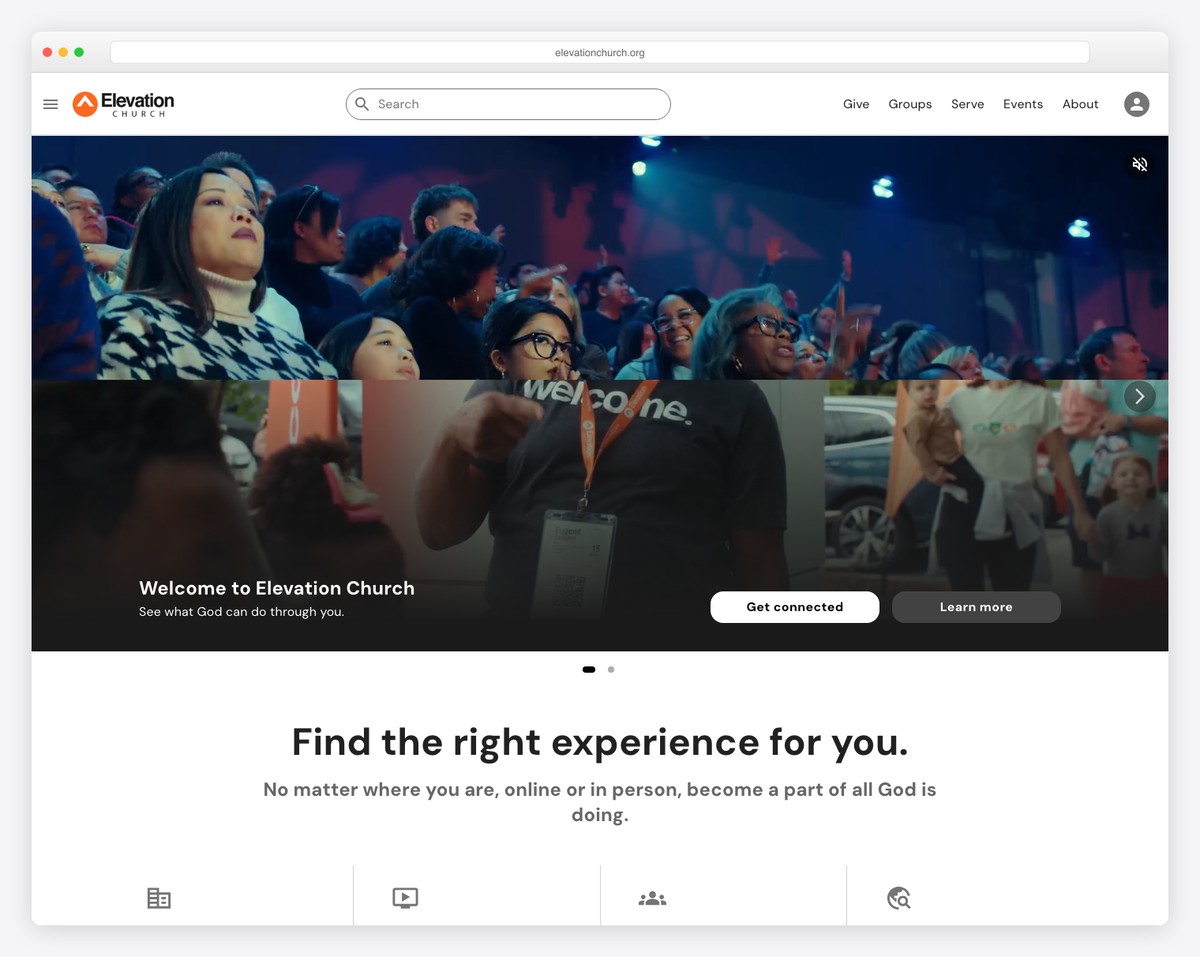
What’s great: Media-forward design that puts sermon content front and center. The sermon player is polished with series artwork, video, and notes. The multi-campus experience is handled well — visitors select a location and see relevant information. The eGroups (small groups) section makes finding and joining a group straightforward. The overall design is premium without feeling corporate.
4. Church of the Highlands (Birmingham, AL)
URL: churchofthehighlands.com
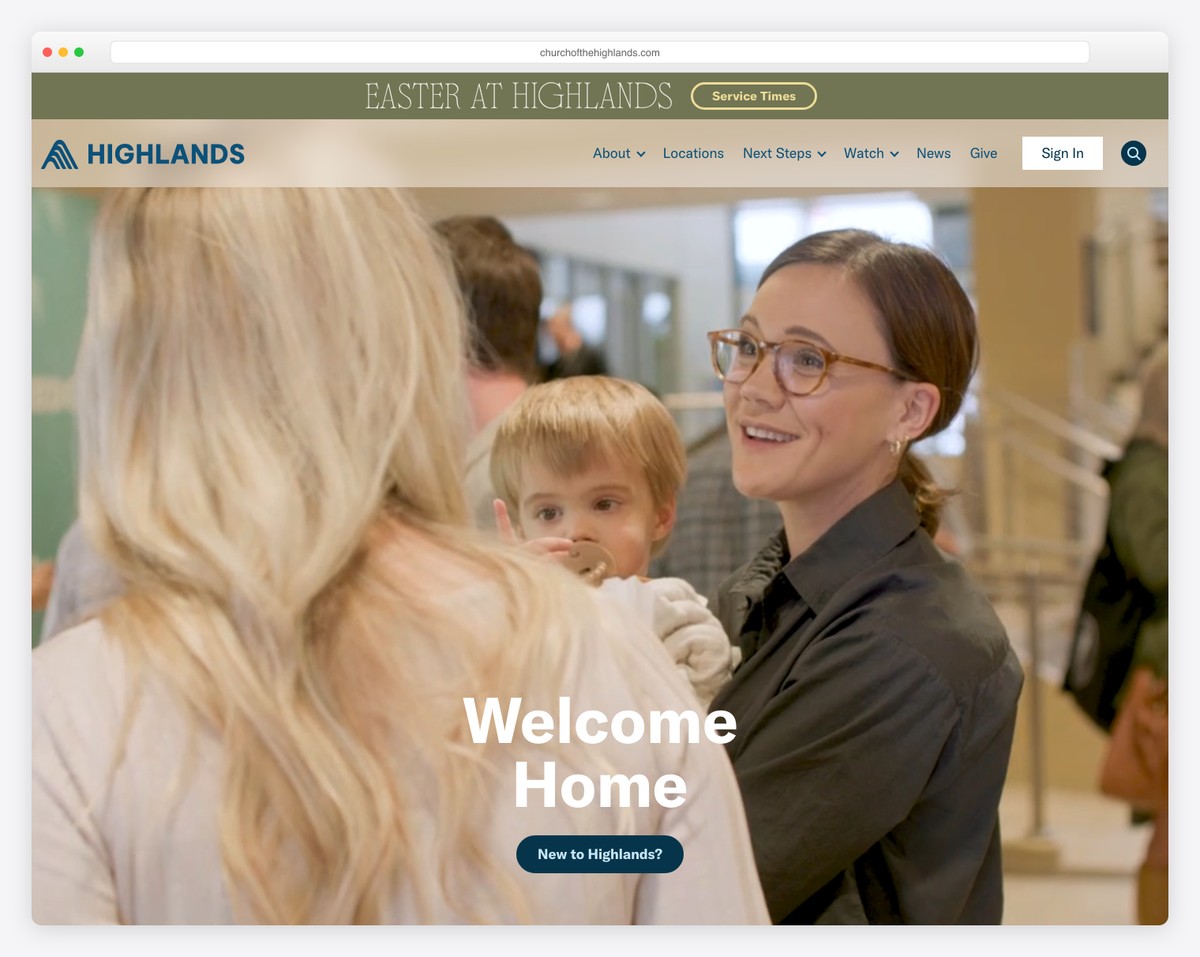
What’s great: Manages 20+ campuses through a clean, organized website. The “Growth Track” concept (their pathway from visitor to serving member) is clearly presented as a visual journey. Small groups, serving opportunities, and pastoral care are all easy to find. The design is warm and inviting — photography of real people throughout. The site proves that large churches can feel personal online.
5. Sandals Church (Riverside, CA)
URL: sandalschurch.com
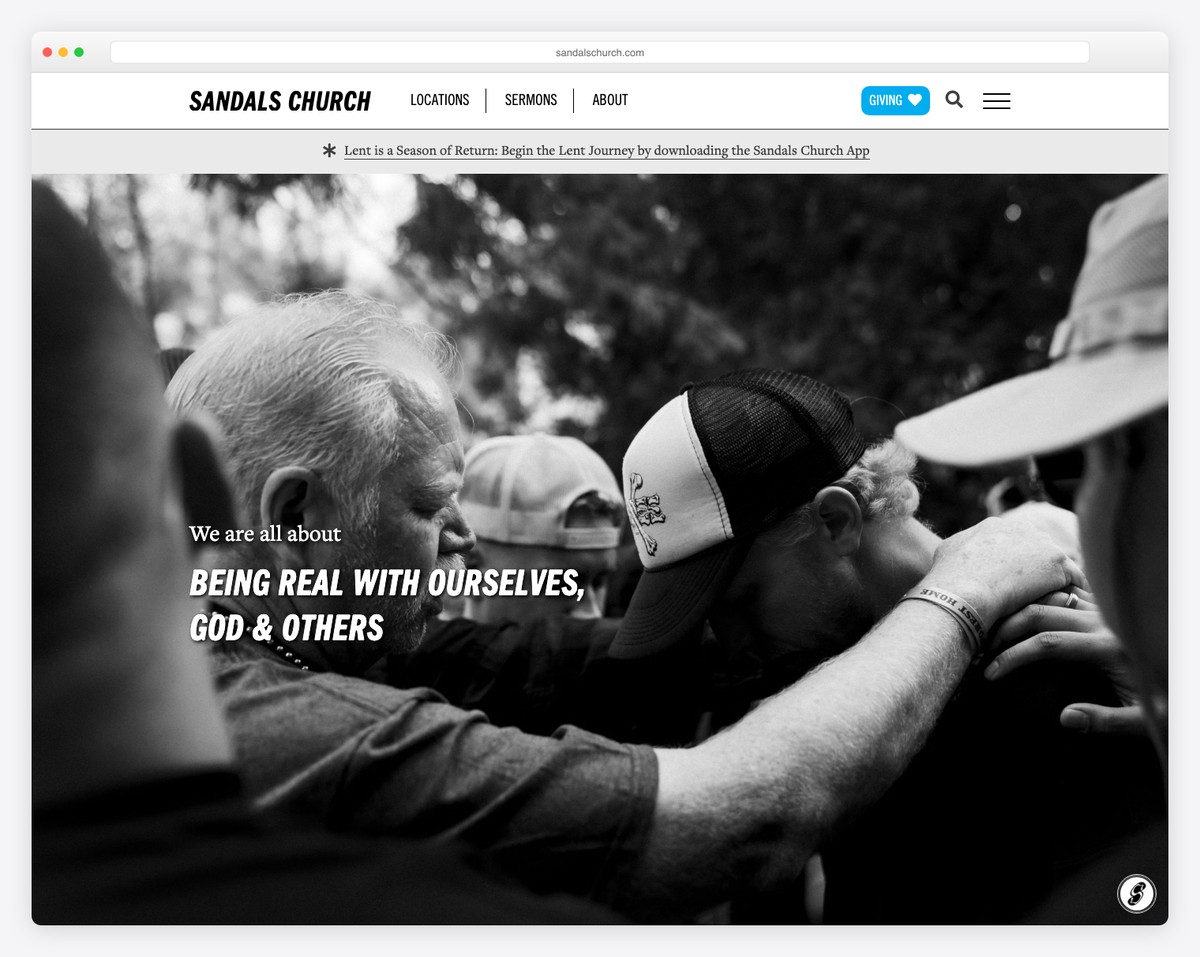
What’s great: The branding is distinctive — the casual name sets the tone immediately. The website matches: approachable, authentic, zero pretense. The “Real” theme carries through everything. The “What to Expect” section is honest and detailed. The podcast and sermon content is well-organized. The design proves you can be casual and professional at the same time.
6. Passion City Church (Atlanta, GA)
URL: passioncitychurch.com
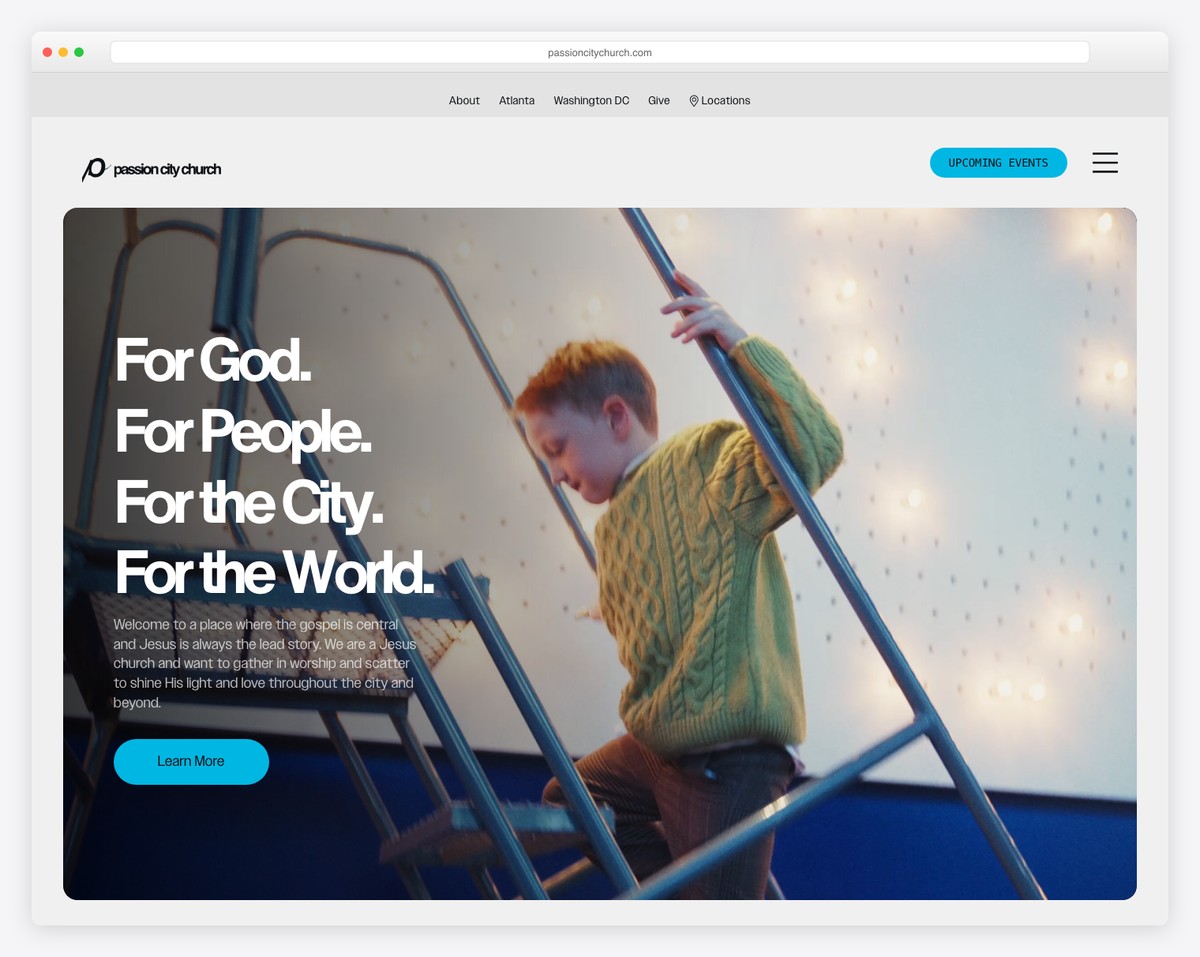
What’s great: Beautiful design with a focus on artistry and creativity. The connection to the Passion movement is clear without being the sole identity. The worship and teaching content is presented with excellent production quality. The social justice and community initiatives are featured prominently. The design aesthetic is minimalist and intentional — every element serves a purpose.
7. Northpoint Community Church (Alpharetta, GA)
URL: northpoint.org
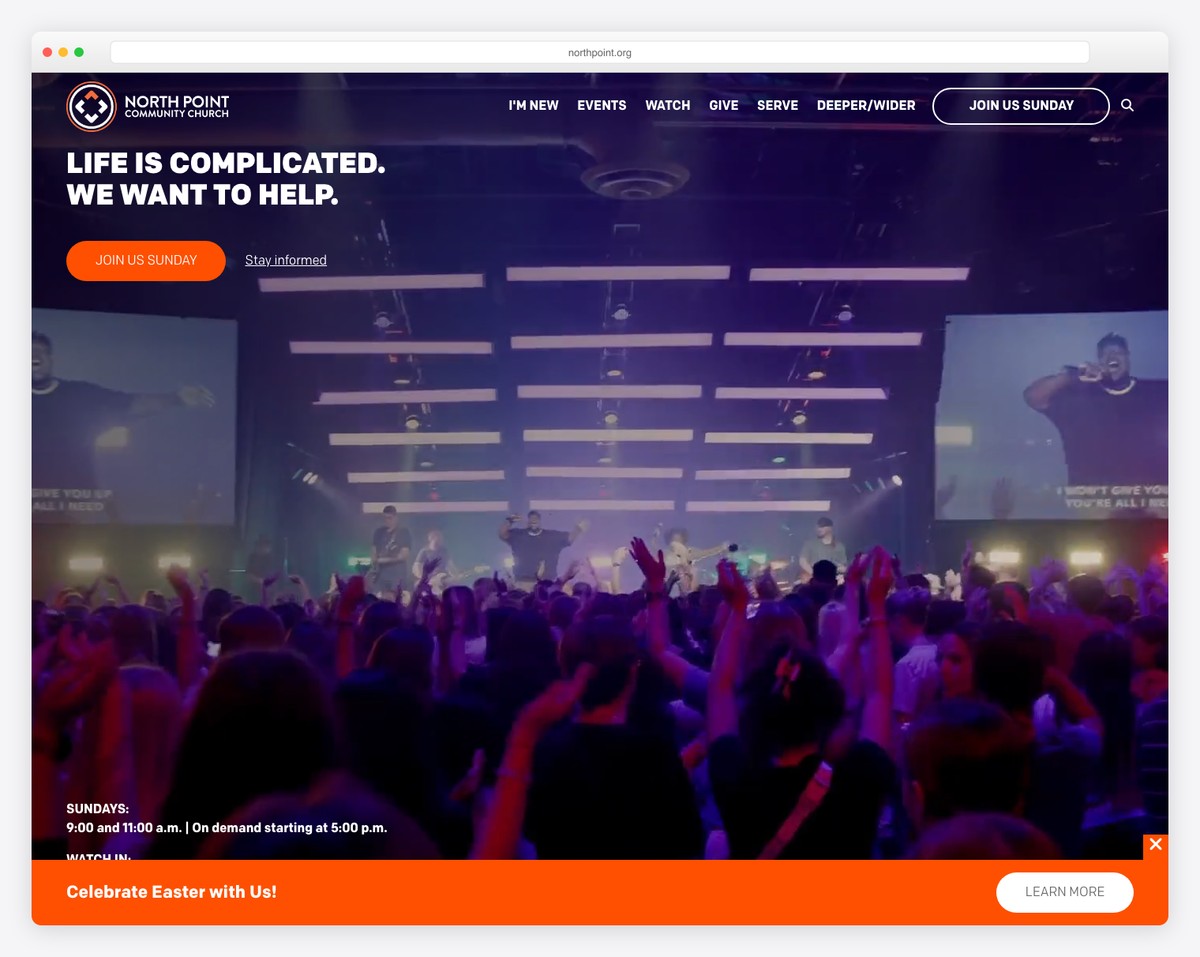
What’s great: Andy Stanley’s church delivers a content-rich website that manages multiple ministries, campuses, and organizations. The “Starting Point” pathway for new visitors is clearly articulated. The content library goes deep with sermon series, discussion guides, and leadership resources. The partner church network is showcased effectively. Clean navigation handles the massive content volume.
8. Vous Church (Miami, FL)
URL: vouschurch.com
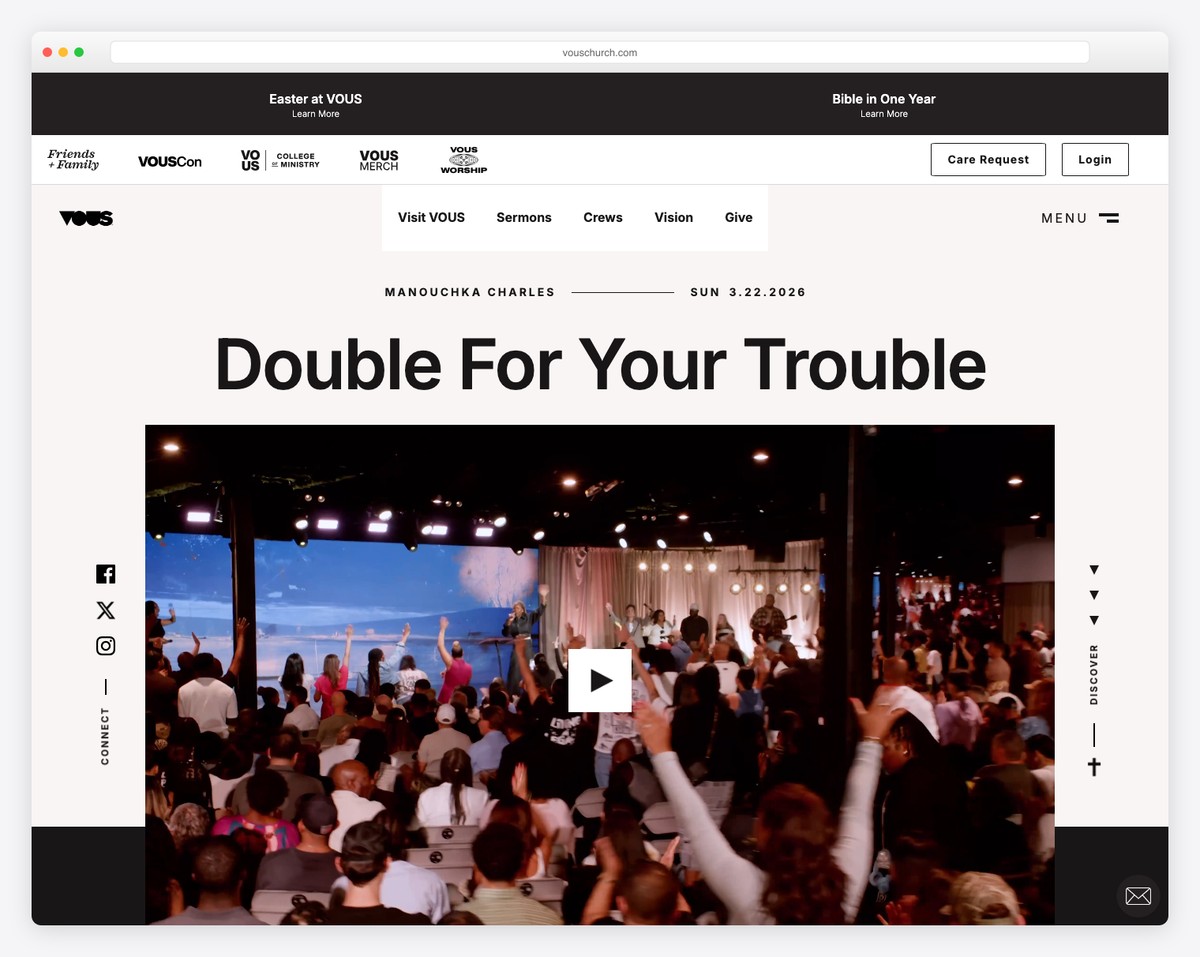
What’s great: The most design-forward church website on this list. Built on Webflow, it looks like a premium brand site. The visual identity is bold — custom illustrations, dynamic layouts, creative typography. The “Vous Friends” community section is innovative. Proves that a church website can be a genuine design portfolio piece. Not easy to replicate without design talent, but aspirational for churches that value aesthetics.
9. Rock Church (San Diego, CA)
URL: sdrock.com
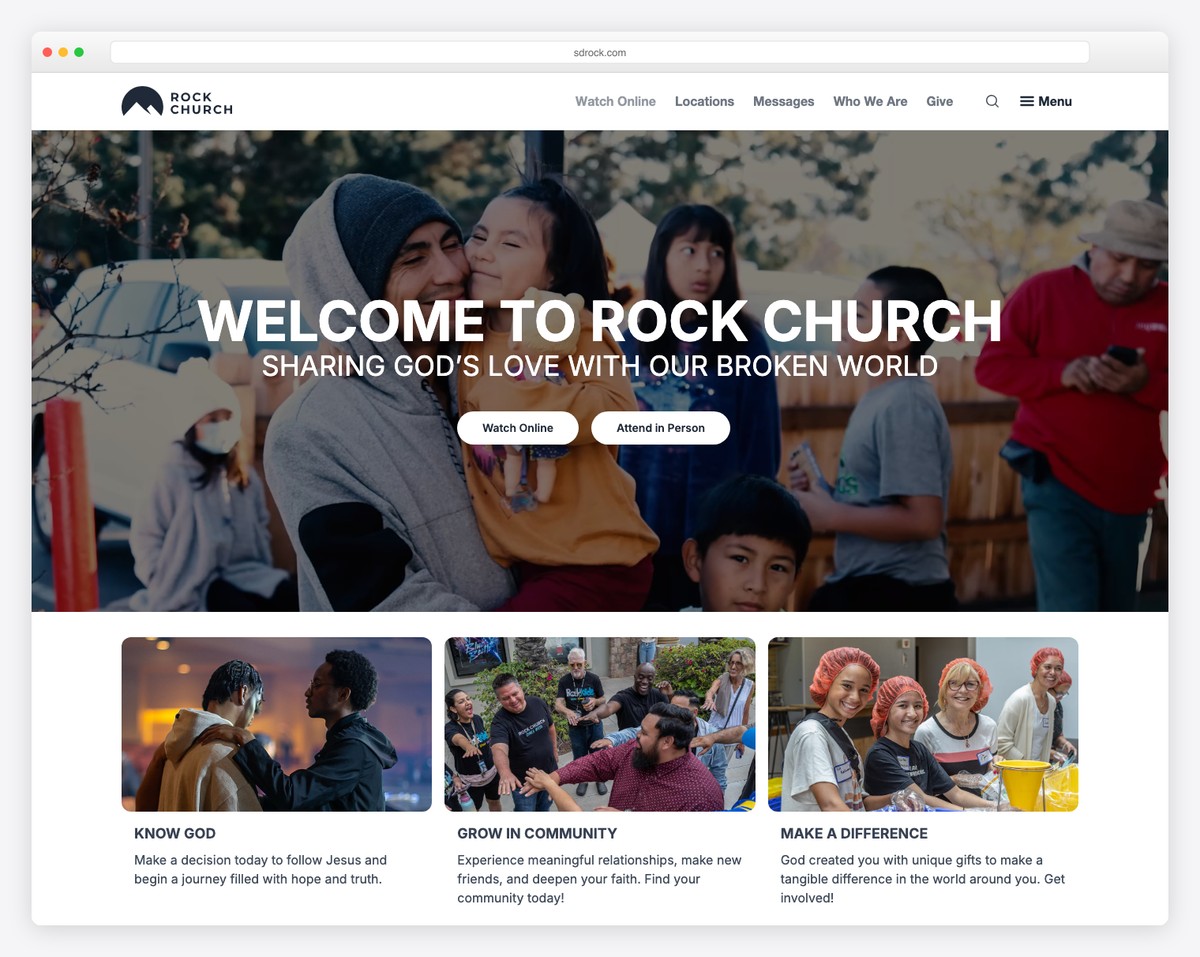
What’s great: Strong community outreach focus that’s immediately visible on the website. The “Do Something” initiative and local outreach projects are featured alongside typical church content. The campus information is clear with service times and locations. The design is clean and modern without being flashy. The giving page explains impact, not just mechanics — showing donors how their contributions make a difference.
10. Christ Fellowship (Palm Beach, FL)
URL: christfellowship.church
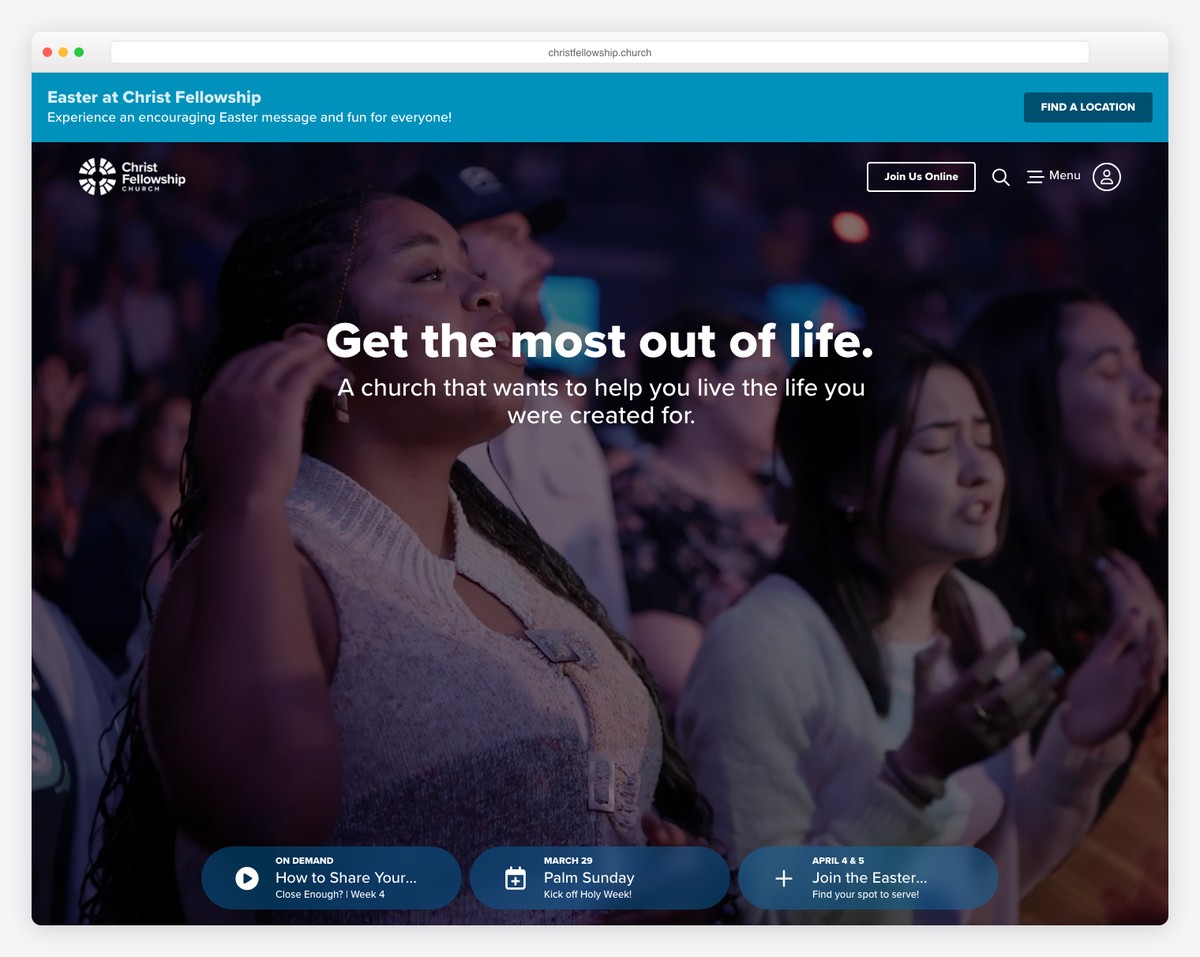
What’s great: Multi-campus website with excellent visual design. The homepage balances welcome messaging with practical information. The “Next Steps” pathway is clear and visual — from first visit to baptism to group life to serving. The Spanish language option reflects the South Florida community. The kids and youth sections are detailed enough that parents feel confident about the experience.
Design Tips for Non-Denominational Church Websites
Develop Your Brand First
Before building your website, establish your visual identity: logo, color palette, fonts, and photography style. A non-denominational church website without consistent branding looks generic — and generic doesn’t build trust with visitors. See our church branding guide for a step-by-step process.
Use Authentic Photography
Non-denominational churches thrive on community. Show that community through real photos — worship, small groups, service projects, baptisms, community meals. Hire a photographer to capture one Sunday morning and a few events. Those photos will serve your website for 6-12 months and communicate more about your church culture than any paragraph of text.
Create a Clear Visitor Pathway
Since visitors can’t rely on denominational familiarity, your website needs to hold their hand through the visitor journey. Create a clear pathway: Learn about us → Plan your visit → Visit on Sunday → Connect in a group → Find a way to serve. Each step should be a page or section with specific, practical information. For the homepage structure, see our homepage formula.
Write a Great Beliefs Page
This is non-negotiable for non-denominational churches. Write your beliefs in accessible language. Organize them with clear headings (God, Jesus, Holy Spirit, Bible, Salvation, Church, Baptism, Communion). Include Scripture references but don’t make the page feel like a systematic theology textbook. Visitors want to understand what you believe, not earn a seminary degree.
Feature Video Content
Non-denominational visitors especially want to “preview” the experience. A 60-90 second welcome video from the pastor, worship clips, or a “Sunday experience” video gives visitors the confidence to show up. Place video prominently on your homepage and “Plan a Visit” page. Ensure it’s recent — a video from three years ago undermines trust.
Frequently Asked Questions
Should we call ourselves “non-denominational” on the website?
Yes, include it — but don’t make it your primary identity. People search for “non-denominational churches near me,” so the term helps with SEO. Include it on your About page and in your meta description. But your church’s unique personality, mission, and community should be more prominent than the label “non-denominational.”
How do we explain our beliefs without sounding academic?
Write your beliefs page for a neighbor who knows nothing about church. Use short sentences, everyday words, and practical explanations. Instead of “We believe in the triune nature of God,” try “We believe in one God who exists as three persons — Father, Son (Jesus), and Holy Spirit.” Include a brief “What this means for us” under each belief statement to show how theology connects to everyday life.
What platform works best for non-denominational churches?
It depends on your size and priorities. Squarespace is the best choice for design-conscious churches that want a professional look without maintenance hassle. Tithe.ly is ideal if you want church-specific features (giving, sermons) built in. WordPress works for larger churches with extensive content needs. See our church website builders comparison for the full breakdown.
How important is the pastor’s personal brand to the website?
Important, but with boundaries. Visitors want to know who will be teaching and leading. A welcome video, a personal bio, and regular sermon content featuring the pastor are all appropriate. But the website should represent the church community, not be a personal platform for the pastor. If the pastor left tomorrow, the website should still communicate who the church is.
Should we feature worship music on the website?
Absolutely. Worship style is one of the top factors in church selection for non-denominational visitors. Include a video clip of worship on your homepage or “What to Expect” page. You don’t need a full song — 30-60 seconds of congregational worship gives visitors an accurate preview. Make sure the clip is recent and represents a typical Sunday, not your best-ever production moment.
Leave a Reply